Regions/countries/states/jurisdictions covered

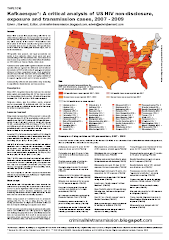
ACT (Aus) (3) Africa (37) Alberta (5) Angola (3) Arkansas (6) Asia (1) Australia (50) Austria (6) Azerbaijan (1) Belgium (1) Benin (2) Bermuda (3) Botswana (6) Brazil (1) British Columbia (7) Burkina Faso (1) Burundi (1) California (5) Cambodia (1) Cameroon (1) Canada (119) China (3) Colorado (2) Congo (1) Czech Republic (1) Delaware (1) Denmark (10) Egypt (4) Europe (3) Fiji (1) Finland (7) Florida (7) France (10) Georgia (US) (4) Germany (15) Ghana (1) Guinea (5) Guinea-Bissau (3) Guyana (1) Idaho (2) Illinois (5) India (3) Indiana (1) Iowa (7) Ireland (3) Italy (1) Jamaica (1) Kansas (3) Kentucky (2) Kenya (4) Kyrgyzstan (1) Laos (1) Latin America (1) Lesotho (1) Louisiana (2) MIssouri (4) Maine (2) Malawi (2) Mali (3) Malta (2) Manitoba (8) Maryland (3) Michigan (12) Minnesota (1) Mississippi (2) Montana (1) Mozambique (2) NSW (Aus) (3) Nebraska (3) Netherlands (3) New Hampshire (1) New Jersey (2) New Mexico (2) New South Wales (2) New York (11) New Zealand (17) Niger (3) Nigeria (3) North Carolina (3) Norway (10) Nova Scotia (1) Ohio (5) Oklahoma (2) Ontario (55) Oregon (1) Papua New Guinea (1) Pennsylvania (3) Qatar (1) Quebec (7) Queensland (Aus) (1) Rwanda (2) Saskatchewan (4) Scotland (5) Senegal (2) Sierra Leone (4) Singapore (6) South Africa (6) South Australia (14) South Carolina (4) South Dakota (2) South Korea (3) Spain (1) Swaziland (1) Sweden (20) Switzerland (10) Tanzania (3) Tennessee (4) Texas (7) Togo (5) UAE (1) UK (38) USA (149) Uganda (18) Ukbekistan (1) Ukraine (1) Vermont (1) Victoria (Aus) (14) Virginia (2) Washington (State) (2) Western Australia (5) Wisconsin (3) Zimbabwe (5)
Showing posts with label HIV forensics. Show all posts

Tuesday, 10 April 2012

Sweden: Gay doctor convicted of HIV exposure has sentenced reduced (update)

Update: 10th April 2012
An HIV-positive doctor who was previously convicted for 'reckless endangerment' for having had unprotected sex (see below) has had his sentence reduced by the Stockholm Court of Appeal, according to a brief report at DN.se.

Originally convicted to ten months imprisonment by the District Court, the Court of Appeal dropped one of the charges and reduced the man's remaining prison sentence to four months primarily because there was no evidence of when the physician's partners were infected.

Original post: 22nd June 2010
A gay man in Stockholm who works as a doctor has been sentenced to ten months in prison for 'reckless endangerment' and must pay 26,900 kronor (€2825) compensation for having unprotected sex without disclosure with another man.

However, the more serious charge of aggravated assault brought by a second man who alleged that he became HIV-positive as a result of unprotected sex with the defendant was dismissed by the court because "it can not be ruled out that he was infected by someone else."

The case, reported in the English language at The Local.se, is at least a partial victory: the court appeared to understand that phylogenetic analysis can only be useful as 'proof' of transmission if all previous sexual partners prior to an HIV-positive test are also tested and those who are positive included in the analysis.

Lawyer Elisabeth Massi Fritz, representing the two men, told news agency TT that the ruling will be appealed. "The prosecutor and I agreed that we would appeal if any of the charges were to be dismissed."

The man was facing a further charge of aggravated assault, with an alternative charge relating to causing the HIV infection. These charges were dismissed by the court as it could not be concluded that the doctor was responsible for the infection. Elisabeth Massi Fritz says she is not surprised at the verdict but expressed disappointment that one of the charges was dismissed.

"There can be no other person that has infected my client. But we have to obtain a supplementary investigation to prove this," said Massi Fritz.
During sentencing the judge said that since the man worked as a doctor, he ought to have known better.

The district court concluded in its ruling that the doctor's actions had threatened the lives of the men and that his offence should be considered especially serious, given that in his professional capacity he should be aware of the Swedish Institute for Infectious Disease Control (SMI) rules of conduct.
However, since the maximum prison sentence is two years for this 'crime' he was still somewhat lenient - if you accept that a prison sentence for not disclosing your HIV status before sex that may risk HIV exposure (and we don't know about the doctor's viral load, or the sexual acts or sexual position which may have reduced the risk to almost zero, or better than using condoms) is ever warranted.

Wednesday, 18 January 2012

Austria: Man accused of criminal HIV transmission fights "unconstitutional" forced blood test

A man in Austria is taking a case to the Constitutional Court that challenges the forcible testing of blood for HIV (as well as for use in phylogenetic analysis) that was legalised on 1 January 2012 through an amendment of the Criminal Procedure Code by the Prevention of Terrorism Act 2011.  He is being supported by Rechtskomitee LAMBDA, whose president, Dr. Helmut Graupner, is also his defence counsel.

Full details of the case, and the problematic application of this law, from the Rechtskomitee LAMBDA press release issued today are included in full below (English version is slightly modified from the original release; German is the original.)


From 1 January 2012: Forced Hiv-Testing: Rechtskomitee LAMBDA supports case in the Constitutional Court

The Prevention of Terrorism Act 2011 also amended the Criminal Procedure Code. It makes forcible HIV-testing legal as of 1 January 2012, despite the fact that the Constitution prohibits taking blood by force. A case has already been brought to the Constitutional Court.

The Prevention of Terrorism Act 2011, passed by federal parliament in October 2011, legalizes taking blood by force in order to prove the misdemeanor of Endangering Human Beings by Transmittable Diseases (§ 178 Criminal Code). Up to now forcible blood taking (in the case of not intoxicated defendants) had been restricted to sexual felonies or other felonies incurring a maximum penalty of five years.

Since 1 January 2012 this changed, despite the fact that the Constitutional Court prohibits forcible blood withdrawals, as no one may be forced to supply his body as evidence against him. The first case challenging this new power of the criminal police has already been taken to the Constitutional Court.

The applicant, who has no criminal record, is HIV-positive and asks the Constitutional Court to strike down the amendment. The state prosecutor has started proceedings against him under  § 178 CC after another HIV-positive man had accused him of infecting him with HIV. Indeed the two men had sex with each other years ago, but in accordance with the safer sex rules propagated by the Ministry of Health and the AIDS Service organisations (oral sex without ejaculation into the mouth).

Blackmailed and reported to the police

The accuser, who has a massive criminal record of violent, drug and property offences, reported the defendant to the police years after the sexual contact and only after the man refused to fulfil his considerable financial demands. In addition the accuser admitted during his interrogation that he had unprotected sex with others, and he had searched for casual sex (“sexdates”) in the internet displaying in his profile the information “Safer Sex: Never”. Even more so the man, according to his own depositions, is addicted to heroin and thus had been exposed also to other ways of transmission than the sexual one.

The case against the accuser (for aggravated blackmail) has been dropped immediately after the interrogation of both men due to "conflicting depositions". Not so the case against the defendant for endangering by transmittable diseases (which offence is fulfilled just by engaging in unsafe sex without the necessity of causing infection). Also in regard to this offence there were "conflicting depositions" but the prosecutor wanted a blood test (for phylogenetic analysis).

Potential for conviction of innocents

A phylogenetic analysis however cannot prove an infection. And phylogenetic analyses bear the risk of false results and misinterpretation at the expense of a defendant. There are no standards (guidelines) so far for such analyses in forensic context and its results unfortunately again and again are misunderstood and misinterpreted by the courts. UNAIDS and the EU-Fundamental Rights Agency for years have been highlighting this.

So the man did not agree to blood withdrawal from him as he fears, because he is innocent, to be wrongfully convicted on the basis of such a blood test. Since 1 January he now is facing the danger of forced blood taking at any time. Therefore he has addressed the Constitutional Court.
  
"It is incredible that the governing coalition passed this unconstitutional law," says president of Rechtskomitee LAMBDA (RKL) and defence counsel of the man, Dr. Helmut Graupner, “As too often we again have to hope for the Constitutional Court”.

Seit 1.1.2012: Zwangs-Hiv-Tests: Rechtskomitee LAMBDA (RKL) unterstützt Antrag an den Verfassungsgerichtshof

Das Terrorismuspräventionsgesetz bringt auch eine Novelle der Strafprozessordnung. Seit 1.1.2012 sind gewaltsame Blutabnahmen bei Verdacht einer Ansteckung mit Hiv zulässig, obwohl die Verfassung zwangsweise Blutabnahmen verbietet. Eine Beschwerde liegt bereits beim Verfassungsgerichtshof.

Mit dem im Oktober 2011 verabschiedeten Terrorismuspräventionsgesetz wurden Zwangsblutabnahmen bei Verdacht des Vergehens der Gefährdung von Menschen durch übertragbare Krankheiten (§ 178 Strafgesetzbuch) erlaubt. Bisher waren zwangsweise Blutabnahmen (bei nicht berauschten TäterInnen) nur bei Verdacht auf ein Sexualverbrechen oder auf ein (anderes) Verbrechen zulässig, das mit mehr als 5 Jahren Freiheitsstrafe bedroht ist.

Das ist seit 1. Jänner anders, obwohl der Verfassungsgerichtshof zwangsweise Blutabnahmen verbietet, weil niemand gezwungen werden darf, seinen Körper als Beweismittel gegen sich selbst zur Verfügung zu stellen. Die erste Beschwerde gegen die neue Befugnis der Kriminalpolizei liegt bereits beim Verfassungsgerichthof.

Der unbescholtene Antragsteller ist Hiv-positiv und beantragt die Aufhebung der Gesetzesnovelle. Die Staatsanwaltschaft (StA) hat gegen ihn ein Ermittlungsverfahren wegen des Verdachts gem. § 178 StGB eingeleitet, weil ihn ein anderer Hiv-positiver Mann beschuldigt, ihn mit Hiv angesteckt zu haben. Tatsächlich hatte der Mann mit diesem anderen Mann vor Jahren einvernehmlichen sexuellen Kontakt, jedoch entsprechend den vom Gesundheitsministerium und den Aids-Hilfen propagierten Safer Sex Regeln, also mit Sexualpraktiken, bei denen eine Ansteckung nicht möglich ist (Oralverkehr ohne Ejakulation in den Mund).

Erpresst und angezeigt

Der mehrfach wegen Gewalt-, Suchtgift- und Vermögensdelikten vorbestrafte Anschuldiger hat die Anzeige, in der er ungeschützten passiven Analverkehr behauptete, erst Jahre nach dem sexuellen Kontakt erstattet und erst nachdem der Beschuldigte nicht bereit war, seine erheblichen finanziellen Forderungen zu erfüllen. Zudem hat er selbst in seiner Einvernahme angegeben, anderweitig ungeschützte sexuelle Kontakte gehabt zu haben und hatte er im Internet flüchtige sexuelle Kontakte („Sexdates“) gesucht mit einem Profil, auf dem angegeben war: „Safer Sex: Niemals“.  Darüber hinaus ist dieser Mann nach seinen eigenen Angaben heroinsüchtig, und war daher, außer dem sexuellen noch anderen Übertragungswegen für eine Hiv-Infektion ausgesetzt.

Das gegen den Anschuldiger (wegen des Verdachts der schweren Erpressung) eingeleitete Strafverfahren wurde „wegen der widerstreitenden Aussagen“ sogleich nach Einvernahme der beiden Männer eingestellt. Nicht jedoch das Verfahren gegen den Beschuldigten wegen des Verdachts der Gefährdung durch übertragbare Krankheiten (wofür bereits unsafer Sex ausreicht, ohne dass es zu einer Ansteckung gekommen ist). Auch hier bestanden widerstreitende Aussagen, jedoch begehrte der Staatsanwalt eine Blutuntersuchung (phylogenetische Untersuchung).

Gefahr der Verurteilung Unschuldiger

Eine phylogenetische Untersuchung kann aber eine Ansteckung nicht beweisen. Und phylogenetische Untersuchungen bergen das Risiko falscher Ergebnisse und von Fehlinterpretationen zu Lasten des Beschuldigten Es gibt (noch) keine Standards (Richtlinien) für die Durchführung dieser Analysen zu gerichtlichen Zwecken und ihre Ergebnisse werden von Gerichten leider immer wieder missverstanden und fehlinterpretiert. Darauf weisen UNAIDS und die EU-Grundrechteagentur seit Jahren hin.

Der Mann hat daher einer Blutabnahme nicht zugestimmt, weil er befürchten muss, auf Grund der Testergebnisse unschuldig verurteilt zu werden. Seit 1. Jänner muss er nun jederzeit die gewaltsame Abnahme einer Blutprobe fürchten und hat sich daher an den Verfassungsgerichtshof gewandt.

„Es ist unglaublich, dass die Regierungsparteien, gegen die Opposition, diese verfassungswidrige Regelung beschlossen haben“, sagt der Präsident des RKL und Rechtsanwalt des Antragstellers Dr. Helmut Graupner, „Es bleibt, wie so oft, die Hoffnung auf den Verfassungsgerichtshof“.

Thursday, 4 August 2011

New report explores implications of tests to estimate timing of HIV infection for criminal prosecutions

From UNAIDS front page today.


Feature Story: New report explores implications of tests to estimate timing of HIV infection for criminal prosecutions

The UK charity National AIDS Trust (NAT) launched a report on 4 August 2011, entitled Estimating the likelihood of recent HIV infection – implications for criminal prosecution, which explores the validity and meaning of the Recent Infection Testing Algorithm HIV tests, or RITA tests, within the context of criminal prosecutions of HIV transmission.

The report, primarily aimed at professionals working in the criminal justice system and HIV specialists who may be called on as expert witnesses in criminal HIV transmission cases, calls for caution about the potential use of RITA results to determine timing of HIV infection.

About RITA and its potential use in criminal law context

RITA tests estimate the likelihood that a person found to be HIV-positive has been infected recently, usually within the previous six months. To date, the United Kingdom is the only country reported to routinely return RITA results to newly diagnosed patients.

As criminal law in the UK allows for the prosecution of people for transmitting HIV to another person, the report underlines the importance that RITA tests and their limitations be fully understood and not misused in criminal proceedings. The report underlines that while there have been no reported instances of use of RITA results in courts to attempt to prove timing of HIV transmission and consequently the identity of the person who transmitted HIV, this may happen in the near future.

No test can conclusively state when an individual acquired HIV

“No scientific test is able to conclusively state when an individual acquired HIV,” said Dr Cate Hankins, Chief Scientific Adviser to UNAIDS. “It is important to be cautious, follow clear protocol, and understand the limitations of RITA results when delivering them to patients or using them within a criminal law context.”

According to the report, proving HIV transmission in the context of criminal law cases requires the use of a combination of scientific evidence, medical records and testimony to establish the facts, timing and direction of HIV transmission.

“Scientific advances such as RITA testing are extremely welcome when estimating the recency of HIV infection on a population level, especially as late diagnosis is a huge issue,” said Ms Deborah Jack, Chief Executive of National AIDS Trust. “However, it is crucial that the limitations of RITA tests are fully understood and are not used out of context, for example during criminal proceedings.”

As RITA tests are designed to work at the population level (based on averages) rather than at the individual level, taking into account significant rates of false RITA test results in individuals, the report draws the conclusion that RITA tests are not reliable as evidence of recent HIV infection for individuals in the context of criminal proceedings.

Better understanding of HIV science in the context of criminal law

The NAT report comes weeks ahead of an expert meeting on the scientific, medical, legal and human rights aspects of the criminalization of HIV transmission and exposure organized by UNAIDS in Geneva from 31 August to 2 September 2011.

The meeting will bring together leading scientists and medical experts on HIV together with legal and human rights experts. Participants will examine relevant scientific and legal evidence and concepts relating, among others, to harm, risk, intent and proof, and their conceptualization/application in the context of criminalization of HIV exposure and transmission.

The meeting is part of UNAIDS’ work towards halving the number of countries with punitive laws and practices around HIV transmission, sex work, drug use, or homosexuality that block effective AIDS responses by 2015.

Wednesday, 19 May 2010

UK: HIV transmission case dropped against gay Doncaster man

A case against a gay man in Doncaster, in the north of England, who was accused of 'recklessly' transmitting HIV to two male complainants, has been dropped due to lack of evidence - apparently there had been no investigation of the previous sexual partners of the complainants who may have infected them.

I don't have a lot of details about the case, which I first heard about in March 2009, and I would like to protect the identity of the accused who has obviously been through hell for at least 15 months.

What I do know is this: two men had complained to the police that they believed that they had been infected by the accused during separate dates. (I don't know whether the complainants knew about each other before they went to the police, or after).

The Crown Prosecution Service (CPS) took their complainants seriously enough to prepare a 'reckless grievous bodily harm' prosecution under Section 20 of the Offences Against the Person Act 1861. To prove the element of causation of such 'grievious bodily harm' (i.e. HIV transmission), the prosecution must prove beyond reasonable doubt that only the accused could have infected the complainant(s).

I'm reliably informed by the man's defence lawyer, Khurram Arif, that the trial was meant to commence yesterday at Doncaster Crown Court. The defence had prepared a scientific report examining the likelihood that only the accused could have infected both complainants. The report highlighted that the complainants' previous sexual partners may also have infected them and that phylogenetic analysis could not rule this out.

Yesterday, the prosecution consulted with its own scientific expert and conceded that since both complainants had previous sexual partners and the police did not investigate nor eliminate them as possible sources of infection, there was no case to answer. This is, in fact, what the CPS guidelines state.

This is one of several cases defended by Mr Arif, where a lack of attention to the detail of what scientific evidence can – and cannot – prove has led to the CPS dropping cases very late in the day. As Mr Arif notes in his email to me: "The prosecution, when making such allegations, have to prove that they have closed all the doors to the possible sources of infection. Again, in this case, they did not."

The case highlights that in England & Wales, people accused of such 'crimes' should never plead guilty and should immediately contact an HIV organisation for advice in order to be put in touch with an expert defence lawywer, such as Mr Arif, who services legal aid clients through Christian Khan Solicitors and private clients through GSC Solicitors.

In addition, complainants need to be aware that making such accusations requires them to reveal their entire previous sexual history and to name all of their sexual partners since their last HIV-negative test. Only when they have all been contacted and tested for HIV can a prosecution actually reach trial.

Monday, 30 November 2009

New Zealand: Alleged 'HIV predator' dies in cell

The man at the centre of New Zealand's biggest ever criminal HIV transmission case died in his cell in the early hours of Monday morning. His death is not being treated as suspicious, but the Coroner is investigating the circumstances.

The post-mortem has already begun on the impact of his death, however. GayNZ.com, which first alerted the public to 40 year-old Glenn Mills, dubbing him the 'HIV predator', has already run several pieces, including an interview with the first complainant to go to the police.

The first young formal complainant was described as "incredibly brave" after he fronted up to Auckland's Adult Sexual Assault Team in May with details of his sexual relationship with Mills and his subsequent HIV diagnosis. His evidence was the break police needed to ramp up the case into a fully-fledged investigation which revealed many more allegations. He says he felt all along that Mills should have faced justice and "fronted up to what he had done."

The young man, who has preferred not to be publicly identified, says news of Mills death is sad but he feels a sense of relief. "The anxiety of knowing that sometime soon I would have to stand up in court and reveal so much to strangers and be cross-examined about intimate aspects of my life has been intense," he says, "...at times it has been overwhelming." He says even in recent weeks he had been feeling "overwhelmingly black thoughts" about his situation but has been receiving lots of support... so many professional people and organisations have been there when I needed them, I truly appreciate their help." He says he was dreading the possibility of Mills being released on bail. "Meeting him in the street or having him contact me directly or through others would have been terrible.

"I think I may get some closure on this now," the man said this morning just minutes after hearing the news of Mills' death, "I hope so anyway. But this is not the way I would ever have wanted it to happen."

Reactions have also come in from the main NZ HIV organisations. Another piece from GayNZ.com quotes Body Positive Auckland chief executive Bruce Kilmister:
"We are deeply sorry to hear of the death of Glenn Mills," says [Kilmister]. "We realise that people may have mixed feelings about him but we also acknowledge the stigma associated with HIV which he was having to deal with after after his health status was publicly revealed." Body Positive has been supporting a number of young men who believe they contracted HIV from Mills. Kilmister says his team are working quickly to contact everyone they can to put in place professional counselling and peer support.
Mr Mills' death is a mainstream news story in NZ, too. TVNZ.com, which aired an uncomfortable in-depth report on the case in June, published a story on its website today also quoting Mr Kilmister:
He says the premature death of an HIV sufferer is sad but it will spare victims and their families from having to give evidence before the court. "That's the only positive aspect we can see. It will avoid any long trial and won't put any people through that ordeal."
Despite their use of the phrase 'HIV sufferer', I was heartened to see they included this quote from him, too:
With his death coming the day before World Aids Day, Kilmister says it reinforces the message that people need to continue to test themselves and to practise safe sex. "Each person has a responsibility to keep themselves and others safe from the transmission of this virus." He says public attitudes towards the disease have made some progress but there is still some stigma towards people with the disease.
A story from NZCity.com focuses futher on the 14 complainants (seven of whom had tested HIV-positive).
Head of the Auckland Adult Sexual Assault Team Detective Sergeant Andy King says some of the 14 people who came forward to complain about Mills are quite upset about his death. He says others are happy the matter is now behind them. "They all came forward knowing well and truly that they may have to give evidence at court. And some when I spoke to them, or when they were spoken to by police, indicated that they were sorry that they wouldn't get a chance to see justice being done."

The article ends with some rather mixed messages, however, from Hannah Jennings-Voykovich, editor of Express, NZ's gay mazagine.

Ms Jennings-Voykovich says this case has highlighted the need for people to have personal responsibility when it comes to safe sex.
But earlier in the piece
[Jennings-Voykovic] says as she relayed the news to staff this morning, there was sense of relief. However she says there are still many unanswered questions. "Whether there was the intent. Whether there could be proof that there was an intent in court. And I think there are going to be a lot of hurt people out there wondering what happened." [She] says there will now be no sense of justice for Mills' victims. "A person that we spoke to this morning said 'I believe he got off lightly'."
We shall never know whether the case of Glenn Mills, the alleged "HIV predator", was more hysteria than fact. Earlier this month, Mr Mills was in court faced with an order to provide a sample of his blood for phylogenetic analysis. This would have been compared with samples from the seven complainants who claimed he was the source of their infection, and that he "deliberately" infected them by not disclosing his HIV status when they had consensual unprotected sex. This test may have shown that he was not the source.

It's also interesting to read about the relief his death has brought, not just to some of the complainants, but also to some in NZ's gay and HIV community. His trial may have been difficult – and the media reporting would certainly have added to the stigma associated with being gay and living with HIV – but it may also have exonerated Mr Mills, or at least shown that he may not have been any kind of predator (as is the case with most people accused of such crimes).

Still, putting the boot in, is GayNZ.com's content editor, Jay Bennie, who tells 3 News
“Right from the start we described Glen Mills as a predator, and that has been controversial – but I stick by it,” says Jay Bennie of GayNZ.com. “He has been manipulative, he has been cold and calculating, he has preyed on people who are vulnerable.”
Instead, his legacy has been sealed via trial by media – and he was found guilty in that domain long ago.

[This posting is the first to reveal the name of Mr Mills, even though it has been in the public domain since June. I hesitate to include it even now, but do so to help balance the reporting on his death and legacy.]

Monday, 21 September 2009

US: Padieu case gets the 20/20 treatment; phylogenetic analysis totally misrepresented

The case of Philippe Padieu, the French-born Texan found guilty in May 2009 on six counts of aggravated assault with a deadly weapon and sentenced to 45 years for five counts and 25 years for the remaining count – all of which run concurrently - was featured last Friday night on US ABC TV's tabloid-style news magazine, 20/20.

Five and half million viewers watched as Mr Padieu faced trial by media yet again. All six parts of the one hour show (actually 39 minutes minus commercials) are available to watch online.

Part 1: Women recall HIV criminal's allure
Part 2: HIV diagnosis rocks women's lives
Part 3: Women take matters into own hands
Part 4: HIV serial dater faces victims in court
Part 5: Man convicted of HIV crime speaks
Part 6: Women want case known to protect others

It's basically sold as the story of a group of scorned women uniting to put Mr Padieu behind bars, summarised beautifully by the accompanying story on the ABC news website headlined, 'How Women United to Stop HIV-Positive Man, Women's Horror at Diagnosis Replaced With Mission: Stop Man From Infecting Others.'

There's so much I could say about the show, which is something of a milestone in criminal HIV transmission reporting in the mainstream media, but I'm going to limit my comments about the very worrying misrepresentation of phylogenetic analysis as 'proof' that Mr Padieu was the source of all the women's HIV infection. Perhaps blog readers could fill in the comments sections with insights and criticisms of their own about this programme.

[Update: Catherine Hanssens of The Center for HIV Law and Policy has some terrific comments and insights in her Sept 29th blog post.]

In Part 4 of the show, presenter/journalist Elizbeth Vargas says that it was Mr Padieu's "own DNA" that proved he was guilty. But phylogenetic analysis is all about testing the genetics of HIV, not the individual. They then showed one of the US's foremost experts in HIV forensics, Dr Michael L Metzker, of Baylor College of Medicine, Houston, Texas, who testified for the prosecution that Mr Padieu's virus was extremely similar to that of the six women. Except here he says definitively that Mr Padieu was "the source" of the six women's HIV. I've written about the limitations of phylogenetic analysis many times: the issues are summarised here.


In the final part of the show, we are introduced to 'Lisa' who dated Mr Padieu in 1997, and was diagnosed HIV-positive that same year. The show gives Dr Metzker a sample of Lisa's blood and he says that "preliminary analysis" suggests that Mr Padieu was the source of all seven women's HIV infection. The show concludes that Mr Padieu "gave Lisa HIV in 1997" and goes on to suggest, without a shred of evidence, that he had been diagnosed earlier than 2005 and knowingly infected Lisa and possibly hundreds of other women.


I'm extremely disappointed in Dr Metzker for totally misrepresenting what phlyogenetic analysis can prove. It is impossible to conclude, given the many limitations of phylogenetic analysis, that Mr Padieu infected Lisa in 1997. It is, in fact, just as possible that Lisa infected Mr Padieu.

I don't expect 20/20 to explain the science (in fact, I expect them to get it wrong), but I do expect Dr Metzker, who is (was?) considered to be a respected scientist, to be less definitive about his conclusions. Maybe Dr Metzker would like to explain how he could be so sure - it would be very helpful to know if he has developed new, as yet unknown, techniques in phylogenetic analysis that can definitively pinpoint timing and direction of transmission.

Wednesday, 3 June 2009

US: Padieu gives TV interview, highlights Texan 'injustice'

It wouldn't happen anywhere else, but three days after Philippe Padieu was sentenced to 45 years in prison after being found guilty of six counts of aggravated assault with a deadly weapon, after having unprotected sex without first disclosing his HIV status with six women who subsequently tested HIV-positive, he gave a TV interview to CBS 11 News.

In it, he essentially repeats the same accusations of bias and lack of evidence that he made in court prior to be sentenced.

I thought the trial was just public opinion turned against me. It wasn't a fair trial at all... The reason I'm serving 45 years is because I had an ineffective counsel. I had no money...
However, seeing him say these things in the flesh makes me appreciate that he has a point. In particular, since Texas has no HIV-specific law, the bar is set much higher in proving that he actually infected the six women with HIV. Although phylogenetic analysis linked his strain of HIV with the six women's, that is not enough to prove the direction of transmission, and - notably - the timing.

He noted that all six women had multiple partners, and that he had sex with three of them before he tested positive (which means he could have infected these women before knowing his status, which definitely would not be a crime).

I think it was an injustice. You couldn't say anything about these woman in court. You couldn't bring up their past sexual history.

However, some of his other allegations are more difficult to swallow, including saying that the six women were "very vindictive."

You could blame them because they failed to take responsibility. They lied. They were involved in a conspiracy. They formed a hate group. I believe they should step up to the plate. They are just as responsible as I am...There's rage. There's vengeance. Admitting knowledge is not admitting responsibility. Hate and anger is fear and guilt in disguise.

Mr Padieu will now appeal and is looking for a new lawyer.

Saturday, 30 May 2009

US: Texan man found guilty of aggravated assault with a deadly weapon for reckless HIV transmission

A Texas jury has found 53 year-old Philippe Padieu of Frisco, Texas, guilty of six counts of aggravated assault with a deadly weapon. He is the sixteenth person with HIV in Texas to be successfully prosecuted for either HIV exposure or transmission since 1997.

Update: May 30th.

Original posting, from May 28th, below:

Mr Padieu was arrested in July 2007 after two women went to police after testing HIV-positive . The police investigation led to four further complainants.

The case has had widespread media coverage throughout the United States, highlighted in today's Dallas Morning News story summarising the trial.
After five hours of deliberations, the [jury's] guilty verdicts were read in a large ceremonial courtroom where the trial was moved to accommodate local and national TV crews covering the case, including ABC's 20/20.
Prosecutors likened Mr Padieu to a "ticking time bomb, a lethal weapon."
"It's as if he took a gun and shot all of them," prosecutor Lisa King said during closing arguments earlier in the day. "But a gunshot wound heals. In this case, he gave them a virus that causes a disease that may well kill them."

[Assistant District Attorney Curtis] Howard said, Padieu is "a ticking time bomb, he's a lethal weapon," and he likened Padieu to Typhoid Mary. He told jurors that Padieu broke the law by knowingly, recklessly and intentionally having sex with multiple women, exposing them to HIV, the virus that causes AIDS, without telling them.
His defence attorny, Bennie House, argued that Mr Padieu was in denial and that the six female complainants should have protected themselves knowing that unprotected sex can result in the transmission of sexually transmitted infections.
"They asked Mr. Padieu if he was safe, he said yes," said House. "He's in denial." He added, "Mr. Padieu is not a predator. ... He likes sex...House said his client's partners had a responsibility to practice safe sex. "They should have invoked a mantra – no glove, no love," House said. "If that didn't happen, they should walk out."
Another of Mr Padieu's defence lawyer, George A. Giles, argued - rather unsuccessfully given the many previous Texan convictions for HIV-positive bodily fluids being classed as deadly weapons, including Willy Campbell, who was sentenced to 35 years for spitting at a cop – that Texan law did not specifically say that his client had committed aggravated assault.
[He said that] what Padieu did does not constitute aggravated assault. He suggested that prosecutors go to Austin to lobby for changes in the law if they want to use the criminal code to address the practice of unsafe sex by someone with HIV. "When does he have to tell them or anybody he's got a disease?" Giles said.
However, since the law in Texas is not HIV-specific, the bar was set much higher for the prosecution to prove that Mr Padieu actually infected the six women. They used one of the US's foremost experts in HIV forensics, Dr Michael L Metzker, of Baylor College of Medicine, Houston, Texas, to testify that Mr Padieu's virus was extremely similar to that of the six women, although he came to a conclusion that may not have been totally scientific.

The news website of NBC Dallas Fort/Worth reported:
He said he used a national database of HIV positive blood samples and compared the samples taken from Padieu and his six alleged victims. In what was called a blind study, Metzker never knew who each sample belonged to.

"I wanted anonymous samples," he said. "I did not want to know the identity of any of the individuals, we treated them all equally, generated the data, generated the alignments."

Metzker said Padieu is the source of his accusers' infection.

"One sample stood out as the potential source of most, if not all, of the other samples," he explained.

However, Padieu's attorneys got Metzker to admit that the study reaches a conclusion, but cannot be called an absolute fact.

The defense is focusing on the fact that HIV can mutate and change over time.

Mr Padieu will be sentenced tomorrow (Friday May 29th). He faces sentencing that ranges from five to 99 years in prison on each of the six counts.

Friday, 17 April 2009

Canada: Johnson Aziga and questions about the virological evidence

Here's an excellent piece analysing flaws in the recent Johnson Aziga trial by Chris Morley, HIV Policy, Information and Publications Coordinator at George House Trust in Manchester, England. He writes this in a personal capacity.

He has had first-hand experience with some UK criminal HIV transmission cases, and contributed significantly to the HIV Forensics chapter of my book. He originally wrote this as a comment on my posting about the scientific evidence in the trial, but I thought it deserved a posting in its own right. He's also written about the trial on the GHT website.

Johnson Aziga and questions about the virological evidence

by Chris Morley

Call a virologist

The defence lawyers failed to follow a key lesson from some recent English cases - which is to call a virologist, expert in HIV, as an expert witness, or at the very least commission an expert HIV virologist's report to use as evidence.

Because the state called Dr Paul Sandstrom, director of the Public Health Agency of Canada's national HIV and retrovirology laboratories as its scientific witness, there was a critical need to have an internationally respected independent expert HIV virologist giving evidence for the defence.

In well represented recent English cases, some level of expert HIV virologist involvement has led to a not guilty verdict, acquittal, case dismissed, and cases being abandoned. It makes a crucial difference to the outcome. It may not always cast enough reasonable doubt on all prosecution claims, but the English experience so far is all of prosecution failures where this is used, and usually of prosecution successes when it isn't used.

From my reading of reports about the scientific evidence an expert virologist would have been able to question, or even demolish the assumptions and conclusions put forward by the prosecution.

Here's the report, from The Hamilton Spectator, of the testimony of Dr Sandstrom:

"We were able to determine that all of the complainants and Aziga had a phylogenetically distinct form of HIV and that Mr. Aziga had the virus prior to contact with any of the women," Sandstrom said. .....

Aziga and the women in the Hamilton infection cluster all had Clade A, which is rare in North America but endemic in Aziga's native Uganda.

In this country, fewer than 2 per cent of those newly diagnosed with HIV have subtype A.

Phylogenetic analysis examines small differences in HIV genes by coding sequences of the HIV genome and comparing them to other HIV sequences in public databases.

HIV virologists can only determine the degree of similarity between two samples. They can't produce a definitive match because unlike human DNA, HIV is not unique to an individual.

The analysis is also unable to determine the direction of transmission, Sandstrom said. So, theoretically, one of the women could have infected Aziga, instead of the other way around.

To resolve that issue, Sandstrom obtained a frozen blood-plasma sample drawn from Aziga after his HIV diagnosis 12 years ago. The specimen -- collected before Aziga met any of the women -- was phylogenetically analyzed and found to be nearly identical to the Hamilton infection cluster, comprising Aziga and the seven HIV-positive women.

"It means Mr. Aziga did not become infected by any of the women and that he had already been infected prior to contact with any of the women," Sandstrom said.


No Proof

This does not fully address or prove transmission from Johnson Aziga at all - other explanations are at least a possibility, and need to be ruled out. Mr Aziga and the women complainants are not the only people in Canada with subtype A - there are over 1000 other people diagnosed with it and more who are undiagnosed. One or more of the others with HIV-A might have been the source of one or more women's HIV.

Sandstrom did not consider it part of his job to explore this, or try to exclude this as a possibility. As the leading state HIV virologist he had a professional obligation to attempt to resolve this uncertainty and present the full picture. It would either have strengthened or weakened the prosecution case. Either way it needed checking.


Not my job to check

He was cross examined about this by the defence who argued that although Aziga and the women share a related virus, that did not mean that other persons, still unknown, might not also be carriers and part of the same transmission network. "It still remains, that your investigation does not rule out the possibility that there are other people 'out there' who are a part of the same infection cluster," suggested the lawyer. Sandstrom said his investigation was "not directed at finding additional complainants or additional suspects," but at providing confirmatory evidence for the footwork done by Hamilton police.

And the police, under cross examination, said it wasn't their job either, to look for other possible sources of the women's HIV.


Miscarriage of Justice and reversed burden of proof

This leaves me with serious concerns that there has been a miscarriage of justice. The defence is left to carry out an investigation, without police powers or resources, requiring the taking and testing of blood samples and complex and expensive scientific analysis, in an attempt to show there are other credible explanations. Does this not unfairly reverse the legal burden of proof?


Sexual history of complainants must be a central part of all transmission investigations

With HIV transmission cases, the proper police investigative practice of not looking into a rape complainant's own sexual history, is often adopted. A woman's sexual history is irrelevant to whether she was forced to have sex by someone; however it is critical to establishing which of her partners might have been the source of HIV in a consensual encounter. To attempt to prove X did it, you have to at least rule out A, B, C etc. And this at least can be proved conclusively with virology (HIV virology can prove someone didn't transmit that HIV, but it can't prove who did).

Rarely are the circumstances such that a complainat can be absolutely sure which of several partners might have been the source. The police are used to checking statements and seeking corroboration for everything. Why are claims about who transmitted HIV treated as if they cannot and must not be questionned? Why don't the police routinely seek, and prosecutors demand, corroboration by ruling out all other possibilities?

For example, one of the women who died (H.C.) had three previous partners in recent years, two of whom were also migrants from Africa and, if HIV positive, likely also to have HIV-A. And an earlier date of infection from one of these men would better explain her surprisingly rapid development and death from Burkitt's lymphoma, all apparently within 3 years or so of her supposed infection by him. (Reported here based on reports in The Hamilton Spectator )
And regarding the other women, see for example this article in The Hamilton Spectator.

Reasonable doubt opportunity wasted

With prosecution and defence expert witnesses contradicting each other, reasonable doubt would be raised far more strongly. Instead of calling an expert in HIV virology, the defence called Rafal Kustra, an associate professor of biostatistics with the Dalla Lana School of Public Health at the University of Toronto. He was not able to make much of an impact, saying he was "underwhelmed" by the level of analysis used by Ottawa scientists who concluded that Johnson Aziga and seven HIV- positive women carry viruses that are so closely related they can be described as a single "Hamilton transmission cluster." He criticised the method used by Sandstrom and that was about it. He didn't produce any new evidence, and wasn't even invited by the defence to offer a different interpretation of the same facts, or say what further evidence was needed, and which questions need to be answered, before the prosecution's case can become credible scientifically.

The defence barrister did criticise the prosecution's scientific claims and failure to eliminate other potential sources of HIV. This does not carry any real weight with judge and jury - in legal terms it is not evidence, more an argument. The defence lawyer is not a scientific expert who can credibly contradict Canada's head of HIV virology, no matter how right he may be. He tried, but didn't call an expert virologist as a witness who could have made the argument convincing with fresh evidence and interpretation based on professional expertise.

An independent expert virologist might have been able to show, for one or more of the infected, scientific reasons why the prosecution are drawing the wrong conclusions and missing out vital evidence.

Establishing reasonable doubt is the job of the defence. Succeed, and the judge would then have pointed this out to the jury. The judge's response to reasonable doubts should lead to a not guilty verdict, or acquittal, on one or more of the charges.

Not guilty verdicts and acquittals might not have produced justice, but there doesn't seem to be much certainty of justice in this verdict, from what I have seen reported.

No-one knows for a scientific fact whether or not he did transmit HIV to the 7 people whom the prosecution claim he infected. This can never be proved with current scientific techniques. The essential virological analyses and testing of other partners, that might have shown the virological connections between the HIV samples could have more than one credible explanation, seem to have been omitted.

The apparent failure to eliminate from suspicion the women's other / previous partners raises serious doubts about any scientific claims made that he was the source, because those claims seem based on only some of the potential scientific evidence.

Herd mentality

A herd mentality can develop in big trials and high profile cases. The pressures to secure a conviction are huge. In cases involving HIV transmission, some of the media behave like a baying mob. Police and prosecutors may become convinced they have their man and be unable to entertain any other possibility. We've much experience of this in England and this case has the hallmarks of another, but in Canada.

Dysfunctional justice?

It's a case that shines a light on the Canadian justice performing badly in a major trial. It seems there are errors as much in the prosecution, police investigation and justice procedures, as well as tactical mistakes by the defence. He's been five years in prison awaiting trial and this was his 6th team of lawyers. This case makes the Canadian justice system look dysfunctional. I hope it redeems itself at the appeal stage.

Germany: Complexities of scientific evidence discussed in Spiegel magazine article

The plight of Nadja Benaissa, the No Angels singer arrested last week in Frankfurt for alleged criminal HIV exposure and transmission has already resulted in more international media attention on the issues around criminalisation than any other case I'm aware of.

Although the recent murder trial of Johnson Aziga in Canada led to a great of press and soul-searching within its own borders, Ms Benaissa's celebrity has resulted in coverage far beyond Germany.

Today, Time magazine in the United States, ran a nicely balanced article summarising the case, and including the first quote I've seen from No Angels manager, Khalid Schroeder.

...manager, Khalid Schroeder says Benaissa's arrest is the result of "a witch-hunt against Nadja. She is being prejudged. The investigation is still continuing and there are no hard facts yet. This is unfair. We want her to be released as soon as possible."
It also quotes yet another spokesperson from Deutsche AIDS-Hilfe, who eloquently sums up their objections to her arrest and to criminalisation in general.
AIDS groups have criticised the authorities' handling of the arrest and have warned against a rush to criminalise the transmission of HIV. "Based on the information that we have about the detention of Nadja Benaissa, we think she should be released," says Carolin Vierneisel, a spokeswoman for the AIDS organisation Deutsche AIDS-Hilfe. "When it comes to consensual sex, whether protected or unprotected, we talk about shared responsibility," she says. "The criminalisation of HIV transmission, as shown in this case, doesn't support HIV prevention efforts. On the contrary, it fosters the stigmatisation of HIV positive people."

Meanwhile, Germany's answer to Time, Der Spiegel, today published an English-language article that examines the difficulties the Darmstadt prosecutor faces in proving that Ms Benaissa actually infected the male complainant. This is the first time I've ever seen the discussion of the unreliability of phylogenetic analysis in a mainstream magazine article.
Investigators in the case have since ordered an immunological report to clarify if the 26-year-old singer actually infected her former partner with HIV.

Experts like Norbert Brockmeyer, a spokesman for HIV/AIDS, a network of experts funded by the German government, is doubtful if such a report can be of much value.

"The absolute proof that person A infected person B cannot be provided by medical means after a number of years," Brockmeyer, a professor of dermatology and allergology, told SPIEGEL ONLINE. He explains that the virus would have mutated too much in each of the bodies -- particularly if those infected have undergone medical treatment.


Of course, that isn't the whole story (and it's a virological, not an immunological report, this is required). Even if there are stored blood samples available from 2004 - when the alleged transmission occurred - it is still impossible to tell from a virological analysis the timing and direction of transmission. And to rule out that someone with a similar virus (and there will be many, many people with similar viruses) didn't infect the male complainaint, they would need to test all of the man's previous sexual partners between his first HIV-negative test and first HIV-positive test (assuming he'd previously taken a test) and include those samples in the analysis. In the English courts, this limitation alone has resulted in charges being dropped in three recent cases.

Saturday, 21 February 2009

Canada: Scientific evidence challenged by Aziga's defence

Two months after the Crown rested its case against Johnson Aziga - accused of first-degree murder due to the death of two women with whom it is alleged he recklessly infected with HIV - his defence team is rigourously questioning the scientific evidence that the Crown had said linked Mr Aziga with the seven complainants allegedly infected with HIV (an additional four complainants allege that Mr Aziga had unprotected sex without disclosing his HIV status, but they are HIV-negative).

Previously, Paul Sandstrom, Director of National HIV and Retroviral Laboratories at the Public Health Agency of Canada, had testified that Mr Aziga and the seven HIV-positive complainants shared the same HIV subtype, clade A, which is rare in Canada but endemic in Uganda, where Mr Aziga is from.

Sandstrom's evidence was that Aziga and the women had viruses so genetically similar they would have come from a common ancestor. He said they formed a unique transmission cluster when compared to other clade A viruses in Canada and internationally.

(Source: The Canadian Press)

However, defence lawyer, Davies Bagambiire who is aware of the precedent-setting English case from 2006 which established that scientific evidence – specifically phylogenetic analysis – is not as cut and dried as other forensic tests relied upon by the criminal justice system, such as genetic fingerprinting.

The lawyer claimed police and prosecutors had “tunnel vision from the beginning to the end” of the case.

“The fact that there were other possible sources of the HIV for the women who tested positive was never even contemplated,” he said.

Bagambiire noted most of the women had met Aziga in “risky environments,” such as lower-class bars and night clubs in Hamilton and Brantford.

“The evidence is that other men could have been possible sources of the HIV,” said Bagambiire.

He pointed specifically to a Brantford man, who is the current partner of one of the HIV-positive women, and who subsequently was found to have had unprotected sex with both her and another complainant in this case.

“Some men who engaged in sexual activities with the complainants left the country without ever having been directed to take an HIV test. Some of their names are not known and their HIV status is not known,” he said.

Source: The Hamilton Spectator

Wednesday, 22 October 2008

Sweden: Health agency criticised for not co-operating with police

The Swedish Institute for Infectious Disease Control has revealed in an article in a medical journal that they have refused to co-operate with police in tracking down individuals who may have broken Sweden's draconian public health and criminal HIV exposure and transmission laws. Following a public furore, they have now backtracked somewhat.

Articles from the Associated Press and The Local.se below.


Swedish health agency blasted for HIV stance

STOCKHOLM, Sweden (AP) — A Swedish health agency revealed in an article published Wednesday that it had refused to help police track down people who knowingly infect others with HIV.

The revelation triggered harsh criticism and the government agency, the Swedish Institute for Infectious Disease Control, agreed later in the day to resume helping police.

Officials for the agency were quoted in a medical newspaper as saying they had declined to cooperate with police because they disagreed with current legislation that criminalizes the willful spread of the AIDS virus.

The report in the Dagens Medicin weekly sparked anger among prosecutors, police and government officials, who accused the institute of placing itself above the law.

The institute backtracked and its officials also clarified their position, saying they had no problem with the law itself, but believed the penalties for spreading HIV were too severe. The willful transmission of the virus is punishable by a maximum 10 years in prison.

Jan Albert, an expert at the agency, said the threat of imprisonment harms prevention efforts because some people who suspect they may have the virus refrain from getting tested for fear of prosecution.

Albert said the agency had declined to help police on many occasions, "but we've come to the understanding that we'll resume work with the police."


'Decriminalize spread of HIV': agency
Published: 22 Oct 08 11:38 CET

A Swedish government agency is refusing to assist the police in an ongoing investigation concerning a person suspected of infecting a woman with HIV.

Under current legislation, a person with HIV risks spending one to ten years in jail on assault charges if he or she knowingly has unprotected sex with another person.

"The criminalization of HIV makes preventive work more difficult. Also, sentences are very tough," Ragnar Norrby, director-general of the Swedish Institute for Infectious Disease Control (SMI), told newspaper Dagens Medicin.

In a reversal of its previous policy, the disease control institute has recently refused to cooperate with prosecutors who requested information on a person suspected of spreading HIV.

"It is now our view that spreading HIV should not be classified as an offence," Jan Albert, SMI head physician and regional manager, told Dagens Medicin.

"It is at least as much the responsibility of the individual person to understand that unprotected sex involves risks," he added.

According to Ragnar Norrby, the threat of prosecution leads many people infected with HIV to remain anonymous, making it more difficult to trace the spread of the virus.

SMI also notes that the development of antiretroviral drugs has meant that HIV can no longer be equated to a death sentence.

Friday, 18 July 2008

Switzerland: Federal Court rules that undiagnosed criminally liable for HIV transmission

Switzerland's highest court - the Federal Court in Lausanne - has ruled that a man who was unaware of his infection is still criminally liable for infecting a woman with HIV.

In effect, the court has ruled that anyone who has had unprotected sex in the past, and does not disclose it to their sexual partner before having unprotected sex with them, may be criminally liable should HIV transmission take place.

An unofficial translation of the article in the Neue Zürcher Zeitung (the original and the translation follow, below) reporting the case, says the following:

..you have to refrain from having unprotected intercourse, if there are concrete indications for a potential HIV infection. Indications can be, in principle, any perceived risky contact in the past, such as unprotected intimate contacts with a person whose sexual past one does not know. In principle the Safer Sex Guidelines of the Federal Health Office are authoritative for this. Irrelevant are the statistical risks of transmission or the fact that signs [of seroconversion] failed to appear.
There are three articles below. First, my article on this published today on aidsmap.com. Then there is a short article in English from swissinfo.ch, and finally the Neue Zürcher Zeitung article (in English and then a jpg of the German original) which contains a lot more information.

I also have a copy of the full judgment in German, which helped inform my article for aidsmap.

I had delayed reporting on this very important case because I had asked the Swiss Federal AIDS Commission (EKAF) to provide an official comment, and to discuss its implications. However, I found out last night that this will not be available until they have their next meeting in September. Nevertheless, I know that some individuals working with EKAF are very concerned about this latest development.

(Thanks to Nick Feustel, of georgetownmedia.de, for providing German to English translations).


Swiss court rules all people with HIV can be criminally liable for transmission, even if untested
Edwin J. Bernard,
aidsmap.com
Friday, July 18, 2008

Switzerland's highest court - the Federal Court in Lausanne - has ruled that a man who was unaware of his infection when he had unprotected sex that transmitted HIV is still criminally liable. The ruling suggests that unprotected sex in Switzerland without first disclosing a sexual history may result in prosecution should HIV be transmitted.

In 2006, the California state Supreme Court ruled that ‘constructive knowledge’ – when it is reasonably foreseen by a reasonably intelligent person that their actions could lead to harm – of the possibility that HIV transmission may occur, is enough to allow for civil liability. However, this is the first ruling anywhere in the world to find that an undiagnosed individual may be criminally liable for HIV transmission.

The criminal case, reported in some detail in the July 1st edition of the Neue Zürcher Zeitung, began with a trial in Zurich’s District Court in 2005. The complainant was a woman who had tested HIV-positive after having unprotected sex in 2002 with the defendant. Although the man had not been diagnosed HIV-positive before their sexual encounters, he did have a history of unprotected sex.

Notably, in 2000, he had been informed by a former sexual partner that she had been diagnosed HIV-positive. The man testified that he had not taken an HIV antibody test because he did not believe himself to have been infected during unprotected sex with this woman, based on a lack of seroconversion symptoms at the time. However, the District Court found him guilty under both public health and criminal law.

Swiss criminal HIV exposure and transmission laws
Liability for HIV exposure or transmission in Switzerland is based on two distinct sets of laws – those aimed at protecting the general public (public health law) and those protecting the individual (criminal law).

Article 231 of the Swiss Criminal Code allows prosecution by the police – without the need for a complainant – of anyone who “deliberately spreads a dangerous transmissible human disease.” Informed consent to unprotected sex does not nullify the offence, and even the attempt to spread a dangerous transmissible human disease (i.e. HIV exposure without transmission) is also liable to prosecution.

Article 122, also allows prosecution for grievous bodily harm if unprotected sex results in HIV transmission. However, informed consent is a defence in this case, and a prosecution requires a complainant in order to prove that informed consent (i.e. disclosure of HIV status before sex) was not obtained.

In effect, “any unprotected sex of an HIV-positive person is a crime, even if there is no transmission,” Professor Pietro Vernazza, of the Cantonal Hospital in St. Gallen, and President of the Swiss Federal Commission for HIV / AIDS, tells aidsmap.com. In part, it was these draconian laws that motivated the Swiss Federal AIDS Commission’s recent statement regarding antiretroviral therapy’s effect on HIV transmission.

Cantonal Court upholds appeal
The undiagnosed man convicted under these laws appealed to the Zurich Cantonal Court in 2007. The appeal had two parts: questioning whether an undiagnosed person has a legal requirement to test for HIV and to disclose their sexual history; and questioning the validity of the phylogenetic analysis evidence used in the original case.

The Cantonal Court ruled that not only was he not liable – because there is no law mandating HIV testing or disclosure after unprotected sex – but also that the scientific evidence was not conclusive enough to prove that he had infected the complainant.

Although phylogenetic analysis of the samples linked the man's rare HIV subtype to the complainant’s own HIV strain, his lawyers successfully argued that phylogenetic analysis cannot rule out that another individual may have infected the complainant. In addition, phylogenetic analysis ruled out a link between the defendant and the HIV-positive woman with whom he had ‘risky’ sex in 2000.

Federal Court reverses appeal
On June 30th 2008, Switzerland's highest court ruled that the man can be held responsible for HIV transmission under both public health and criminal law. They said the defendant could not ignore the fact that his own past behaviour was risky, particularly since one of his previous partners had told him she was HIV-positive after they had had unprotected sex.

It also ruled that the woman did not have joint responsibility for her HIV infection because she did not give informed consent to the risk of unprotected sex. If she had known the man’s sexual history, it was unlikely she would have had consented to unprotected sex, it said.

An unofficial translation of the German-language article in the Neue Zürcher Zeitung quotes the following: “...you have to refrain from having unprotected intercourse, if there are concrete indications for a potential HIV infection. Indications can be, in principle, any perceived risky contact in the past, such as unprotected intimate contacts with a person whose sexual past one does not know. In principle the Safer Sex Guidelines of the Federal Health Office are authoritative for this. Irrelevant are the statistical risks of transmission or the fact that signs [of seroconversion] failed to appear.”

The Federal Court also overturned the ruling on phylogenetic analysis, saying that since the defendant’s strain was so rare, it would have been highly unlikely that the complainant could have acquired it elsewhere.

In effect, Switzerland’s highest court had now ruled that anyone who has had unprotected sex in the past, and does not disclose it to their sexual partner before having unprotected sex with them, may be criminally liable should HIV transmission take place.


Court rules in HIV case
July 1, 2008
swissinfo.ch

Switzerland's highest court has ruled that a man who unknowingly infected a woman with HIV can be held responsible for his actions.

The Federal Court in Lausanne wrote that any person having occasional sex with another should use a condom to protect the other person. Otherwise they should expect to be accused of causing seriously bodily harm through negligence if the occasional partner is diagnosed with the Aids-causing virus.

The decision overturns an earlier one by Zurich's cantonal court after an appeal by a woman who was diagnosed with the virus. She had had unprotected sex with a man who did not know he was contaminated.

The man had previously had unprotected relations with other partners, and the country's highest court ruled that he had failed to apply the rules of safe sex.

Even if he did not know he was HIV positive, the judges said he could not ignore the fact that his own behaviour was risky, especially after one of his earlier partners had admitted being infected.


HIV Transmission After Risky Contacts: Conviction required
Neue Zürcher Zeitung
1 July 2008

If you ignore the possibility of being infected with HIV after previously having had risky contacts, and then infect a sexual partner by having unprotected intercourse, you can be prosecuted for reckless greivous bodily harm. The Federal court requires the Zurich cantonal courts to convict a man, who had unprotected intercourse with various women for years.

In 2000, one of his former sexual partners informed him she was HIV-positive. He abstained from having an HIV test done, because he relied on not having been infected due to the lack of signs, such as fever attacks. Two years later he had unprotected sex with another woman, who he didn't inform about that risk. Later she was diagnosed with having the same rare HIV strain as he did.

The Zurich cantonal court fully acquitted the man in March 2007 of the accusation of reckless greivous bodily harm and reckless spreading of human diseases, following an earlier convicion. The court had negated the recklessness of the act, claiming that there is no legal obligation to test for HIV after having had unprotected intercourse.

The Penal Department of the Federal court has now approved of the victim's remonstrance and sent the matter back to the Cantonal court for the conviction of the man. According to the adjudication from Lausanne, as for the question of recklessness, it is decisive that you have to refrain from having unprotected intercourse, if there are concrete indications for a potential HIV infection. Indications can be, in principle, any perceived risky contact in the past, such as unprotected intimate contacts with a person whose sexual past one does not know. In principle the Safer Sex Guidelines of the Federal Health Office are authoritative for this. Irrelevant are the statistical risks of transmission or the fact that signs [of seroconversion] failed to appear.

The Lausanne judges answered their Zurich colleagues back on another point. The Cantonal court's perception that the woman could have been infected indirectly via a chain of persons with the relevant virus type, is highly unlikely and therefore indefensible, according to the Lausanne judges.

Finally even a joint responsibility of the woman was negated. If she had known the preliminary history of her sexual partner, she would hardly have had consented to having unprotected intercourse, says the Federal court.


Tuesday, 8 January 2008

UK: Leicester and Manchester cases update

A brief update to ongoing cases in Leicester and Manchester.

The Leicester trial will begin on January 29th at Leicester Crown Court.

A hearing called by the defence to dismiss charges against a Manchester man, due to lack of scientific evidence, will be held on February 5th at Manchester Crown Court.

Wednesday, 19 September 2007

Editorial: HIV forensics in the BMJ

http://www.newscientist.com/article/mg19526213.900-hiv-sequences-cannot-prove-guilt-in-court.html

HIV sequences cannot prove guilt

19 September 2007

People infected with HIV might well want to know who gave it to them - but the genetic sequence of their virus won't tell them.

The virus is now routinely sequenced in each infected person to uncover drug-resistance genes, but virus sequences have also been used in several high-profile court cases by lawyers seeking to show who infected whom. This has led some HIV carriers to wonder if they might be able to do the same.

"The data won't work for that," warns Deenan Pillay of University College London - because HIV evolves too fast. This means that even though the viruses from two people may look similar, other local viruses may even be more alike. Analysing them can't show whether A infected B or vice versa, whether it went through a third person or whether both were infected by another person (BMJ, DOI: 10.1136/bmj.39315.398843.BE).

However, the British database - now the world's largest collection of viral sequences from a national epidemic - could answer other important questions. For example, it could tell us whether certain strains tend to spread among certain risk groups, or where the super-spreaders of HIV are.

From issue 2621 of New Scientist magazine, 19 September 2007, page 5

Friday, 31 August 2007

Africa’s HIV transmission laws based on questionable science

Africa’s HIV transmission laws based on questionable science
by Cassandra Willyard, New York
Nature Medicine 13, 890 (2007)
Published online: 31 August 2007

Faced with an AIDS epidemic that kills millions every year, countries in sub-Saharan Africa are contemplating a new prevention strategy: criminal charges.

Uganda, touted as the rare success story in the region, is the latest nation to propose a law that would criminalize knowingly transmitting HIV to another person, the country’s health minister announced in June. Since 2001, Zimbabwe, Lesotho and Swaziland have also adopted similar laws.

Few say the laws do what they’re intended to: reduce the spread of HIV. “They make lawmakers feel good, but they have very limited positive benefits for the public,” says Jonathan Berger, head of policy and research at the Johannesburg-based AIDS Law Project.

Apart from stigmatizing the disease more than it already is, critics warn, the laws ignore the fact that these countries may not have the resources to perform the careful genetic analysis required to distinguish the innocent from the guilty.

Phylogenetic analysis helps pinpoint how closely related two isolates of HIV are. In a criminal case, a virologist would obtain genetic sequences of the virus from both parties involved and compare them to sequences in a database, such as the US National Institutes of Health’s GenBank, or from other infected individuals in the community.

If the viruses appear more closely related to each other than they are to samples taken from the larger population, it increases the likelihood that one person infected the other.

The procedure has its limitations, however. “It doesn’t say anything about the direction of movement. It doesn’t say anything about timing. It doesn’t even really say that the transmission took place between the two people,” says Yusef Azad, director of policy and campaigns at the National AIDS Trust, a UK-based advocacy group. “They both could have been infected by a third party.”

Still, phylogenetics can exonerate the innocent. If the two HIV samples aren’t closely related, it’s unlikely one person could have infected the other. “The greatest power of it is exculpatory,” says Gerald Learn, a microbiologist at the University of Washington. “If I was a defense lawyer, I would insist on it.”

But the procedure is complicated and costly. “Scientists who are not trained in this field couldn’t just read published reports and try to do this on their own without having the proper tools,” says Michael Metzker, assistant professor of molecular genetics at the Baylor College of Medicine in Houston.

Genetic analysis of each HIV sample can require more than 100 sequences, with a price tag between $1 and $5 per sequence—no small sum in a developing country.

A few labs in Uganda are equipped to do the analyses, says Maria Wawer, a professor of population, family and reproductive health at Johns Hopkins University who conducts research in Uganda. “But it is likely to remain too expensive for the foreseeable future,” she says.

Courts in these countries may instead rely on circumstantial evidence, raising the risk of wrongful convictions.

“In the absence of really clear scientific evidence as to who infected whom,” says Azad, “there will too often be an assumption that those categorized as undesirable by society are guilty of infecting other people.”

In 2002, UNAIDS argued against laws that penalize HIV transmission, recommending instead that responsible individuals be prosecuted using standard criminal laws, notes Azad. “Any legislation which singles out HIV for this kind of criminal sanction is breaching international human rights guidelines.”

Friday, 10 August 2007

France: Gay man indicted for HIV transmission

This summary is not available. Please click here to view the post.

Archive

Is this blog useful? Let me know

If you find this blog useful, please let me know, and if you find it really useful, please also consider making a small donation.

Thank you.

(Clicking on the Donate button above will take you to Paypal.)