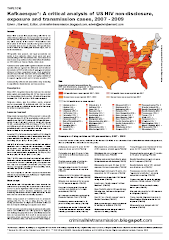
Regions/countries/states/jurisdictions covered

ACT (Aus) (3) Africa (37) Alberta (5) Angola (3) Arkansas (6) Asia (1) Australia (50) Austria (6) Azerbaijan (1) Belgium (1) Benin (2) Bermuda (3) Botswana (6) Brazil (1) British Columbia (7) Burkina Faso (1) Burundi (1) California (5) Cambodia (1) Cameroon (1) Canada (119) China (3) Colorado (2) Congo (1) Czech Republic (1) Delaware (1) Denmark (10) Egypt (4) Europe (3) Fiji (1) Finland (7) Florida (7) France (10) Georgia (US) (4) Germany (15) Ghana (1) Guinea (5) Guinea-Bissau (3) Guyana (1) Idaho (2) Illinois (5) India (3) Indiana (1) Iowa (7) Ireland (3) Italy (1) Jamaica (1) Kansas (3) Kentucky (2) Kenya (4) Kyrgyzstan (1) Laos (1) Latin America (1) Lesotho (1) Louisiana (2) MIssouri (4) Maine (2) Malawi (2) Mali (3) Malta (2) Manitoba (8) Maryland (3) Michigan (12) Minnesota (1) Mississippi (2) Montana (1) Mozambique (2) NSW (Aus) (3) Nebraska (3) Netherlands (3) New Hampshire (1) New Jersey (2) New Mexico (2) New South Wales (2) New York (11) New Zealand (17) Niger (3) Nigeria (3) North Carolina (3) Norway (10) Nova Scotia (1) Ohio (5) Oklahoma (2) Ontario (55) Oregon (1) Papua New Guinea (1) Pennsylvania (3) Qatar (1) Quebec (7) Queensland (Aus) (1) Rwanda (2) Saskatchewan (4) Scotland (5) Senegal (2) Sierra Leone (4) Singapore (6) South Africa (6) South Australia (14) South Carolina (4) South Dakota (2) South Korea (3) Spain (1) Swaziland (1) Sweden (20) Switzerland (10) Tanzania (3) Tennessee (4) Texas (7) Togo (5) UAE (1) UK (38) USA (149) Uganda (18) Ukbekistan (1) Ukraine (1) Vermont (1) Victoria (Aus) (14) Virginia (2) Washington (State) (2) Western Australia (5) Wisconsin (3) Zimbabwe (5)
Showing posts with label English law. Show all posts

Thursday, 4 August 2011

New report explores implications of tests to estimate timing of HIV infection for criminal prosecutions

From UNAIDS front page today.


Feature Story: New report explores implications of tests to estimate timing of HIV infection for criminal prosecutions

The UK charity National AIDS Trust (NAT) launched a report on 4 August 2011, entitled Estimating the likelihood of recent HIV infection – implications for criminal prosecution, which explores the validity and meaning of the Recent Infection Testing Algorithm HIV tests, or RITA tests, within the context of criminal prosecutions of HIV transmission.

The report, primarily aimed at professionals working in the criminal justice system and HIV specialists who may be called on as expert witnesses in criminal HIV transmission cases, calls for caution about the potential use of RITA results to determine timing of HIV infection.

About RITA and its potential use in criminal law context

RITA tests estimate the likelihood that a person found to be HIV-positive has been infected recently, usually within the previous six months. To date, the United Kingdom is the only country reported to routinely return RITA results to newly diagnosed patients.

As criminal law in the UK allows for the prosecution of people for transmitting HIV to another person, the report underlines the importance that RITA tests and their limitations be fully understood and not misused in criminal proceedings. The report underlines that while there have been no reported instances of use of RITA results in courts to attempt to prove timing of HIV transmission and consequently the identity of the person who transmitted HIV, this may happen in the near future.

No test can conclusively state when an individual acquired HIV

“No scientific test is able to conclusively state when an individual acquired HIV,” said Dr Cate Hankins, Chief Scientific Adviser to UNAIDS. “It is important to be cautious, follow clear protocol, and understand the limitations of RITA results when delivering them to patients or using them within a criminal law context.”

According to the report, proving HIV transmission in the context of criminal law cases requires the use of a combination of scientific evidence, medical records and testimony to establish the facts, timing and direction of HIV transmission.

“Scientific advances such as RITA testing are extremely welcome when estimating the recency of HIV infection on a population level, especially as late diagnosis is a huge issue,” said Ms Deborah Jack, Chief Executive of National AIDS Trust. “However, it is crucial that the limitations of RITA tests are fully understood and are not used out of context, for example during criminal proceedings.”

As RITA tests are designed to work at the population level (based on averages) rather than at the individual level, taking into account significant rates of false RITA test results in individuals, the report draws the conclusion that RITA tests are not reliable as evidence of recent HIV infection for individuals in the context of criminal proceedings.

Better understanding of HIV science in the context of criminal law

The NAT report comes weeks ahead of an expert meeting on the scientific, medical, legal and human rights aspects of the criminalization of HIV transmission and exposure organized by UNAIDS in Geneva from 31 August to 2 September 2011.

The meeting will bring together leading scientists and medical experts on HIV together with legal and human rights experts. Participants will examine relevant scientific and legal evidence and concepts relating, among others, to harm, risk, intent and proof, and their conceptualization/application in the context of criminalization of HIV exposure and transmission.

The meeting is part of UNAIDS’ work towards halving the number of countries with punitive laws and practices around HIV transmission, sex work, drug use, or homosexuality that block effective AIDS responses by 2015.

Wednesday, 19 May 2010

UK: HIV transmission case dropped against gay Doncaster man

A case against a gay man in Doncaster, in the north of England, who was accused of 'recklessly' transmitting HIV to two male complainants, has been dropped due to lack of evidence - apparently there had been no investigation of the previous sexual partners of the complainants who may have infected them.

I don't have a lot of details about the case, which I first heard about in March 2009, and I would like to protect the identity of the accused who has obviously been through hell for at least 15 months.

What I do know is this: two men had complained to the police that they believed that they had been infected by the accused during separate dates. (I don't know whether the complainants knew about each other before they went to the police, or after).

The Crown Prosecution Service (CPS) took their complainants seriously enough to prepare a 'reckless grievous bodily harm' prosecution under Section 20 of the Offences Against the Person Act 1861. To prove the element of causation of such 'grievious bodily harm' (i.e. HIV transmission), the prosecution must prove beyond reasonable doubt that only the accused could have infected the complainant(s).

I'm reliably informed by the man's defence lawyer, Khurram Arif, that the trial was meant to commence yesterday at Doncaster Crown Court. The defence had prepared a scientific report examining the likelihood that only the accused could have infected both complainants. The report highlighted that the complainants' previous sexual partners may also have infected them and that phylogenetic analysis could not rule this out.

Yesterday, the prosecution consulted with its own scientific expert and conceded that since both complainants had previous sexual partners and the police did not investigate nor eliminate them as possible sources of infection, there was no case to answer. This is, in fact, what the CPS guidelines state.

This is one of several cases defended by Mr Arif, where a lack of attention to the detail of what scientific evidence can – and cannot – prove has led to the CPS dropping cases very late in the day. As Mr Arif notes in his email to me: "The prosecution, when making such allegations, have to prove that they have closed all the doors to the possible sources of infection. Again, in this case, they did not."

The case highlights that in England & Wales, people accused of such 'crimes' should never plead guilty and should immediately contact an HIV organisation for advice in order to be put in touch with an expert defence lawywer, such as Mr Arif, who services legal aid clients through Christian Khan Solicitors and private clients through GSC Solicitors.

In addition, complainants need to be aware that making such accusations requires them to reveal their entire previous sexual history and to name all of their sexual partners since their last HIV-negative test. Only when they have all been contacted and tested for HIV can a prosecution actually reach trial.

Wednesday, 27 August 2008

UK: Developing guidance for HIV prosecutions: an example of harm reduction?

I'm including an excerpt here - the conclusion, actually - of an excellent article by Yusef Azad of the National AIDS Trust, in the July issue of the HIV/AIDS Policy and Law Review, published by the Canadian HIV/AIDS Legal Network, which describes the way the HIV sector managed to successfully intervene and manage the harm of criminal prosecutions in England & Wales for 'reckless' HIV transmission following an initial period of shock and panic.

By persuading the Crown Prosecution Service (CPS) to consult with the community on the production of a policy statement, as well as legal guidance for prosecutors and caseworkers in this area of law, he argues that this was pragmatic 'harm reduction'. Certainly, the process has resulted in a much higher burden of proof of transmission and guilt, and there have been no successful prosecutions since an African migrant living in Bournemouth pleaded guilty in January 2007.

Since then, three cases have been dismissed by a judge in pretrial hearings, including two gay cases (in Preston in April 2007 and Cardiff in May 2008) and one heterosexual case (in Manchester in October 2007). These prosecutions all failed because the men had the same informed solicitor who successfully argued that the CPS failed to provide uneqivocal proof that the defendant, and only the defendant, could have, in fact, infected the complainant(s). Although the CPS guidance was only published in March 2008, even the existence of draft versions was enough to persuade the judge in the earlier two cases.

The full article, 'Developing guidance for HIV prosecutions: an example of harm reduction?', can be found here.

Judging success depends a lot on one’s initial expectations. The CPS were not in a position to end prosecutions for reckless transmission or disagree with the interpretation of the OAPA 1861 as set out by the Court of Appeal.

What they could do — and what they did do — was consider in greater depth, and on the basis of detailed evidence, what is required to prove responsibility for infection, knowledge, recklessness and appropriate use of safeguards. An informed understanding of these elements has, even in the context of current criminal law, resulted in fewer and fairer prosecutions.

As the CPS says in its Policy Statement, “[O]btaining sufficient evidence to prove the intentional or reckless sexual transmission of infection will be difficult … accordingly it is unlikely that there will be many prosecutions.” Therefore, we should consider this to be a successful example of policy intervention as harm reduction.

It was not without its risks. Success was due to a number of factors, not least of which was a CPS that was already committed to taking seriously the concerns and experiences of affected communities when considering prosecutions in socially sensitive areas of law.

Some jurisdictions will not have such an enlightened prosecution service, and so the HIV sector will need to start further back in terms of engaging with the authorities. But it may be possible, even given the different legal contexts of different countries, to use the CPS Guidance to help bring about improvements in practice elsewhere.

The process was helped immensely by the commitment from an extraordinarily wide range of partners within the HIV sector, encompassing NGOs, academics, clinicians, virologists and, above all, people living with HIV.

Although harm may be reduced, it has not been ended — prosecutions for reckless HIV transmission remain and will continue. There is an urgent need to restate the ethical and policy case against such prosecutions and to consider freshly how and when we might engage with political decisionmakers on this issue.

Thursday, 20 March 2008

UK: Long-awaited guidelines for prosecuting criminal HIV transmission published

It has taken a year longer than anticipated, but the Crown Prosecution Service for England & Wales has finally published their policy on prosecuting criminal HIV transmission.

Thankfully, the document bears almost no relation to the draft version originally published in September 2006, following consultation with HIV experts and advocates.

Naturally, then, a (right wing) think-tank quoted in the (right wing) Daily Mail believes the CPS is being too lenient.

Dr David Green, of the Civitas think-tank, warned that the new rules would encourage risky behaviour among those with HIV.

"Someone who has sex in those circumstances is subjecting the other person to a potentially deadly illness and to suffering over a long period of time," he added.

"These rules are too lenient, and they will lead people to think they will not be prosecuted."

On the other hand, my story for aidsmap.com, includes criticism from academic and practicing lawyers who think the guidance is wishy-washy (HIV is never mentioned by name), vague (condoms are never mentioned by name) and fails to elucidate any further on the real question we all really, really want to know: under what circumstances is someone likely to be prosecuted for reckless HIV transmission?

The Daily Mail story, and my aidsmap story, are below (for balance).

Interestingly, the Daily Mail changed its story (the original is now gone forever, sadly) within hours of its publications from being quite surprisingly balanced, to one that seems to wish the CPS guidelines had changed the law and made all unprotected sex by HIV-positive people a criminal act. I should also warn that if you click on the link to the Daily Mail website, you will see one of the most offensive (and laughably reactionary) comments I've ever read.

HIV carriers could escape jail for passing on infections to others
By STEVE DOUGHTY
Last updated at 10:47am on 15th March 2008

Anyone deliberately infecting a sexual partner with HIV through a one-off encounter should not be charged with a crime, prosecutors ruled yesterday.

A single sexual incident will not count as evidence that they have deliberately tried to infect their partner with the virus, the Crown Prosecution Service said.

Cases of intentional or reckless transmission of sexual infection will only be brought against those who have infected a series of partners, or have infected one partner during a period of regular risky sex.

The rules were set out to clarify the law on reckless infection and to guide prosecutors on how to deal with a crime that can lead to a life sentence for those convicted.

They also said that those accused of reckless HIV infection are themselves "victims", because they suffer from a devastating condition.

Eleven defendants have been taken to court in England for transmission of the Aids virus.

Ten of the cases ended in a conviction. Defendants are charged with causing grievous bodily harm under the 1861 Offences Against the Person Act.

The first person to be jailed for infecting partners was given eight years in 2003 for infecting two women.

The sentence on Mohammed Dica, a married father-of-three, was cut to four and a half years after a re-trial found that he had deliberately infected only one woman.

The guidance, set out in a CPS policy document, said it would be necessary to prove a "sustained course of conduct" in order to find a defendant guilty - in other words a single sexual encounter does not amount to a crime.

"It will be highly unlikely that the prosecution will be able to demonstrate the required degree of recklessness in factual circumstances other than a sustained course of conduct during which the defendant ignores current scientific advice regarding the need for and the use of safeguards, thereby increasing the risk of infection to an unacceptable level," it said.

The document also said: "We appreciate too that those who are defendants in these cases may be seen as victims themselves, as they also have the infection that they are alleged to have transmitted to another person."

The statement set out a series of other reasons for prosecutors to be cautious before bringing charges.

Those newly told that they have an infection could be in a state of shock or might not have fully understood the diagnosis.

Prosecutors were told that someone who spread a sexual infection could also have a defence to a charge if the victim knew of their infected status.

The Director of Public Prosecutions, Sir Ken Macdonald, said: "Although these types of cases are rare, we are publishing this statement because we recognise the importance of consistent decision-making. We hope that it provides clarity."

Dr David Green, of the Civitas think-tank, warned that the new rules would encourage risky behaviour among those with HIV.

"Someone who has sex in those circumstances is subjecting the other person to a potentially deadly illness and to suffering over a long period of time," he added.

"These rules are too lenient, and they will lead people to think they will not be prosecuted."


Guidelines on prosecuting criminal HIV transmission for England & Wales finally published
Edwin J. Bernard, Wednesday, March 19, 2008

Last Friday, the Crown Prosecution Service (CPS) for England and Wales published its long-awaited policy statement and legal guidance for prosecutors for cases involving the intentional or reckless sexual transmission of serious infection.

Although the policy statement (which can be read here) and legal guidance (which can be read here) have generally been welcomed by the two major HIV policy organisations, because they clarify some of the uncertainties that have surrounded prosecutions for reckless HIV transmission, some legal experts say the documents are vague – for example, neither HIV nor condoms are specifically mentioned – and leave important questions unanswered.

The CPS issued the first draft of its policy statement in September 2006. Following widespread criticism of both the policy and CPS’ lack of understanding regarding issues of harm, transmission and the relationship between scientific evidence and causation, the policy went back to the drawing board, missing its original February 2007 deadline.

“We have consulted widely on the development of this policy statement and have benefited substantially from listening to the views and concerns of others,” the latest CPS policy statement notes. “We have greatly appreciated their input; however, the content of this policy statement is the responsibility of the CPS alone.”

“We are publishing this statement because we recognise the importance of, and the need for, consistent decision-making,” it continues. “We also recognise the potential tension between public health and criminal justice considerations. However, the criminal law exists in part to protect those who are the victims of unlawful conduct by others, including through the unlawful transmission of sexual infection.”

Of note, the guidance does not specifically mention HIV, although all thirteen prosecutions that have taken place in England & Wales since 2003 have been for reckless HIV transmission.

What is clarified?
Two national HIV policy organisations, Terrence Higgins Trust (THT) and the National AIDS Trust (NAT) have already published documents providing initial, brief explanations of how the CPS policy may apply to reckless and intentional HIV transmission. (The THT document can be downloaded here, and the NAT document can be downloaded here.)

In short, the policy clarifies that:

  • Prosecutions are likely to talk place within relationships, and not as a result of one-off sexual encounters. “It will be highly unlikely that the prosecution will be able to demonstrate the required degree of recklessness in factual circumstances other than a sustained course of conduct during which the defendant ignores current scientific advice regarding the need for and the use of safeguards,” it says in the legal guidance for prosecutors.
  • Scientific evidence must be used to show that the defendant infected the complainant, but that this evidence alone cannot conclusively prove the responsibility of the defendant for the complainant’s infection. “The prosecutor will need to be satisfied that the complainant did not receive the infection from a third party or that the complainant did not infect the defendant,” it says in the legal guidance for prosecutors. “This means that the prosecutor will need to know about any possibility which is compatible with the scientific evidence that the complainant was infected by a third party. This means enquiries will have to be made about the relevant sexual behaviour and relevant sexual history of the complainant.
  • The defendant has to have known they were infected when transmission took place to be convicted, although there are some other, very limited circumstances (termed ‘wilful blindness’ e.g. where someone has refused to test despite explicit clinical advice to do so because of symptoms) that could result in prosecution and conviction.
  • In order to be convicted, the CPS must prove that that the defendant understood that they were infectious to other people as well as understood how the particular infection is transmitted.
  • Informed consent of the complainant to the risk of HIV infection is a defence against a charge of reckless HIV transmission. Disclosure is one way of informing the complainant, but the CPS will allow for other possible ways in which the complainant might have been ‘informed’ of the defendant’s HIV status – whether from a third party, or a hospital visit, or from obvious symptoms of infection.
  • Consistent condom use is a defence against a charge of reckless HIV transmission. However, the word ‘safeguards’ is used, rather than condoms, because it appears that the CPS is trying to cover a wide range of differently transmissible conditions.
  • Transmission must take place for a recklessness charge. There is no crime of ‘attempted reckless transmission’. THT says it has “seen a number of cases where local CPS officers have tried to bring non-existent charges, mainly of ‘attempted recklessness’, which is clearly nonsense. All such cases have foundered upon reaching court. It is very helpful that the CPS have stated clearly that this is not appropriate. However, it is possible to bring a charge of attempted intentional transmission, and there is no defence of consent available in charges of intent. To date, nobody has been successfully prosecuted for intentional transmission.”

Positive responses
The CPS policy document says in its conclusion that, “cases involving the intentional or reckless sexual transmission of infection may raise very difficult and highly sensitive issues. We recognise that obtaining sufficient evidence to prove the intentional or reckless sexual transmission of infection will be difficult and that accordingly it is unlikely that there will be many prosecutions.”

Both THT and NAT – who along with the African HIV Policy Network, the British HIV Association, Positively Women and the (now defunct) UKC – were consulted on the policy document, cautiously welcome its publication.

"For years now we have seen huge variations in how justice has been administered in this area of the law. This has caused problems for police, courts and people caught up in prosecutions." said THT’s Head of Policy, Lisa Power. "The new CPS guidance will go a long way towards removing confusion, cutting the most inappropriate investigations short and clarifying where people with HIV and other STIs stand if they transmit them."

NAT’s Chief Executive, Deborah Jack, notes that, “this new guidance from the CPS is helpful in clarifying the prosecution process. The level of evidence needed to prove intentional or reckless sexual transmission of infection has rightly been set very high and it is unlikely that there will be many prosecutions. However whilst prosecutions continue the National AIDS Trust will work to ensure the best possible advice is available to prosecutors, lawyers, police, support organisations, healthcare workers and people living with HIV.”

‘Disappointing’ and vague
However, academic lawyer, James Chalmers, Senior Lecturer at the University of Edinburgh School of Law, says that, “it’s disappointing that the CPS are too coy to use the word ‘condom’ in the document... In terms of intelligible public guidance it leaves a lot to be desired.”

He also criticises the document for leaving the most important question unanswered. “Aside from acknowledging the importance of scientific evidence, I don't think the document takes us much further forward,” he tells aidsmap.com. When you strip out the guidance as to what the law is, you're not left with very much of a guide as to when the law will be used. The difficult question was always ‘when will the CPS consider it in the public interest to prosecute?’ and that question is left unanswered.”

And defence lawyer, Khurram Arif, of London solicitors, Hodge Jones & Allen, who has successully defended three clients against reckless HIV transmission charges, notes that, although “it is encouraging to see that the guidelines actually specify that scientific and medical evidence should be gathered as part of the investigation,
I think the CPS will always get stuck on the point of causation.”

In addition, both THT and NAT admit they are disappointed with various parts of the guidance. “The CPS are less clear about condom breakage during sex. THT believes it should be an adequate defence, if a condom is found to have broken during sex and HIV transmission occurs as a result, for the defendant to have promptly advised their partner to get PEP. We will be pressing for further clarity on this.”

Yusef Azad, NAT’s Director of Policy and Campaigns, also tells aidsmap that he is disappointed that “there is no definition of what constitutes reckless behaviour in relation to HIV transmission. In some ways this could be a good thing [because] at least we don't have an incorrect or unhelpful definition. But the CPS leave it instead to individual clinicians to advise in each case with a worrying possibility of inconsistent approaches and clinicians simply rehearsing their own ethical opinions rather than providing obejective expert advice.”

Finally, it should be noted that the CPS only become involved once a case has been investigated by the police, and that so far there is no guidance for the police in this area. Khurram Arif points out that in his experience, “I have not come across many [police] officers who are familiar with any CPS guidelines.”

However, both NAT and THT plan to work with the Association of Chief Police Officers to help create a more unified – and better-understood – criminal justice system policy now that the CPS guidance has been published.


Sunday, 24 February 2008

UK: New book explores criminal HIV transmission


An excellent new book on the criminalisation of HIV transmission by Dr Matthew Weait, senior lecturer in law and legal studies at Birkbeck College, University of London, has recently been published.

The book, Intimacy and Responsibility: The Criminalisation of HIV Transmission,was welcomed by HIV clinicians and advocates at its February 12th launch at Waterstone's bookshop at the Wellcome Institute in London.

My story on the book and its launch from aidsmap.com follows comments from Dr Catherine Dodds, a research fellow at Sigma research, University of Portsmouth, who has studied the impact of criminal prosecutions in affected communities, I'm including them here.

In her brief talk, Dr Dodds provided an incisive overview of not just the book, but also Dr Weait's immeasurable contributions to the debate on the criminalisation of HIV transmission over the past decade:

When criminal prosecutions became a reality in England and Wales Matthew encouraged the development of a network of activists,academics, HIV service providers, doctors, politicians, lawyers, civil servants, researchers and journalists and anyone who was interested, frankly... who might be able to collate their knowledge and their talents and their energy to act in whatever way was possible to challenge, clarify and respond to the developments.

As a part of developing this network, he raised the funds from the Economic and Social Research Council to host a series of seminars at Keele University in Stoke and at Birkbeck College here in London. People attending those seminars exchanged knowledge and experiences. They offered a space where people were encouraged to think out loud.

What abides with me from attending those seminars is the way that those attending simply shared their humanity - in all of its strength and frailty and warmth - and that had a great amount to do with the kind of environment that Matthew created. It was an opportunity for learning and planning and thinking and sharing unlike any I have ever known.

Whether it is setting up message-boards so that people can share information and thoughts instantly - or making the time to speak with (and listen to) groups of people with diagnosed HIV, or with groups of medical or legal professionals - what Matthew has always wanted to do is to get people talking about criminal prosecutions for the transmission of HIV. Because he learned, and he taught me to see, that once people chew it over and consider it for a while - the obviousness of applying the criminal law to such situations, tends to grow a little less obvious.

In writing Intimacy and Responsibility, Matthew has effectively thrown that discussion open to a much broader audience. I can tell you from personal experience, that if you want to get noticed - sit on the tube and read this book. Never have I been so aware of so many people being so aware of what it is I am reading. Perhaps they are intrigued by its cover, and on a number of occasions, I have noticed continued glances and thoughtful expressions that indicates they are thinking and wondering about what such a book on such a topic might hold between its covers.

What Matthew does in Intimacy and Responsibility is to pull together and present information from a huge array of different academic disciplines because these are all required in order to begin untangling the complexities of such prosecutions. While a different writer may have tried to dissect this application of the law at the expense of considering what it is to be one of the people involved in such cases, it is from the standpoint of those very people - both complainant and defendant - that Matthew's main argument begins.

He effectively opens a window into the lived experience of the trial, by closely analysing the transcript of an early prosecution for reckless sexual transmission of HIV. It is here that he begins to forensically dig into the reality of a criminal judicial process that fails to make sense of what it is to be human. He muses that in the criminal justice system's pursuit of ensuring that blame is laid - the system has perhaps lost sight of what it is to make human society better - by losing sight of (or perhaps not even considering) what is required to reduce HIV transmission in the midst of this epidemic.

This isn't an easy discussion to initiate, by any means. Matthew is quite frank in the pages of his book that he knows that the odds stack up against his position, and that many people will have a gut instinct about the morality and the criminality of such situations. But despite the uncomfortableness that it might cause, he argues that slowing the HIV epidemic requires us to prioritise the public good. This in no way diminishes Matthew's recognition of the pain, the hurt, the fear and the distrust that is likely to be a part of the experience of both complainants
and defendants involved in such cases.

In extending this debate, Matthew's book asks us to consider what our own priorities are. It asks us to engage actively as citizens who think about how our criminal justice system works, and who ask if it should be the place to resolve all of the issues in our complicated, intimate, messy, sloppy, passionate, tangled, painful human lives. As he says, and I paraphrase here a bit: 'The fact that we inhabit a society... in which an ever more extensive and punitive system of criminal law is understood as the mechanism that can provide the solution, does not mean that we should allow our imaginations to rot'.

The extent to which Matthew has extended his leadership, and energy and intellectual capacity and humanity to challenging and responding to this application of the criminal law cannot be overstated. This book incorporates and reflects that wider project and it will prove to be a tremendous resource for many years to come.


Decriminalise reckless HIV transmission, argues HIV legal expert
Edwin J. Bernard, Friday, February 22, 2008
www.aidsmap.com

A new book on the criminalisation of HIV transmission by Dr Matthew Weait, senior lecturer in law and legal studies at Birkbeck College, University of London, argues that current English law has “the potential to do more harm than good” if “its primary purpose is to prevent onward transmission.”

The book, Intimacy and Responsibility: The criminalisation of HIV transmission, was welcomed by HIV clinicians and advocates at last week’s central London launch, which highlighted the impact of criminal prosecutions on the ability of doctors and researchers to work effectively.

Dr Jane Anderson, consultant physician at Homerton Hospital, and lead author of the British HIV Association’s (BHIVA) briefing paper on HIV transmission, the law and the work of the clinical team said that the spectre of criminal prosecutions had affected the way the NHS provided services to HIV-positive patients “in terms of care, advice and confidentiality” and had created “a great deal of anxiety and concern.”

She said that many healthcare staff working with HIV-positive patients felt that “the law was looking over people’s shoulders” and that it had significantly affected the doctor-patient relationship since doctors could potentially be asked to testify as expert witnesses for either prosecution or defence.

Dr Anderson also highlighted the impact recent prosecutions have had on research. “The rigour of our research has been coloured by prosecutions,” she said. “We have had to reconsider whether we ask certain questions whilst researching sexual behaviour in the current climate.”

Also speaking at the launch was Dr Catherine Dodds, a research fellow at Sigma research, University of Portsmouth, who has studied the impact of criminal prosecutions in affected communities. She said that in his book, Dr Weait “asks us to engage actively as citizens who think about how our criminal justice system works, and who ask if it should be the place to resolve all of the issues in our complicated, intimate, messy, sloppy, passionate, tangled, painful human lives.”

Dr Weait’s book critically examines and deconstructs the English criminal law’s approach to criminal prosecutions for reckless HIV transmission. In one of the book’s most revelatory chapters, he uses transcripts from the trial of Feston Konzani to show how the English criminal law reduces complex human thoughts, feelings and interactions to “over-simplified accounts of responsibility and irresponsibility, of guilt and innocence.”

The book also examines concepts of harm, risk, recklessness, consent, and responsibility and strongly suggests that the criminal law is ill-equipped to understand these concepts pragmatically. If the primary purpose of the criminal law is to prevent onward transmission, he argues, then it “has the potential to do more harm than good.”

Edwin Cameron, Justice of the South African Supreme Court of Appeal, and one of the world’s leading figures on HIV and AIDS and the law, writes in the book’s preface that “Weait’s premise is that criminal law and criminal justice should be used for the public good rather than as means of securing reparation for particular individuals.”

“If his argument is correct,” he continues, “then we must question criminal laws that may discourage people from HIV testing, or from being candid about their sexual history when confiding in health care workers. We must question whether it is good to impose criminal liability when media coverage is often sensational and inaccurate – with the effect of demonising all with HIV, and marking them as potential aggressors. We must question whether such laws acknowledge the difficulties that some living with HIV – particularly women, who may risk violence and expulsion from the home – have in negotiating safer sex.”

“And we must question the public ‘good’ that comes from ascribing sole responsibility for transmission (as such laws do) to the person with HIV, thus attenuating the partner’s responsibility for avoiding transmission – especially in an epidemic when all should be aware of the risks of unprotected sex,” writes Mr Justice Cameron.

The best way to promote “a more authentic and socially beneficial approach to the meaning, practice and expression of responsibility than that which the law constructs and reinforces,” concludes Dr Weait “is to decriminalise the reckless transmission of HIV.”

Reference
Weait M. Intimacy and Responsibility: The criminalisation of HIV transmission ISBN 978-1-904385-70-7; Routledge-Cavendish, 2007.

Thursday, 6 December 2007

UK: Court of Appeal rules non-HIV disclosure amounts to 'provocation'

After posting the original story from the Halifax Courier yesterday, I wrote an article for aidsmap that incorporates comments from two legal experts. I have decided to make this the main article; the original story appears further below.

English Appeal Court rules that HIV non-disclosure may be 'provocation'

from www.aidsmap.com. by Edwin J. Bernard, Wednesday, December 05, 2007

Judges at London’s Court of Appeal have today ruled that non-disclosure of an individual’s HIV-positive status before having sex may be considered a relevant factor in sentencing. The ruling came during the appeal of a gay man who had been sentenced to life imprisonment for severely attacking an HIV-positive man for not disclosing his HIV status until after they had had casual, consensual sex.

According to a report in today’s Halifax Evening Courier, 26 year-old David Summers had previously admitted causing grievous bodily harm with intent at Bolton Crown Court and was sentenced to life imprisonment in July.

The men had met on Manchester’s gay scene and gone back to the unnamed HIV-positive man’s flat for sex. When, following sex, the man disclosed that he was HIV-positive – the report does not mention the important fact of whether or not condoms were used – Summers attacked the HIV-positive man, “leaving his victim unconscious in his blood-spattered flat before taking property and driving off in his car.”

The HIV-positive man, says the report, “suffered bleeding to his brain as a result of the beating and has been left with permanent disabilities.”

At today’s appeal, Summers’ barrister, James Ward, claimed that the HIV-positive man had "deceitfully exposed him to risk of infection with HIV... The victim knowingly concealed from him the fact that he had HIV and put this appellant at a direct risk from that disease. It was the deception that caused the appellant to react the way that he did. He said if he had known he was HIV-positive he wouldn't have had any sex with him at all."

The report says that Mr Ward argued that Summers, therefore, acted under extreme provocation.

Lord Justice Richards, sitting with Mr Justice Openshaw and Judge Martin Stephens QC, allowed the appeal and quashed Summers’ life sentence. Instead, they imposed an indeterminate sentence of imprisonment for public protection.

James Chalmers, Senior Lecturer at the University of Edinburgh School of Law, notes that Summers' appeal "seems to have succeeded only in a very technical sense. An indeterminate sentence for public protection is barely any different from a life sentence – the main difference is that it's available for a broader range of offences. Unless the court set a different minimum term for his sentence (which is not clear from that report), this is unlikely to make any difference to how long he spends in jail. Although his counsel argued that there was 'serious provocation', it's not clear from the report that the judges actually bought that argument."

During their decision, Lord Justice Richards noted, "The victim had put [Summers] at a direct and very serious risk of contracting a terminal illness. When he realised he had slept with a man who was HIV-positive he must have been shocked. But I cannot believe that any court would be properly discharging its public duty if it realistically could licence or permit an attack of this brutality.”

Nevertheless, he concluded: “We don't consider this offence so serious to warrant a life sentence."

Although this ruling was only about sentencing the decision sets a "worrying precedent", notes Daniel Monk, Senior Lecturer, School of Law, Birkbeck College, University of London, "Provocation can only be used as a defence to murder, where it can reduce the crime to manslaughter so in this case if the victim had died as a result of the attack the approach of the court suggests that Summers might have been able to argue that it was not murder.
In other words a ‘reasonable’ person might respond in that way."

"The case also supports the worrying trend of the courts seeing non-disclosure as an unexplainable, and always totally inexcusable act," he concludes.

-------------------------------------------------------------------------------------------------------------

Rage of gay attacker who beat up one night stand over HIV revelation


A GAY man savagely attacked a partner who he thought had given him HIV after a one-night stand, a court was told.

David Summers, 26, of Malham Road, Rastrick, had sex with his victim after meeting him during a night at Manchester's gay scene last year.

Afterwards, his pick-up told him he was HIV positive.

Summers unleashed a savage beating, leaving his victim unconscious in his blood-spattered flat before taking property and driving off in his car.

The victim suffered bleeding to his brain as a result of the beating and has been left with permanent disabilities.

Summers, who had minor previous convictions for violence, was jailed for life, with a six-year minimum term, at Bolton Crown Court in July after admitting causing grievous bodily harm with intent.

But now judges at London's Criminal Appeal Court have overturned the life sentence after hearing arguments from Summers' barrister, James Ward, that his victim had "deceitfully exposed him to risk of infection with HIV."

Summers will, however, remain in jail.

Mr Ward told the court: "The victim knowingly concealed from him the fact that he had HIV and put this appellant at a direct risk from that disease.

"It was the deception that caused the appellant to react the way that he did.

"He said if he had known he was HIV positive he wouldn't have had any sex with him at all."

Mr Ward also argued that Summers only acted as he did under extreme provocation.

Lord Justice Richards, sitting with Mr Justice Openshaw and Judge Martin Stephens QC, allowed Summers' appeal and, after quashing his life sentence, instead imposed an indeterminate sentence of imprisonment for public protection. The judge said: "The victim had put him at a direct and very serious risk of contracting a terminal illness.

"When he realised he had slept with a man who was HIV positive he must have been shocked.

"But I cannot believe that any court would be properly discharging its public duty if it realistically could licence or permit an attack of this brutality."

Although the Crown Court judge had been right to condemn Summers as dangerous, Lord Justice Richards concluded:

"We don't consider this offence so serious to warrant a life sentence."

Wednesday, 7 November 2007

Editorial: The Transmission of HIV and the Criminal Law

THE TRANSMISSION OF HIV AND THE CRIMINAL LAW
Editorial by Matthew Groves in Criminal Law Journal (Australia)
(2007) 31 Crim LJ 137

There has recently been considerable publicity about the criminal law and the transmission of human immunodeficiency virus (HIV). In South Australia, the two issues came together in an appeal concerning so-called “AIDS-denialists”. In Victoria, the possible use of the criminal law in a case involving criminal conduct and the transmission of HIV generated widespread publicity about the alleged failure of administrative arrangements to manage the behaviour of people who are HIV positive and are suspected of engaging in inappropriate behaviour. The common theme in each instance was the continued difficulty that the law has in grappling with HIV-related issues. Another common point arising from each controversy is that legal responses to HIV, at least in the criminal arena, remain vexed about issues of knowledge and consent. Even the most recent of cases shows that these age-old issues are not capable of easy resolution of exact legal principle.

THE GHOSTS OF CLARENCE AND PAPADIMITROPOULOS
Criminal cases about the transmission of HIV almost always involve sexual conduct. In most of these cases, a key dispute of fact is usually whether the alleged victims knew the accused was HIV positive. Many also raise the question of whether the accused knew if he (as it usually is a male) was HIV positive. The spectre of the Clarence1 case has long hung over such cases. That notorious case involved a husband who knew that he was suffering from gonorrhoea, but nonetheless had sex with his unsuspecting wife and passed the disease to her. Clarence was charged with inflicting grievous bodily harm and assault occasioning actual bodily harm.2 His appeal against conviction succeeded in part because the consent of Mrs Clarence to have sex with her husband was held not to be vitiated by her husband’s failure to disclose his illness. The case became more controversial over time by reason of its reliance on the artificial proposition that a married woman was, by virtue of her status as a wife, deemed to have consented to have sex with her husband. But considerable difficulty also flowed from
the suggestion of Stephen J that fraud would not vitiate consent unless it went to either the nature of the act or the identity of the other person. The main problem with that approach was that it greatly narrowed the circumstances in which fraud would stymie consent.

The High Court essentially adopted a similar view Papadimitropoulos v The Queen3 when it held that an accused who had taken a woman through a sham marriage was not guilty of rape when the two subsequently had sex (on what the woman mistakenly thought was their wedding night) because the woman knew of, and consented to, both the nature of the act and the identity of the accused. The court explained that “once the consent is comprehending and actual the inducing causes cannot destroy its reality and leave the man guilty of rape”.4
The reasoning adopted by Stephen J in Clarence was not decisively accepted in England until
over a century later,5 but the decision had been steadily narrowed in the meantime.

Papadimitropoulos was similarly chipped away by the introduction of many lesser sexual offences under which similar fraud could have been prosecuted.6 The reasoning in these decisions has assumed renewed importance with the rise of HIV-related prosecutions because most of these cases involve allegations of fraud that are not unlike those in Clarence and Papadimitropoulos. The experience of other jurisdictions suggests that further difficulties arise from the circumstances of many HIV-related cases.

THE NEW ZEALAND EXPERIENCE
The leading New Zealand case of R v Mwai7 clearly invoked the spectre of Clarence. The defendant who was HIV positive had unprotected sex with five women without disclosing his HIV status. Two of the women became HIV positive. On appeal it was argued that the defendant could not control the virus and, therefore, had not failed to discharge any legal duty to which he might be subject. On appeal, attention focused on the likelihood that one of the defendant’s partners would contract HIV.

More particularly, it was argued that the many biological factors that could influence whether any particular sexual encounter might lead to the transmission of HIV were such that the required causal connection between the sexual act and HIV infection could not be established to the standard required in criminal cases. This argument was essentially accepted in a string of Victorian cases,8 but was flatly rejected by the Court of Appeal of New Zealand.9

Surprisingly little attention was given to the failure of the defendant to disclose his HIV status but the Court of Appeal did accept that disclosure could have made an important difference. The issue arose in the context of the extent of the defendant’s possible duty, as a person who had a dangerous thing under his control or charge,10 and the nature of the duty to take precautions against and to use reasonable care to avoid resulting dangers. The court accepted that:

It is certainly arguable that there would be no duty if the partner consented to run the risk. Seen in thisway, the duty to use a condom would arise only if there were a failure to disclose.11

Although the Court of Appeal accepted that this point was made irrelevant by the defendant’s failure to disclose his HIV status, it was clearly prepared to entertain the possibility that an informed partner might be able to consent to unprotected sex with a HIV positive person. The logically related proposition that a duty to use condoms might only fall upon a HIV positive person if he or she disclosed his HIV status assumes that the person knows of his or her own HIV status. A key problem with that approach is that proof on the part of a defendant of his or her HIV status might be difficult.

Another problem is that, if a duty to engage in protected sex might only arise if there is knowledge and disclosure of HIV status, no such duty arises in other instances. That possibility does not sit well with the great emphasis that health authorities have tried to place on the need to engage in safe sex practices in all instances.

THE CANADIAN EXPERIENCE
In the leading Canadian case of R v Cuerrier,12 the accused, who was HIV positive, was charged with assault after he had unprotected sex with two women without disclosing his HIV status to either of them. The case turned on s 265(3)(c) of the Canadian Criminal Code, which provides that consent to the use of force is not obtained if the victim submits or does not resist by reason of fraud. All members of the Supreme Court held that Cuerrier’s failure to disclose his HIV status could constitute fraud within the meaning of this provision and could, therefore, vitiate consent.13 The case did not provide an entirely satisfactory precedent because the various judges issued three different theories on the requirements necessary to prove fraud in this sense.

Cory, Major, Bastarache and Binnie JJ held that a complainant’s consent to sexual activity could be vitiated by fraud if an accused failed to disclose his or her HIV status dishonestly, and this dishonesty had the effect of exposing the complainant to a significant risk of bodily harm. This latter requirement was clearly met by the risk of engaging in unprotected sex, while the proper use of condoms could reduce harm sufficiently so that there was no “significant risk of bodily harm”.

According to this view, unprotected sex could give rise to criminal liability, but protected sex
probably would not. The remaining judges added a requirement that the prosecution establish that an accused either knew, or ought to have known, that his or her fraud actually induced the complainant’s consent to have unprotected sex. McLachlin and Gonthier JJ essentially argued that Clarence should be cast aside, so that deception or dishonesty about one’s HIV status or another sexually transmitted infection could constitute fraud, which would vitiate any apparent consent to sex. L’Heureux-Dubé J cast a wider net, holding that fraud occurred when the dishonest act induced the other person to consent to the conduct, irrespective of the danger or risk of the act. On this view, any form of fraud would effectively vitiate consent.

THE ENGLISH EXPERIENCE
R v Dica14 was another case involving a HIV positive man who had unprotected sex with several women without informing them of his HIV status. He was charged with the same offence used in Clarence and was convicted after the trial judge ruled that it was open to the jury to find the defendant guilty, partly on the basis that the knowledge or ignorance of the women of his health status was irrelevant because they did not have the capacity to consent to the serious harm of HIV infection.

After this ruling, the defendant chose not to give evidence. On appeal, the defendant argued that, had the trial ruling not been made, he would have testified that the women knew of his condition but consented to have unprotected sex with him.

The Court of Appeal overruled Clarence, holding that a victim’s consent to sex was not
necessarily consent to the possible consequential risk of contracting HIV, but it did concede that consent could provide a defence to the charge of inflicting grievous bodily harm. The issue of consent was, therefore, wrongly withdrawn from the jury and Dica’s conviction was overturned. This approach suggests that a person who is aware that he or she is HIV positive and recklessly transmits HIV to another person may be guilty of an offence, but the issue will depend largely on the facts of each case.

The Court of Appeal accepted that consent could not extend to conduct which amounted to a
deliberate intention to transmit HIV,15 though it is clear that proof of intentional conduct would also depend greatly on the facts of each case.16

The Court of Appeal also engaged in a curious attempt to explain the possible consequence of its acceptance of the role of consent. It reasoned that the criminalisation of risk-taking was fraught with difficulty and that “interference of this kind with personal autonomy, and its level and extent, may only be made by Parliament”.17 The Court of Appeal also observed:
The problems of criminalising the consensual taking of risks like these include the sheer
impracticability of enforcement and the haphazard nature of its impact. The process would undermine the general understanding of the community that sexual relationships are pre-eminently private and essentially personal to the individuals involved in them. And if adults were to be liable to prosecution for the consequences of taking known risks with their health, it would seem odd that this should be confined to risks taken in the context of sexual intercourse, while they are nevertheless permitted to take the risks inherent in so many other aspects of everyday life.18
While the reasoning of the Court of Appeal provoked strong opinions on the extent to which
people can and should be able to give consent to the risk of HIV infection,19 there is a clear consensus that this issue does not lend itself to a simple solution. Most of the cases to date have involved an accused who knew of his or her HIV status and nonetheless engaged in unprotected sex. All of these cases assumed that a HIV person knew the risks associated with unprotected sex but the Supreme Court of South Australia was recently faced with a novel situation in which that key assumption was challenged.

AIDS DENIALISM IN THE SUPREME COURT OF SOUTH AUSTRALIA
In R v Parenzee,20 the defendant appealed three convictions of conduct endangering life. The
defendant was HIV positive and had unprotected sex with three women. The prosecution focused on the defendant’s knowledge of his condition and led evidence that he knew of his HIV status and had been advised of the risks associated with unprotected sex. That evidence provided a strong foundation for a prosecution argument that the defendant knew his actions were likely to endanger the lives of his partners and that he was recklessly indifferent to this danger. The defendant’s appeal sought to completely undercut the basis of the prosecution by essentially denying the existence and effect of HIV. It was argued that existence of HIV had not been clearly proven, that the tests used to diagnose HIV infection were unreliable, and that there was no clear evidence that HIV killed CD4 cells (these are key cells associated with a healthy immune system). It was also argued that, even if HIV existed, there was no clear proof that it was sexually transmitted. An alternative to this latter argument was that, even if did HIV exist, the risk of transmission by sexual activity was extremely low. Although
these arguments were ostensibly raised as potentially relevant to sentencing, the applicant also sought an extension of time for permission to appeal. That permission was refused and the detailed consideration undertaken by Sulan J would no doubt greatly influence any future attempt to deny the existence of HIV or its connection to acquired immune deficiency syndrome (AIDS).

After a careful review of the evidence provided by expert witnesses called by the prosecution and defence, Sulan J rejected the “AIDS denialism” theory offered by the defence because the two witnesses who sought to give evidence in support of the theory were not qualified to give evidence in the fields of their claimed expertise. He also held that, even if the witnesses were regarded as suitably qualified to be experts, the basic assumptions that they sought to challenge were supported by such an overwhelming body of scientific evidence that no jury would fail to conclude that the HIV virus exists, that it is the cause of AIDS and that HIV was sexually transmissible.21

The conclusions of Sulan J fill in an important gap in the wider puzzle of HIV and criminal
liability. Relatively little attention has been paid to the issue of the knowledge of a HIV positive person about the likelihood of transmission or infection. It has usually been assumed that an accused must surely have known the key points found by Sulan J but, in the absence of clear findings to this effect, it would be possible for an accused person to deny the existence of either HIV or AIDS, or the possibility of the sexual transmission of HIV. This possibility would have pre-empted the arguments about knowledge or consent because it simply would have denied the existence of danger about HIV or AIDS. Parenzee essentially forced prosecutors to go “back to basics” and seek judicial confirmation of some fundamental points about HIV. If this ruling is adopted in other jurisdictions, and there seems little reason to doubt the very careful reasoning of Sulan J, it is now virtually impossible for an accused to deny the fundamental parameters of the medical evidence about HIV and AIDS. It is to be
hoped that these propositions will not be re-argued. While a few more “monkey trials” might provide a novel spectacle and grist for the academic mill, they would simply muddy an already obscure area.

Despite the detailed decision delivered by Sulan J in Parenzee, it was not entirely clear to whom the issues decided were relevant, ie did they affect the state of mind of the defendant or his partners? The points decided about the existence and potential danger of HIV and AIDS are clearly relevant to the offences of both endangerment and the actual infliction of harm. They are also relevant to the mental element of both defendants in HIV transmission cases and the partners of any such people who might be argued to have consented to the risk of unprotected sex. For the latter group, it seems increasingly difficult to maintain the possibility foreshadowed in Dica, namely that people may essentially provide informed consent to even the most serious possible harm because the common law has always shied away from the over regulation of personal sexual behaviour. One might suggest that the modern evolution of the laws of sexual offences, especially the reform of rape laws, represents a long journey away from that timidity.

Matthew Groves is a senior lecturer in law at Monash University, Melbourne.

References
1 R v Clarence (1889) LR 22 QBD 23.
2 Respectively under ss 20 and 47 of the Offences Against the Person Act 1861 (UK) (24 & 25 Vict c 100).
3 Papadimitropoulos v The Queen (1957) 98 CLR 249.
4 Papadimitropoulos v The Queen (1957) 98 CLR 249 at 261.
5 R v Linekar [1995] QB 250.
6 See, eg Crimes Act 1900 (NSW), s 61R(2)(a)(ii); Crimes Act 1958 (Vic), s 57; Criminal Code (WA), s 192.
7 R v Mwai [1995] 3 NZLR 149.
8 See the cases noted in B; D (1997) 21 CrimLJ 40; Mutemeri v Cheesman [1998] 4 VR 484; (1998) 100 A Crim R 397.
9 R v Mwai [1995] 3 NZLR 149 at 155-156.
10 Under s 156 of the Crimes Act 1961 (NZ).
11 R v Mwai [1995] 3 NZLR 149 at 156.
12 R v Cuerrier [1998] 2 SCR 371.
13 One assumption of the case was that this provision extended to sex because of the force involved, or rather that sex would normally constitute an assault in the absence of consent.
14 R v Dica [2004] QB 1257.
15 R v Dica [2004] QB 1257 at 1273. It is also worth noting that the Home Office had previously recommended that criminal liability should only attach to the intentional transmission of HIV: United Kingdom Home Office, Violence: Reforming the Offences Against the Person Act 1861 (1998).
16 The same applies to an offence under s 19A of the Crimes Act 1958 (Vic) which creates an offence of intentionally infecting another person with a serious disease.
17 R v Dica [2004] QB 1257 at 1271.
18 R v Dica [2004] QB 1257 at 1271.
19 See, eg Ryan S, “Reckless Transmission of HIV: Knowledge and Culpability” [2006] Criminal Law Review 981; Weait M,
“Criminal Law and the Sexual Transmission of HIV: R v Dica” (2005) 68 Modern Law Review 121.
20 R v Parenzee [2007] SASC 143.
21 Sulan J also rejected related arguments that the tests for the detection of HIV were not scientifically reliable or credible
.

Tuesday, 19 September 2006

HIV crimes - lawyers' views

HIV crimes - lawyers' views

BBC News - September 19, 2006
Michelle Roberts, Health reporter


Two lawyers who have defended men accused of recklessly transmitting HIV share their views and experience regarding HIV prosecutions.

Kharrim Arif, a solicitor in London, was the defending lawyer for the first British man acquitted of 'recklessly' transmitting HIV to his gay lover.

Donald Findlay QC defended a Scottish man accused of knowingly infecting his girlfriend with HIV.

Expressed consent

Mr Arif said: "Someone who is HIV positive must inform their partner of their status before having intercourse. There must be expressed consent.

"Most of the cases that I have dealt with have involved homosexual men and there is always a question of implied informed consent and whether that would amount to a defence.

"For example, the gay scene is known as promiscuous and there is a risk of transmission of HIV from one party to another. The fact that the parties do not discuss this before intercourse and do not use protection, does that mean that they consent to the risk?

"That is the trouble that we have had in these cases. But the law is very clear that implied informed consent is not a defence. You have to have expressed consent, be it in writing or verbally.

"The charges are always for 'reckless' transmission - the person thinks of the risk but none the less carries on.

"The only defence is if you obtain expressed consent.

"And even that may not be enough in the court's view because they might judge that a person could never, in their right mind, have consented to such a risk.

Scientific 'proof'

"From a defence perspective, we go hard and fast at the causation side of things. It is always the scientific evidence that will make or break the case.

"There have been discussions whether there should be a separate offence for passing HIV on. The current law is probably sufficient, classing it as a GBH.

"But whether you should prosecute is questionable. My client would have contracted HIV from someone and he did not consent to it. But he hasn't complained. You could go back and keep prosecuting. It's an endless cycle.

"I don't know whether because of this acquittal case the prosecution will stop and think whether they can prove causation."

Scottish law

Donald Findlay said: "In Scotland, the charge is culpable and reckless conduct.

"If you know that you have HIV, you know that it can be transmitted through sexual intercourse and that it is obviously damaging to the health of the person who catches it and you have unprotected sex, that alone is reckless, which would make it culpable.

"Whether the partner in the sexual act knows and consents is a moot point because you cannot, in Scottish law, consent to an assault.

"Intent can be inferred from the nature of the conduct.

"The law would assume, unless you could somehow prove to the contrary, that you knew it was dangerous to have sexual intercourse because you might transmit the infection.

"If you were HIV positive and told your partner and used a condom but it split, that I do not think would amount to a crime.

"If you did not tell your partner but used a condom - that is a grey area.

"If you have not disclosed it you have a potential problem because you are depriving the other person of assessing the risks that they are taking.

"If there are two people and they know that one of them has HIV and they go out and get blind stinking drunk and end up in bed and the infection is passed, whether anybody would be prosecuted in that situation is somewhat dubious.

"The risk they could be prosecuted is certainly there.

"If you are HIV positive, have told your partner and they consent to unprotected sex, I still think you have committed a crime under Scottish law. I could not rule out the possibility of a prosecution.

"In Scotland, if you have people into sadomasochism, even if though the person consents to being hit, it would still be an assault by the person doing it."

Archive

Is this blog useful? Let me know

If you find this blog useful, please let me know, and if you find it really useful, please also consider making a small donation.

Thank you.

(Clicking on the Donate button above will take you to Paypal.)