Regions/countries/states/jurisdictions covered

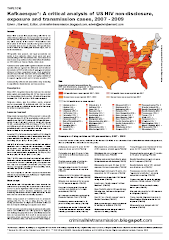
ACT (Aus) (3) Africa (37) Alberta (5) Angola (3) Arkansas (6) Asia (1) Australia (50) Austria (6) Azerbaijan (1) Belgium (1) Benin (2) Bermuda (3) Botswana (6) Brazil (1) British Columbia (7) Burkina Faso (1) Burundi (1) California (5) Cambodia (1) Cameroon (1) Canada (119) China (3) Colorado (2) Congo (1) Czech Republic (1) Delaware (1) Denmark (10) Egypt (4) Europe (3) Fiji (1) Finland (7) Florida (7) France (10) Georgia (US) (4) Germany (15) Ghana (1) Guinea (5) Guinea-Bissau (3) Guyana (1) Idaho (2) Illinois (5) India (3) Indiana (1) Iowa (7) Ireland (3) Italy (1) Jamaica (1) Kansas (3) Kentucky (2) Kenya (4) Kyrgyzstan (1) Laos (1) Latin America (1) Lesotho (1) Louisiana (2) MIssouri (4) Maine (2) Malawi (2) Mali (3) Malta (2) Manitoba (8) Maryland (3) Michigan (12) Minnesota (1) Mississippi (2) Montana (1) Mozambique (2) NSW (Aus) (3) Nebraska (3) Netherlands (3) New Hampshire (1) New Jersey (2) New Mexico (2) New South Wales (2) New York (11) New Zealand (17) Niger (3) Nigeria (3) North Carolina (3) Norway (10) Nova Scotia (1) Ohio (5) Oklahoma (2) Ontario (55) Oregon (1) Papua New Guinea (1) Pennsylvania (3) Qatar (1) Quebec (7) Queensland (Aus) (1) Rwanda (2) Saskatchewan (4) Scotland (5) Senegal (2) Sierra Leone (4) Singapore (6) South Africa (6) South Australia (14) South Carolina (4) South Dakota (2) South Korea (3) Spain (1) Swaziland (1) Sweden (20) Switzerland (10) Tanzania (3) Tennessee (4) Texas (7) Togo (5) UAE (1) UK (38) USA (149) Uganda (18) Ukbekistan (1) Ukraine (1) Vermont (1) Victoria (Aus) (14) Virginia (2) Washington (State) (2) Western Australia (5) Wisconsin (3) Zimbabwe (5)
Showing posts sorted by date for query carl leone. Sort by relevance Show all posts

Wednesday, 3 June 2009

Canada: Fourth woman sues Carl Leone, the police and the health department for not protecting her from HIV

Carl Leone, the Canadian who was sentenced to 18 years in prison in April 2008 after being found guilty of infecting five women with HIV and exposing ten further women, now has four of the HIV-positive complainants suing him – as well as the Windsor Police Services Board and the Windsor-Essex County Health Unit – in civil proceedings.

I reported a lawsuit from two of the women in January. Now, according to an article in the Windsor Star, a woman in her late twenties, known as A.P. has also launched a CAD$10-million lawsuit alongside an earlier, unreported lawsuit "launched on behalf of a woman known as 'Jane Roe' who reportedly met Leone when she was a 16-year-old virgin."

All four women are "represented by high profile local law firm Sutts, Strosberg LLP."

The paper reports

According to the latest statement of claim, A.P. had a sexual relationship with Leone for about nine months in 2003 and 2004, during which time Leone never informed her of his HIV-positive status. The claim says A.P. had vaginal, anal and oral sex with Leone and that he eventually insisted they not use condoms. "Carl repeatedly advised A.P. that he was not infected with HIV or any sexually transmitted disease," the claim states. The claim posits that Leone's actions constitute assault and battery against A.P. The claim further suggests that the police services board is liable for the negligence of officers who "failed to take timely and reasonable steps to investigate and arrest" Leone despite knowledge of the danger to the public he posed.

According to the statement of claim, a Windsor police detective was aware of allegations of Leone's HIV-status as early as 2000. The claim says a woman who was once Leone's fiancee contacted police on more than 100 occasions to tell them Leone was HIV-positive and having unprotected sex with other women. The lawsuit suggests that the health unit knew about Leone's activities even earlier -- in or about 1998. The lawsuit names the health unit as liable for failing to warn the public about Leone, failing to report him to police, and other forms of negligence."They failed to report Carl to the WPSB because of a personal relationship with Carl and/or his family," the claim states.

Like the other lawsuits, this latest one seeks $9 million in general damages and $1 million in special, aggravated or punitive damages -- plus interest and legal costs.

Sunday, 3 May 2009

US: Gay man in Iowa gets 25 years for one-time non-disclosure to a single complainant

Given the things I write about on this blog, I thought I was inured to outrage.

However, the 25 year jail sentence for a gay man in Iowa earlier this week for not disclosing his HIV status prior to one-time sex with a man he met online, reaches new lows in the history of criminalisation. This is a potential human rights violation almost on par with Willie Campbell's 35 year prison sentence for spitting. (I'm thinking about the Eighth Amendment's Cruel and Unusual Punishment Clause, a discussion of which can be found here.)

The Waterloo and Cedar Falls Courier reports that Judge Bradley Harris sentenced 34 year-old Nick Clayton Rhoades to 25 years in prison, the maximum punishment under Iowa's draconian (and mistitled) "criminal HIV transmission" laws, following a guilty plea. There was no tranmission: the male complainant has not tested HIV-positive, and it is now almost a year since the encounter. (The subtlety seems lost on the headline writer, who erroneously states: 'Plainfield man gets 25 years for transmitting HIV' )

Not only was there no sentence reduction due to Mr Rhoades' plea (after all, he saved the court a lot of time and money; and let's face it, it was one person's word against the other, which could have gone either way with a jury), but Judge Harris additionally placed Mr Rhoades on lifetime parole and ordered him to pay court costs and restitution.

In addition, he ordered that must Mr Rhoades must:

  • not contact the complainant for five years
  • register as a sex offender
  • and undergo a sex offender treatment programme.
"Simply because it happens regularly that people don’t disclose, doesn’t mean it’s safe," Harris said. Despite improved treatments, he told Rhoades, contracting human immunodeficiency virus" does change your life, and you more than anyone else should know that."

[...]

"One thing that makes this case difficult is that you don’t look dangerous; you don’t look like most of our criminals that sit here," said Harris. "But the risk is still there, just like if you would have shot a gun."
According to the report, Mr Rhoades met the male complainant, "in an Internet chat room" on June 26th 2008, and then went to his home to have sex.
Although the contact was consensual, the victim, who has since tested negative for HIV, said Rhoades denied he had any sexually transmitted infections. "I should have had the right to choose whether to be intimate with someone who was HIV positive," the victim read in statement to the court. "Instead, Nick was manipulative and denied me that right. … He lied online, and he also lied to me in person when I asked him directly if he was ‘clean.’"

Rhoades said he doesn’t remember discussing his HIV status with the victim. He drank heavily and took prescription pills before having sex, a combination that he said clouded his judgement. In addition to HIV, the defendant also was being treated for herpes and genital human papillomavirus at the time of the incident, said assistant county attorney Linda Fangman.

Rhoades, who was diagnosed with HIV in 1998, was arrested in September. Living with the virus is like "carrying a concealed weapon," he told the court, saying he felt guilty for exposing an unknowing individual to the disease.

"I always wanted to be part of the solution, and not part of the problem," said Rhoades, who had previously participated in AIDS education efforts. "Clearly, I’ve fallen short in this case."
Mr Rhoades sounds like a genuinely remorseful man. He believes that he should have disclosed his status, and didn't. Even if you agree with HIV disclosure laws in general – notwithstanding arguments supporting the concept of shared responsibility of both parties under these circumstances, or the unreliability of disclosure as a way of protecting yourself from sexually transmitted infections – there really is absolutely no justification for this outrageously long prison sentence.

To put this into perspective. A year ago I reported on a 12 year HIV exposure sentence in Arkansas (where the maximum penalty is 30 years) for a man who did not disclose to his girlfriend. At the time, it was the longest sentence I'd heard of for a single complainant. This is a single act!

Notwithstanding Johnson Aziga's likely life sentence after recently being found guilty of murder, the previous longest-ever sentence in Canada was 18 years, and that was for Carl Leone, with 15 complainants, including five who tested positive.

The longest sentence that I'm aware of in Europe has been for Christer Aggett, sentenced to 14 years in prison in Sweden, with a dozen complainants, two of whom tested positive, and half of whom were under 15.

In 2006, the Iowa Supreme Court upheld the law after Adam Musser, 25, appealed his four convictions - and 25-year-prison sentences - for having unprotected sex with four different women in 2002 and not telling them he was HIV-positive.

And yet, in 2007, a woman who also pleaded guilty after not disclosing her status to a single complainant during a three month relationship, had her 25 year prison sentence suspended and received four years probation.

Since Judge Harris has also ruled that he can adjust the sentence any time within the next 12 months (and there is already a precedent to suspend sentencing), I suggest that anyone who feels as outraged as I do, contact either Judge Harris, or Mary Stegmeir (mary.stegmeir@wcfcourier.com), the journalist who reported the case at the Waterloo and Cedar Falls Courier.

About Judge Harris, from the Iowa Judicial Branch website:

District Court Judge, Bradley J. Harris: District 1B Judge Harris, Grundy Center, was appointed to the bench in 2007. He received his undergraduate degree from Loras College in 1976, and his law degree from the University of Iowa in 1980. Judge Harris is a member of the Iowa Bar Association, the Grundy County Bar Association, as well as the Iowa County Attorney Association. Prior to his appointment to the bench, he was a partner at the law firm of Kliebenstein, Heronimus, Schmidt, and Harris, and also served as the Assistant Grundy County Attorney from 1995 to 2003, and the Grundy County Attorney from 2003 to 2007. Judge Harris is married and has two children.

Thursday, 29 January 2009

Canada: Carl Leone sued by two women for infecting them with HIV

Carl Leone, who was sentenced to 18 years in prison last April in Windsor, Ontario, after being found guilty of infecting five women with HIV and exposing ten further women, is now being sued for C$20 million (£11.2 m) by two of the HIV-positive women, according to a report from The Calgary Herald.

The suit, filed Wednesday in Superior Court, is on behalf of two women, both 29, known as J. R. and M. M. they each seek $9 million in general damages and $1 million for "special, aggravated and punitive damages."

The suit names the Windsor Police Services Board, the Windsor Essex County Health Unit and Leone, who is in prison.

"As a result of the negligence of the defendants and the sexual assault and battery by Carl, J. R. and M. M. have become infected with the . . . virus," according to the claim.

"J. R. and M. M. have also suffered permanent injury to their health and now face an increased risk of an early and painful death as a result of HIV, which will eventually develop into AIDS."


Tuesday, 21 October 2008

Canada: Aziga murder trial finally commences

The trial of Johnson Aziga finally began yesterday, more than five years after his arrest.

I've already written extensively on the case (click here for a page refresh with all postings on Mr Aziga), so I won't comment too much here, except to say that both reports included here, from two different reporters from the widely syndicated Canadian Press, are pretty balanced in their reporting, considering the subject.

One of the reporters actually contacted me (after finding my blog) for a comment, and as well as commenting, I also explained that he had a responsibility to be fair and accurate in his reporting of the trial (and sent him a copy of my book and the NUJ guidelines for HIV reporting for good measure). Shame, then, about the 'HIV carrier' headline, and the rather odd and simplistic last-but-one paragraph , possibly owing to the way Dr. Shariq Haider, "a Hamilton-based expert on infectious diseases including HIV" phrased his answer in court:

A person can be asymptomatic for 10 years before AIDS suddenly develops, Hailer said, though early drug intervention post-exposure can help arrest the infection's progress.

The trial is likely to run for six weeks, and there are likely to be multiple daily reports. I will do my best to summarise each week's most pertinent findings once a week over a weekend, otherwise this blog will end up being only about Mr Aziga.

'Landmark' HIV case goes to trial

Allison Jones

Globe & Mail/The Canadian Press

TORONTO — A man facing first-degree murder charges for allegedly spreading the virus that causes AIDS will see his case go before a jury Monday in what's believed to be the first prosecution of its kind in Canada.

Johnson Aziga, 52, has spent five years in pre-trial custody while cycling through several legal teams.

Two women died after allegedly having unprotected sex with him.

“It's going to be a landmark case,” Mr. Aziga's lawyer, Davies Bagambiire, said in an interview.

“This is the first time that a Canadian is prosecuted for alleged murder through the alleged dissemination or transmission of the HIV virus.”

Mr. Aziga, a former research analyst with Ontario's Ministry of the Attorney General, has pleaded not guilty to two counts of first-degree murder and 11 counts of aggravated sexual assault.

“I look forward to the evidence unfolding so I can shake it up, cross-examine and demonstrate the holes in the evidence that I believe exist,” Mr. Bagambiire said.

Alison Symington, with the Canadian HIV/AIDS Legal Network, said the case is significant but adds the allegations against Mr. Aziga are rare.

“There are 60,000 people living with HIV in Canada,” said Ms. Symington.

“These are very rare cases indeed, but there's so much attention to them and so much misinformation and panic around them that it really kind of increases stigma and discrimination, which ultimately may be counterproductive.”

The best way to protect the public is to educate them so that HIV-positive feel comfortable disclosing their status to sexual partners, Ms. Symington said.

“Condoms, disclosure: that's going to prevent transmission. Criminal charges aren't,” she said.

There has been a notable increase in criminal charges for HIV transmission since about 2000, Symington added.

Clato Mabior, an HIV-positive man in Winnipeg, was sentenced earlier this month to 14 years in prison on six counts of aggravated sexual assault, as well as one count each of invitation to sexual touching and sexual interference.

Mr. Mabior's trial heard that none of the half-dozen females, ranging in age from 12 to adults, that he had sex with became infected.

Carl Leone was handed an 18-year sentence on April 4 after pleading guilty in Windsor, Ont., to 15 counts of aggravated sexual assault after failing to inform his sexual partners of his HIV status. Five of the 15 women are now HIV positive.

Former Saskatchewan Roughrider Trevis Smith, who is HIV positive, was sentenced Feb. 26, 2007, to 5 1/2 years in prison for aggravated sexual assault. He was found guilty for knowingly exposing two women to the virus that causes AIDS.

Mr. Bagambiire said he believes his client will not be found guilty but, if he is, Mr. Aziga would get double credit for time his five years of pre-trial custody.

That could also be multiplied if Mr. Aziga's legal team successfully argues that time was spent in poor conditions, Mr. Bagambiire said.

“Other inmates attack him because they stigmatize him because of his HIV status,” he said.

Monday is the fifth trial date to have been set in Mr. Aziga's case, largely due to adjournments sought by the defence and Mr. Aziga's firing of three previous legal teams.

Mr. Bagambiire takes exception to characterizing the moves as delays.

“Really we call it fair trial,” he said.

“Justice can't be done in a hurry. If you do justice in a hurry you end up with miscarriages of justice. Yes, time has passed, but that time has been worth it.”


HIV carrier failed to warn sex partners, Crown says

Colin Perkel

Globe & Mail/The Canadian Press

October 20, 2008

HAMILTON — The unprecedented murder trial of a man accused of having unprotected sex with numerous women despite knowing he carried the virus that can lead to AIDS began Monday with the prosecution saying he lied to his partners about his health status.

Johnson Aziga, 52, of Hamilton, faces two counts of first-degree murder because two of his girlfriends died of what the Crown says were HIV-related cancers, along with 11 counts of aggravated sexual assault.

"One may immediately think of a violent rape scenario," prosecutor Tim Power told the three-woman, nine-man jury.

"That is not what this case is all about."

Rather, Power said in his opening statement, Aziga put his partners at risk of serious bodily harm without their knowing, even having sex with one woman on the morning of his arrest in August 2003.

Seven of his 11 partners tested positive for HIV, including the two who died.

While there have been several criminal prosecutions in Canada and the U.S. related to the wilful spread of HIV, this appears to be the first time someone has been charged with lethally infecting partners.

"As far as I am aware, this is the first-ever first-degree murder trial for sexual HIV transmission," Edwin Bernard, a British-based writer and editor specializing in HIV who tracks criminal cases involving the infection, said from Berlin.

Aziga's lawyers said they plan to challenge "each and every aspect" of the Crown's case during a trial they anticipate could last more than six weeks.

"We are sorry for the families," Davies Bagambiire said outside court.

"(But) we do not believe it can be shown beyond a reasonable doubt that the deaths emanated from the HIV virus."

The United Nations AIDS program and AIDS activists oppose criminal prosecutions, arguing they unfairly stigmatize HIV carriers and rely on faulty assumptions about the nature of the virus's transmission and risks.

Power told court that evidence will show Aziga, an immigrant from Uganda, knew in January 1997 he had tested positive for a strain of HIV rarely found in North America, but failed to tell his partners.

Despite several counselling sessions on the risks of transmission and two public health orders that he inform partners about his status and use condoms during sex, he did not do so, Power said.

In addition, when some of the women asked him directly - including one who initially used condoms with him - if he had the human immunodeficiency virus, he said no.

"He went further and lied," Power said.

One woman, a colleague of Aziga's who had a relationship with him in the summer of 2001, videotaped a statement just before her death in December 2003 that is to be played as evidence.

In it, she says was ignorant of Aziga's HIV status, Power told Ontario Superior Court.

The second deceased recorded an audio statement just prior to her death, indicating Aziga feigned ignorance about his infection when she contacted him in 2003 to tell him she had tested positive for HIV, court heard.

As a result, the Crown argued, the women could not have consented to sexual relations with Aziga, a former employee of Ontario's Ministry of the Attorney General.

In fact, Power said, the women will testify they would not have had sex with Aziga had they known.

The first witness, Dr. Shariq Haider, a Hamilton-based expert on infectious diseases including HIV, testified close to 64,000 Canadians have tested positive for HIV since the mid-1980s, when the epidemic was first identified.

Of those, he said, about 20,000 carriers developed AIDS, the "end stage" of infection at which point the body's compromised immune system allows for often fatal opportunistic infections and cancers to attack.

Haider testified that the chances of transmission of HIV range from about 0.1 per cent to 0.3 per cent for a single sex act, with the likelihood depending on how badly infected the carrier is, the health of the recipient and the type of sex act.

Anal intercourse is the most risky, followed by vaginal intercourse, he said, adding condoms are not foolproof in preventing transmission.

A person can be asymptomatic for 10 years before AIDS suddenly develops, Hailer said, though early drug intervention post-exposure can help arrest the infection's progress.

The trial before Justice Thomas Lofchik continues.


Tuesday, 2 September 2008

Mexico conference shines spotlight on criminal HIV transmission

South African Supreme Court Justice Edwin Cameron's impassioned call for “a campaign against criminalisation” has been heard far and wide since he gave his plenary presentation on the final day of the XVII International AIDS Conference in Mexico City last month.

I have collected the various articles that have reported on Justice Cameron's plenary, as well as the five other sessions consisting of at least 20 different oral or poster presentations, many of which I previously reported on here. Several of the articles also include quotes from a press conference held in Mexico, which – strangely – took place at the same time as the main Wednesday session on criminalisation, and which I unfortunately missed.

They include a high profile article in The New York Times, as well as articles or editorials from Canada, Jamaica, Rwanda, South Africa, Uganda, and the United Kingdom. There was even coverage of the issue in The Diplomatic Courier, a publication from the United States that reports on diplomatic and security issues .

I also wrote a second piece for aidsmap.com, covering Justice Cameron's plenary in detail and several other sessions at the conference, which you can find here.

Seeking Better Laws on H.I.V.
by Lawrence K. Altman
New York Times
August 9, 2008

MEXICO CITY — The 17th International AIDS Conference ended here on Friday with a call for the reversal of laws that criminalize and stigmatize groups at risk for H.I.V., the virus that causes AIDS.

“Criminalization is a poor tool for regulating H.I.V. infection and transmission,” Edwin Cameron, a justice of the Supreme Court of Appeals in South Africa, said in a plenary session.

“Let one of the conference outcomes be a major international push-back against misguided criminal laws and prosecutions,” said Justice Cameron, who is himself infected.

Citing cases in Texas, Zimbabwe, Sierra Leone, Bermuda and Switzerland to illustrate the “folly of criminalization,” the judge said, “There is no public health rationale for invoking criminal law sanctions against those who unintentionally transmit H.I.V. or expose others to it.”

Justice Cameron said he understood that society feared the deadly virus and that public officials might want to invoke laws to counter those who recklessly passed it to others.

But, he said, “Criminalization is warranted only where someone sets out, knowing he has H.I.V., to infect another and succeeds.”

Justice Cameron cited the conviction in Dallas in May of Willie Campbell, 42, a homeless, H.I.V.-infected man who was charged with harassing a public servant with a deadly weapon after he spat at a police officer who arrested him.

Mr. Campbell must serve at least half of his 35-year sentence before he can apply for parole.

Justice Cameron pointed out that, according to the Centers for Disease Control and Prevention, saliva has never been shown to result in the transmission of H.I.V.

“The man was punished not for what he did, but for the virus he carried,” the judge said.

At the trial Mr. Campbell’s lawyer said he was indicted as a habitual offender, with a minimum penalty of 25 years, because he had been convicted of attacking two other officers in a similar manner and biting two inmates, as well as more than two dozen other offenses.

Justice Cameron described a law in Sierra Leone that requires a woman to take reasonable measures and precautions to prevent transmitting H.I.V. to her fetus. But testing for the virus and treatment for an infected mother are not widely available, health officials have said.

At least a dozen African countries have adopted similar laws, many poorly drafted, said the judge, who called them poor substitutes for measures that protected those at risk.

AIDS conference ends with call to end stigma
Ingrid Brown
Jamaica Observer
Monday, August 11, 2008

According to Edwin Cameron - a judge of the Supreme Court of Appeal of South Africa - the enactment of laws that criminalise transmission of or exposure to HIV had become so widespread, and criminal prosecutions so frequent, that they had become a crisis in efforts to deal rationally and effectively with HIV.

"Rather, they radically increase HIV stigma and become barriers to testing and treatment," he said.


10 reasons why criminal laws and prosecutions make bad policy in the AIDS epidemic
Body Positive Northwest (UK)

On the final day of AIDS 2008 in Mexico City HIV positive Judge from South Africa's Supreme Court of Appeal, Edwin Cameron delivered a passionate lecture entitled HIV is a virus, not a crime.

Justice Cameron argued that the enactment of laws that criminalise transmission of or exposure to HIV has become so widespread, and criminal prosecutions so frequent, that they have become a crisis in efforts to deal rationally and effectively with HIV. Citing examples from locations as diverse as the United States, Sierra Leone and Singapore, Cameron highlighted the irrational nature of these laws and their ineffectiveness in achieving their purported goal of preventing the spread of HIV. Rather, they radically increase HIV stigma and become barriers to testing and treatment. Prosecutions often single out already vulnerable groups such as sex workers, men who have sex with men and, in European countries, black males. Women are especially victimised by these laws, which expose them to assault, ostracism and further stigma.

Cameron stated that one of the outcomes of AIDS 2008 should be a major international pushback against such misguided criminal laws and prosecutions. He urged delegates — strengthened in their resolve to fight against stigma and discrimination — to return home committed to persuading lawmakers and prosecuting authorities of the folly and distraction of criminalisation.

In brief, Cameron stressed the following;

1. Criminalisation is ineffective
2. Criminal laws and criminal prosceuctions are a poor substitute for measures that really protect those at risk
3. Criminalisation victimises, oppresses and endangers women
4. Criminal laws and prosecutions are often unfairly and selectively applied
5. Criminlisation places the blame on one person instead of responsibility on two
6. Criminal laws targeting HIV are difficult and degrading to apply
7. Many of the laws are very poorly drafted
8. Criminalisation increases stigma
9. Criminalisation is a strong discincentive to testing
10. Criminalisation assumes the worst about people with HIV, and so punishes vulnerability.

Prevent and treat HIV, don't criminalize it
Andre Picard
The Globe and Mail (Canada)
August 14, 2008

In Dallas, a 42-year-old homeless man was arrested for "harassing a public servant with a deadly weapon" - a fancy way of saying he spit on a cop. Because Willie Campbell was HIV-positive, he was jailed for 35 years, even though there has never been a documented case of the AIDS virus being transmitted by saliva.

In Zimbabwe, an infected woman was arrested for having unprotected sex with her lover.

The woman was convicted of "deliberately infecting another person," even though the man was not infected and did not want to press charges. She was sentenced to five years in prison.

In Windsor, Ont., Carl Leone was sentenced to 18 years in prison after being convicted of 15 counts of aggravated sexual assault. The 32-year-old did not tell his sexual partners he was infected with HIV. Five of the women contracted the virus. Around the world, women and men infected with HIV are increasingly being prosecuted.

Mr. Justice Edwin Cameron of the Supreme Court of Appeal of South Africa told delegates to the International AIDS Conference last week that the growing criminalization of HIV-AIDS is a travesty that risks undermining progress and fuelling the epidemic.

"HIV is a virus, not a crime," he said.

Judge Cameron, who is HIV-positive himself, said there are instances in which criminal prosecutions are appropriate, such as rape and when an infected person deliberately and knowingly spreads the virus, as in the case of Mr. Leone in Canada. But those crimes are covered by existing legislation.

Judge Cameron said what is troublesome in a world where 33 million are infected with HIV is the creation of special laws relating to HIV transmission and exposure.

In Egypt, for example, being infected with the AIDS virus is a crime, regardless of behaviour.

In Sierra Leone, "HIV transmission" is now a crime and the law applies to anyone who exposes another to the virus, even without transmission. The law expressly applies to pregnant women, meaning an HIV-positive woman can be jailed for being pregnant or breastfeeding, even though there are effective measures for preventing transmission.

Judge Cameron said HIV is a fearsome virus, but the response is largely irrational and counterproductive. He listed 10 reasons criminal laws make for bad health policy:

1) Criminalization is ineffective: There is no proof it stops the spread of HIV.

2) Criminal laws and prosecutions are a poor substitute for measures that really protect those at risk.

3) Criminalization victimizes, oppresses and endangers women. Worldwide, the vast majority of those who know they are infected are women, because of policies of testing them before the birth of a child.

4) Criminal laws and prosecutions are often unfairly and selectively applied. Those who end up being prosecuted are sex workers, men who have sex with men, intravenous drug users and, in Western countries, immigrants.

5) Criminalization places the blame on one person in a sexual relationship instead of responsibility on two people. In much of the world, women are in a subordinate position and cannot protect themselves.

6) Criminal laws targeting HIV are difficult and degrading to apply. Should consensual sex be subject to cross-examination? (Rape and the deliberate attempt to infect are different issues entirely.)

7) Many of the laws are poorly drafted and they would not pass muster in democratic states.

8) Criminalization increases stigma.

9) Criminalization is a strong disincentive to testing. And if a person is not tested, he or she will not be treated.

10) Criminalization assumes the worst about those with HIV and punishes vulnerability.

Put simply, Judge Cameron said, "Criminalization is a poor tool for controlling HIV-AIDS. There is no public health rationale whatsoever for invoking criminal law sanctions against those who unintentionally transmit HIV or expose others to it."

It is also well established that countries that respect human rights and civil liberties, and encourage the undiagnosed to be tested for HIV, do a far better job of containing the epidemic than those adopting punitive, moralistic strategies.

The epidemic of HIV-AIDS is now in its third generation, and is likely to be with us for several more generations.

Prevention and treatment are the main tools available to fight this plague, with a dollop of human rights on the side. The world will never be able to prosecute away this massive public health challenge.

Move to criminalise AIDS ‘bad for Africa’
Tamar Kahn

Business Day (South Africa)

MEXICO CITY — A wave of ill-considered new African HIV/AIDS laws criminalising the transmission of the virus were likely to backfire and end in more people being infected, Supreme Court of Appeal judge Edwin Cameron said this week.

Cameron was speaking at the 17th International AIDS Conference, which ends today.

“Just like condoms or faulty medical supplies, bad laws can spread the virus,” said SA’s Cameron, who is expected to give a plenary address on the issue later today.

Cameron said he hoped to use the “Champions for HIV” initiative that Botswana’s former leader, Festus Mogae, started this week, to urge changes to recently passed laws in west, east and central Africa that criminalised HIV transmission.


Criminalising HIV spread won’t help
Editorial
Daily Monitor (Uganda)
August 12, 2008

There is growing concern across the world in regard to the criminalisation of HIV infection. The concern was reiterated at the 17th International HIV/Aids Conference in Mexico which ended last week.

In Uganda the government is soon coming up with a law that criminalises HIV transmission. The draft law holds that any person who knowingly infects another with HIV or carries out an action while knowing that such action will pass on the virus to another person, shall be guilty of a criminal offence.

The punishment for the offence has not yet been specified but the President has said that people who knowingly infect others with HIV should be hanged on conviction.

Whereas it’s heinous to deliberately infect other people with HIV, and whereas the government is right to get concerned, drafters of that law must be mindful of the impediments in its implementation. Criminalisation of HIV infection may not help reduce HIV prevalence as it may be difficult to secure a conviction in courts of law.

The law targets to punish people who infect others through unprotected sexual intercourse including HIV infected rapists/defilers who force their victims into unprotected sex and thereby infecting them.

However there are hurdles that may render this law ineffective. How will the prosecution establish that the victim was HIV free before the alleged rape/defilement occurred? How will the prosecution prove that it’s not the victim who actually infected the rapist/defiler?

How will the prosecution prove that the rapist who has been tested and found HIV positive, knew his sero-status before or at the time he committed the alleged rape/defilement? Because a person can be deemed to have deliberately spread the HIV only if they knew that they were infected with the virus at the time of commission of the crime.

The drafters of the law on criminalisation of HIV transmission have an uphill task to come up with a law that will not become too complicated to deliver the desired results.

Besides, the criminalisation of HIV spread may cause stigma by portraying people living with HIV as callous human beings who have little regard or remorse for other people’s lives.

The government should explore more effective non-criminal interventions or policies to fight HIV/Aids prevalence instead of criminalising the transmission of the Aids virus.

When HIV Carriers Could Be Guilty for Transmitting the Virus
Rwanda News Agency/allAfrica.com
21 August 2008

In 2006, Mr. Emmanuel Gahutu and his wife discovered they were HIV positive. Mr. Gahutu now blames it all on her - after a 17-year marriage. As RNA reports, should some campaigners get their way, Mr. Gatutu should be able to drag his wife to court for infecting him.

Mr. Gahutu's story is telling. He is firm to the belief that he got the virus from his wife. "I got married over seventeen years ago and since then I have never had extramarital sex," he says.

The soft-spoken Mr. Gahutu from the western provincial town of Nyamagabe is sure that his wife may not have been faithful. Although they never went for testing before getting married, his first born, a 17-year-old daughter, is HIV negative. Together they have six children.

"This implies that we must have been negative when we got married, but later on when my wife was pregnant two years ago, she tested positive and I was advised to have a test, which came out positive," says Gahutu.

As per the present situation, according to Mr. Mulisa Tom - who deals directly with the legal dimensions of HIV, it is not possible to criminally charge anybody in Rwanda for transmitting the HIV virus because the local criminal law does not provide for it. Mr. Mulisa is the Legal Officer in Charge of Human Rights and HIV/Aids at the National University of Rwanda's Legal Clinic.

Unlike Rwanda however, some countries in this region already have laws to prosecute people that may willfully transmit HIV. But HIV/Aids activists, researchers and the UN Aids Agency - UNAIDS - are not amused.

During the just concluded XVII International AIDS Conference in Mexico, the criminalisation of HIV transmission or exposure was one of the burning topics.

[...]

Trying to solve the problem of growing cases of infections using the courts, activists like Ms Valerie Musemakweli, say will take the fight against the disease back so many years.

Ms Valerie - who has lived with the virus for some 15 years says people who know their sero-status will not reveal it to their spouses or even seek medical support, "and could move to another place where they are not known" just to escape the law.

Sometimes you could get the virus without knowing how you go it, argues Ms Valerie, but you could tell your spouse just because of your conscience to protect them. "But when you are forced to do that by law, somebody may not feel comfortable to do that and therefore just keeps silent for fear the partner may abandon them and tell the whole would about your status".

Evidence difficult to prove

In February this year, Gasana, 29 years, from the Southern Province, was diagnosed HIV positive. His newly wedded bride Jacqueline - aged 22 was found to be negative.

Out of furry, Jacqueline dumped her husband and was encouraged by her family to remarry. Mediation and sensitization about HIV/Aids by the University Legal Clinic encouraged the youthful Jacqueline to return to her husband - but they are living in separate bedrooms.

In a situation where Gasana would have been required by law to tell his wife, it is doubtful - later alone accept to be counseled. Instead, he would have kept quiet with the understanding that if she gets to know, she will leave him.

"If what is needed today is disclosure. Then where does the right to privacy and confidentiality lie", wonders Mr. Mulisa of the University Legal Clinic. Instead, he says mechanisms to educate the public about voluntary disclosure are more feasible, to reduce the wide number of 'potential criminals'.

The law can be helpful in situations where somebody plans and executes the "intention of willfully" transmitting the HIV/Aids virus to another, which can be an offence in criminal justice, according to some experts.

Case in particular could be if a doctor makes it a point to infect a patient with a syringe well aware it has been used by an infected person.

"But the burden of proof in issues where the various modes of transmission are usually practiced in privacy, with individuals who are not minors (by the law of the particular Country) and it was not rape or defilement because the consent of the parties existed", argues Mr. Mulisa.

Intentional transmission

After HIV/Aids, activists say, similar laws would be necessary for diseases like Ebola, Tuberculosis and others where contact with an individual may lead to transmission.

Should there be more legal means to fight HIV/Aids or should governments invest in health care services and reduce transmission through community awareness programmes.

The UN clearly does not want to have a growing trend of criminalising HIV exposure and transmission to go on undeterred.

[...]

Better NOT

In Rwanda, as some activists say, should such a law come to force, the consequences to the fight against HIV/Aids that has brought down prevalence and infection rates, will be history. "No one will ever again take an HIV/Aids test in fear of being suspected to be a PONTENTIAL CRIMINAL", Mr. Mulisa notes.

This law, as he points out, will reverse the current measures where pre-test counseling has led to many people publicly coming out to the public to educate the others and join the campaign to fight the spread of HIV/Aids.


Criminalization of HIV
A growing number of countries are passing or seeking to pass HIV-specific legislation that carry criminal punishments.
By Rebecca Wexler for Diplomatic Courier
27/08/08

At the XVII annual International AIDS Conference in Mexico City last week, leading experts called on countries around the world to reverse course on the adoption of HIV-specific criminal statutes that apply general criminal law to HIV transmission.

In what many delegates referred to as a dangerous trend, a growing number of countries are passing or seeking to pass HIV-specific legislation that can carry punishments ranging from monetary fines to life imprisonment.

While the criminalization of HIV transmission and exposure is hardly a new concept, several high-profile cases in the developed world along with an explosion of poorly crafted and broadly defined legislative endeavors in the developing world have raised alarm bells for international policymakers.

In 2008, an HIV-positive Texas man was sentenced to 35 years in prison for harassing a public servant with a deadly weapon after spitting on a police officer. Although the Center for Disease Control (CDC) has never recorded a case of HIV transmission through saliva, the man was charged with assault because his saliva was deemed a deadly weapon. In a similar example of how such criminal statutes blur the line between risky behaviors and criminal liability, a Zimbabwean immigrant living in Canada this year was sentenced to seven years in prison for aggravated sexual assault after failing to disclose his HIV-positive status to eight women prior to engaging in consensual unprotected sex. None of the women later became infected.

In Africa - where cultural and social constructs pose particular obstacles to tackling the HIV/AIDS epidemic - criminalization legislation has reached a fever pitch in the aftermath of a US-funded Action for West Africa Region HIV/AIDS Project (AWARE-HIV/AIDS) meeting in N’djamena, Chad in 2004.

As part of the meeting, West African parliamentarians drafted what is now known as the N'djamena African Model Law. The law contains some protections, including the guarantee of pre- and post-natal counseling and the right to health care services, but features several troubling provisions. The N'djamena model broadly requires HIV-status disclosure to a "spouse or regular sexual partner" within six weeks of diagnosis and permits mandatory testing of pregnant women, rape victims, and when necessary to "solve a marital dispute."

The N'djamena law also creates the vague offense of willful transmission pertaining to those who transmit the virus "through any means with full knowledge of their HIV-positive status" - a parameter broad enough to include mother-to-child-transmission. The law does not, however, distinguish between those who intend to do harm and those whose behavior can be categorized as reckless or negligent, raising particular questions about the culpability of individuals who might not be aware that they are HIV positive.

Touted by AWARE-HIV/AIDS as addressing "the need for human rights legislation in that region to protect those who are infected and exposed to HIV," the model law has been adopted as the basis of national HIV legislation in nine West and Central African countries. At least six countries in Southern Africa where the burden of HIV/AIDS is the highest are in the process of following suit.

The explosion in the adoption of HIV-specific transmission and exposure laws on the continent - described by some as a "frenetic spasm" of activity - places Africa on the cusp of becoming the most heavily legislated region in the world.

Proponents of these laws point to legal mandates as "powerful weapons of social change," with the potential to both deter reckless and high-risk sexual behavior, and serve as an effective tool of prevention.

In a joint meeting of the AIDS and Rights Alliance for South Africa (ARASA) and Open Society Initiative for Southern Africa (ORISA) policymakers debated the way forward for HIV-specific statutes. At the meeting, supporters of HIV transmission legislation suggested that such laws hold everyone accountable for curbing the spread of HIV, placing the onus of responsibility on both people living with HIV/AIDS to protect their partners, and on non-infected persons to demand safer sex practices and the use of condoms.

Evidence, however, has yet to provide support for the theory that the criminalization of HIV transmission either alters behavior or controls transmission rates. According to a recent commentary in the Journal of the American Medical Association penned by Temple University Beasley School of Law professor Scott Burris and Justice Edwin Cameron of the Supreme Court of Appeals in South Africa, not a single study to date has effectively proven that the threat of criminal prosecution influences condom use.

Of note, Justice Cameron made waves after becoming the first public official in Africa to disclose his HIV-positive status. A qualitative study conducted in the United Kingdom, however, found that criminal prosecution and the accompanying publicity increased perceptions of stigma for people living with HIV/AIDS, undermining public health efforts that stress disclosure, testing, and supportive social environments as cornerstones of controlling HIV transmission.

Stigma and HIV-based discrimination have taken center stage in the debate against criminalization efforts, with opponents arguing that such legislation could paint HIV-positive persons as criminals, deterring them from seeking testing or treatment and making them even less likely to disclose their HIV status for fear of criminal reprisal.

Speaking at the opening session of the UNDP and UNAIDS Secretariat Consultation in Geneva in 2007, Justice Cameron suggested "HIV is treated exceptionally for one over-riding reason: the stigma associated with it as a sexually transmitted infection," adding "no other infectious disease, not even any other sexually transmitted disease, is treated as HIV is treated."

The situation becomes worse for African women, who still exist in male-dominated communities in which the power over sexual relationships and their safety lies in the hands of their husbands and male partners. In many African countries, women do not have the power to demand condom use or fidelity from their husbands without the risk of being beaten or ostracized by their communities. According to a World Health Organization survey, roughly 25% of African women do not disclose their HIV status for fear of being beaten or abandoned.

Further complicating matters, women are often the first to know about their HIV status because of antenatal testing, and are usually blamed for bringing HIV into the home. An unintended consequence of these transmission laws is the exacerbation of these unequal power relations, further marginalizing women and potentially deterring them from seeking counseling or treatment.

Recognizing concerns that transmission statutes are ineffective tools for altering sexual behavior, violate medical privacy rights, and add stigma and fear to a disease that already bears a scarlet letter, UNAIDS earlier this month drafted a new policy brief urging governments to limit criminalization to cases of intentional transmission.

More specifically, the brief calls on legislators and policymakers to reject the application of criminal law to cases in which there is no significant risk of transmission, or in cases where an individual is unaware of his or her HIV positive status, discloses his or her HIV positive status to a sexual partner, or takes reasonable precautions to avoid transmission, such as practicing safer sex.

In the absence of a public health rationale for invoking criminal law against those who transmit HIV, both Justice Cameron and UNAIDS have suggested punishment and retribution are the driving forces of criminal law efforts, adding that safety and prevention must come first.

According to Hon. Justice Michael Kirby of the High Court of Australia "There will be calls for 'law and order' and a 'war on AIDS.' Beware of those who cry out for simple solutions, for [in] combating HIV/AIDS there are none."


Friday, 4 April 2008

Canada: Carl Leone sentenced to 18 years in prison (update 2)

Carl Leone was sentenced to 18 years in prison on Friday, the longest-ever sentence in a criminal HIV transmission case in Canada.

Update: Later news stories, such as the one in the Vancouver Sun, report that Leone was given 15 consecutive sentences, totalling 49 years in prison: five years each for the five women who were HIV-positive and two- and three-year sentences for the ten other women who were 'exposed' but did not become HIV-positive.

But Superior Court Justice Joseph Quinn had ruled that sentencing guidelines required that he not impose an unduly harsh sentence that would violate the 'totality principal,' and prison term was adjusted downward to 18 years.

An editorial in Leone's local paper, the Windsor Star, is, of course, highly critical of Justice Quinn.

The bottom line? Leone emerges from this dismal exercise a clear winner. Instead of being declared a dangerous or long-term offender and facing an unknown but lengthy time in prison, as the Crown was seeking, he's been handed a modest sentence that will likely be served in some low-risk institution, perhaps even in a coveted prison resort like Beaver Creek in Muskoka.

The previous longest sentence was 15 years given to Adrien Nduwayo of British Columbia in 2006, for five counts of aggravated sexual assault, one of attempted aggravated sexual assault, and one of sexual assault.

Leone's sentence could have been worse - had he been deemed a 'dangerous offender,' he could have been imprisoned indefinitely – and a 30 years sentence would not have been unexpected. He will be eligible for parole in six years.

He had previously pleaded guilty to 15 counts of aggravated sexual assault.

He will not be appealing.

Friday's story from the Canadian Press below.


Man who knowingly spread HIV gets 18 years
By THE CANADIAN PRESS
April 4, 2008

WINDSOR, Ont. - A man convicted of knowingly spreading the virus that causes AIDS was handed an 18-year prison sentence Friday after a judge declined to declare him a dangerous offender.

Carl Leone pleaded guilty last year to 15 counts of aggravated sexual assault after failing to inform his sexual partners of his HIV status. Five of the 15 women are now HIV-positive.

On Friday, Superior Court Justice Joseph Quinn handed Leone 15 consecutive sentences totalling 49 years - a number Quinn reduced to 18 years to better reflect sentencing guidelines laid out in the Criminal Code.

In passing sentence, Quinn said Leone committed a "despicable and selfish crime for five to 10 minutes of sexual gratification."

Leone, 32, will have to surrender a DNA sample, and his name will be added to Ontario's sex offender registry.

He will be eligible for parole in six years.

Defence lawyer Andrew Bradie, who noted he hadn't spoken with his client, said outside court the sentence was fair and that he would not appeal.

Leone's mother left the courthouse with tears in her eyes, accompanied by Leone's father and sister. The family did not comment.

Quinn told the court that Leone's age, his lack of a criminal record and the fact he pleaded guilty to spare his victims the trauma of testifying were factors in his sentence.

At his dangerous offender hearing in February, Leone expressed remorse and said he hopes he can be forgiven and one day return to the community.

A dangerous offender designation would have jailed Leone indefinitely.

Leone, who helped run his wealthy parents' music store, was told in 1997 by Windsor Essex County Health Unit workers that he was HIV-positive - seven years before his arrest on June 6, 2004.

Court has heard that Leone lived in a "sex-drenched, drug-drenched environment" that included frequenting strip clubs and having casual sex.


Tuesday's story in the Vancouver Sun below.


HIV-positive man gets 49 years in prison
Vancouver Sun
Tuesday, April 08, 2008

WINDSOR, Ont. -- A man convicted of knowingly spreading the virus that causes AIDS has been sentenced to 15 consecutive sentences, totalling 49 years in prison.

However, Ontario Superior Court Justice Joseph Quinn dismissed a Crown application to label sex offender Carl Leone, 32, a dangerous or long-term offender, saying the man who infected unwitting partners with HIV does not represent a substantial risk to reoffend.

Quinn sentenced Leone to five years in jail for each victim infected with HIV and, for those not infected, Quinn gave Leone two- and three-year sentences, depending on the aggravating circumstances.

One of Quinn's objectives in sentencing was deterrence. "The spread of HIV in the community must be stopped," he said. The judge also called Leone's behaviour "despicable" and said he was selfish for not wearing a condom and not disclosing his HIV status.

© The Vancouver Sun 2008


Editorial from the Windsor Star below.

A twisted message
Gord Henderson

It proved too good to be true. But when word came from the courthouse that HIV assailant Carl Leone had been sentenced to 49 years in prison, I found myself marvelling, between high-fives, that our justice system had at last found its spine.

I should have known better. I should have remembered that serious punishment for serious crimes is an outmoded concept, long banished from our squeamish courts as primitive, vengeful and lacking rehabilitative value.

Within minutes of the Leone sentencing, this new-found faith in our system dissolved. That total sentence of 49 years on 15 counts of aggravated sexual assault? All smoke and mirrors. Just a paper transaction.

The "real" sentence, taking into account some legal gobbledygook called the "totality principle" which prevents judges from imposing unduly harsh sentences (as if that were an issue in Canada), is a relatively benign 18 years.

But even that 18 years is all sizzle and no steak. It amounts to misleading advertising because, as everyone in the crime game knows, the big eye-catching number is strictly for (gullible) public consumption.

The Star's page-one headline Saturday pretty much gave it away: "'Despicable' crimes cost Leone 18 years; Up for parole in six." Truth is, those sickening, life-shattering assaults on those vulnerable young women won't cost Leone anything like 18 years.

I'm betting he'll be back on the street and enjoying the sweet life six years from now, while he's still in his debonair, man-about-town 30s.

Leone will be the type of candidate for early release the National Parole Board drools over. Even his victims described him as clean-cut, funny, popular, generous to a fault and the kind of guy a girl could confidently take home to mom. Considering that he snowed his victims before brutally violating them, imagine how easily he'll snooker parole board appointees. He'll be the poster child for early release.

CONDITIONAL RELEASE

In all likelihood, you'll see Leone swanning around Kingston, maybe even Windsor, on "conditional releases" long before those six years are up. According to the Solicitor General's office, temporary absences can be granted for medical, administrative, community service, family contact and personal development reasons relating to rehabilitation. Escorted temporary absences may be granted at any time and unescorted temporary absences can be issued after one-sixth of a sentence has been served, in Leone's case three years.

There's also day parole, generally issued six months before full parole eligibility, and work release, which allows offenders to engage in paid or voluntary work in the community under supervision.

In other words, there's an entire shopping cart loaded with justifications for being outside the institution and enjoying normal life instead of cooped up behind bars and "paying" for one's crimes as the public expects.

The bottom line? Leone emerges from this dismal exercise a clear winner. Instead of being declared a dangerous or long-term offender and facing an unknown but lengthy time in prison, as the Crown was seeking, he's been handed a modest sentence that will likely be served in some low-risk institution, perhaps even in a coveted prison resort like Beaver Creek in Muskoka.

The Windsor Star's Mike Graston summed it up perfectly Monday with that devastating cartoon contrasting Leone's six-year sentence with the life terms facing his victims.

Their lives, in many cases, have been ruined. Some face death sentences. And the perpetrator, the devious coward who violated their trust in the most depraved manner imaginable? He gets a relative walk in the park and, if he's as smart as Karla Homolka, free higher education, courtesy of Canadian taxpayers.

"I hope it sends a message," said Dr. Allen Heimann, medical officer of health, following the sentencing. No offence, doctor. But the message it sends me is that a seemingly clean-cut, upper-middle-class guy with a top-notch lawyer needn't worry about having the book thrown at him. The secondary message: young women better be on full alert when it comes to sleazy predators like Leone because they can't count on the courts for protection.

One of the creepiest aspects of this case was Leone's statement that he would like to "share my powerful, personal story" and lecture youngsters on his "sickening and criminal action." Share? Was he kidding? This guy shouldn't be allowed anywhere near a nightclub, let alone a high school auditorium, when he completes his all-too-soft sentence.

ghenderson@thestar.canwest.com

© The Windsor Star 2008

Sunday, 24 February 2008

Canada: Carl Leone says he 'deserves all the time I get'

On the final day of Carl Leone's sentencing hearing, Mr Leone himself gave a statement to the court in which he says his "crime was horrendous and despicable - I deserve all the time I get."

He is likely to receive a minimum of 30 years in prison, and – if he is designated a 'dangerous offender', for which the Crown has argued – may receive an indefinite sentence, which in realistic terms, is imprisonment for life.

Mr Leone will be sentenced on April 4th.

Of note, in the comment section after the report in the Windsor Star (the local newspaper), is someone who appears to be one the complainants. 'A very hurt woman' writes:

one thing i want everyone to know is some of the women slept with him like one night stand wise.. Some as like myself was drugged in our drinks and raped and woken up and knew we were taken advantage of. so i want everyone to know I am the cleanest person you would ever meet i am the sweetest person you would ever meet and I thought he was my friend.. I had no intentions in being even close to Carl in any way and he did that to me..........I have never felt so sick in all of my life. For a chick who does not use public restrooms, to washing my hands everytime I pass a sink. I feel very very DISGUSTED! Sometimes I find myself to cry thinking why did this happen to me the person I was before this incident is taken from me and I dont think i can ever find myself again. One thing I can say is I did not contact the virus but I know for someone saying that they found jesus out of no where let me tell you something.... I had angels, angels who were over my shoulder and saved me from this virus. And I am able to be a mother I have always wanted to be and I can see them grow up.. But for those women who had gotten the virus I am so sorry that they have not the chance that I have gotten and I hope that happiness is in their eye.. I know nothing can change what you have to live with but I am so sorry words can not express my sincerity IM very sorry! This is horrible and I hope that this can turn into something better soon enough...
An excerpt from the Windsor Star report is below, followed by another report from the Toronto Sun/Canadian Press (the case has made national news each day of the week).

Leone admits what he did was 'horrendous and despicable'

Doug Schmidt, Windsor Star

Published: Wednesday, February 20, 2008

Carl Leone told a court today he had no idea he was putting women's lives at risk when he engaged in unprotected sex with multiple partners over a seven-year period after being warned he was HIV-positive.

"My crime was horrendous and despicable - I deserve all the time I get," the Windsor businessman told Superior Court Justice Joseph Quinn at the conclusion of his dangerous offender hearing. The judge sentences Leone, 32, on April 4.

[.....]

Last week, four of his victims were ushered into a courtroom through a back door to read victim impact statements on how their lives had been drastically and permanently altered. Assistant Crown attorney Tim Kavanagh read into the record statements provided by the other women.

"It was a very painful experience," Leone said of having to listen to the testimonials. "I feel no words can truly express my true remorse," he added, reading from a prepared text.

His words were at turn remorseful for the victims but also self-pitying. The only time his speech began to break was when he described his own personal battle with HIV.

Forensic psychiatrists for both the prosecution and the defence testified earlier in the hearing that Leone was adept at crafting his responses to questions on what he felt the listener wanted to hear.

"Only God knows that I'm sincere in my remorse," said Leone, acknowledging that "some may see this as a self-serving exercise."

Leone said he's now a "changed person" and that he has found Jesus.

The Crown wants the judge to impose a life sentence and declare Leone a dangerous offender requiring him to always be under supervision.

"There hasn't been in our legal history a case with as many offences," said Frank Schwalm, another assistant Crown attorney who fought the case. He called Leone's crimes "an orgy of extreme behaviour."

Defence lawyer Andrew Bradie didn't recommend a specific number but has asked the court to be fair, take his client's "fragile health" into consideration and to set a fixed prison term.

"I'm facing some serious prison time," said Leone.

When he eventually gets out, Leone told the judge he'd like to "share my powerful, personal story" and lecture youngsters on his "sickening and criminal action."


Man who kept HIV status a secret hopes he can be forgiven
By THE CANADIAN PRESS
Wed, February 20, 2008

WINDSOR, Ont. - A man who pleaded guilty to aggravated sexual assault for having sex with 15 women without telling them he was HIV-positive told a court Wednesday he didn't know he was putting people at risk.

Carl Leone pleaded guilty to 15 counts - one for each of his victims - for spreading the virus that causes AIDS, and five of those women are now infected with HIV.

The Crown is seeking to have Leone declared a dangerous offender, which means he could be jailed indefinitely. Leone is scheduled to be sentenced on April 4.

Leone's dangerous offender wrapped up in court Wednesday with the 32-year-old's statement, in which he expressed remorse and said he hopes he can be forgiven and one day return to the community.

Leone became choked up when he spoke about his shortened life expectancy due to his HIV status. He also said in the future, if he is released into the community, he will inform potential partners that he is HIV-positive and will wear a condom.

Defence lawyer Andrew Bradie said the sentiments were genuine and heartfelt.

"I think he understands, to some extent, the public (is owed) some explanation for this," Bradie said.

"Hopefully there's a lesson to everyone that this type of behaviour can result in disastrous consequences for everyone, and generally speaking, perhaps everyone should be more careful."

Assistant Crown attorney Frank Schwalm said Tuesday if the dangerous offender designation isn't granted, the Crown wants consecutive sentences for each of the 15 victims - amounting to between 30 and 50 years in prison.

The defence did not make any specific recommendations, but did agree with the consecutive sentences suggestion. Bradie said the defence would like to see Leone get more than a two-for-one credit for time served because of the poor conditions in the Windsor jail.

"In a range which is designed for 10 people, there are 15," Bradie said.

"People are three to a cell (and) one person in each of the cells is sleeping on the floor."

The Crown also said Tuesday that Leone is "overwhelmingly manipulative" and should be imprisoned indefinitely.

Leone cannot be trusted in the community because he lied to his victims about being HIV-positive when they asked if he had been tested, Schwalm said.

But Bradie said the Crown "utterly failed" to prove that his client should be declared a dangerous offender. He argued that Leone's 15 guilty pleas were based on consensual relationships, which is not aggressive behaviour.

Friday, 15 February 2008

Canada: Carl Leone was 'in denial' testifies psychiatrist

Sentencing hearings for Carl Leone continued this week. Today, psychiatrist for the defence, Dr Paul Fedoroff, testified that Mr Leone was in denial of his HIV status when he had unprotected sex with fifteen women, rather than intentionally deceiving them.

"His problem is one of not being aware of the nature of his (condition) and engaging in unsafe sexual activity."
I've often wondered why the 'denial' defence hasn't been used before. It seems obvious to me that many of the people prosecuted for 'reckless' HIV transmission have been in denial of their status and/or of their infectiousness. This is not the same as being an HIV denialist. Denial – the refusal to acknowledge the existence or severity of unpleasant external realities or internal thoughts and feelings – is a classic manifestation of grief.

Following diagnosis, HIV-positive people are likely to experience an initial period of shock often followed by confusion, social withdrawal and depression. It can take months, if not years, to adjust – depending on an individual’s own situation – and whilst it may seem that onward HIV transmission ought to be a priority, in reality it vies for importance with many other issues.

Heath advisor guidelines list some common issues that may need to be discussed in post-test counselling, including:
• Adjustment to living with HIV
• Beliefs: health, medical, religious, cultural
• Children / pregnancy issues
• Disclosure of status to friends and family
• Employment issues
• Fear and anxiety for the future
• Partner notification
• Personal and social relationships
• Risk reduction and behaviour change
• Shock and uncertainty
• Social/financial situation

In this situation, newly-diagnosed people are unable to take in more than a fraction of any information provided in a single post-test counselling session. In addition, although limited research has been conducted regarding the content and quality of post-HIV test counseling, one study found that it varied widely between clinics and between individual advisors .

After post-test counselling, information on HIV transmission, and how to reduce the risk (rather than eliminate the possibility of risk) is only provided to patients at HIV clinics on an ad hoc basis. Since there is no specific guidance provided to health advisors regarding the advice on specific sexual practices, what may be considered ‘high risk’ by one health advisor may be thought of as ‘low risk’ by another.

HIV carrier said in 'denial'
by Gregory Bonnell, THE CANADIAN PRESS

WINDSOR, Ont. - A man convicted of knowingly spreading the virus that causes AIDS was in "extreme denial" of his HIV status until his trial a decade later, a psychiatrist testified Wednesday at Carl Leone's dangerous offender hearing.

Crown prosecutors immediately took exception to Dr. Paul Fedoroff's denial argument, calling Leone's guilty plea an admission of the "dishonesty and deceit" that was at the root of his failure to tell his 15 victims he was HIV-positive.

Still, the psychiatrist said based on his two meetings with Leone last month he found "evidence of extreme denial of the seriousness of the disease he had been diagnosed with."

"Mr. Leone's problem is not an overly high sex drive," said Fedoroff, who was called as a defence witness.

"His problem is one of not being aware of the nature of his (condition) and engaging in unsafe sexual activity."

Leone, who helped run his wealthy parents' music store, was told in 1997 by Windsor Essex County Health Unit workers that he was HIV-positive - seven years before his arrest on June 6, 2004.

"Mr. Leone himself came to the conclusion that the test must have been a so-called false positive," said Fedoroff, a psychiatrist at the Royal Ottawa Hospital.

"He tells me that he has changed his opinion, that he now believes he is HIV-positive and requires treatment."

That epiphany apparently came at Leone's trial, which ended abruptly after several weeks of testimony last April when he suddenly entered a guilty plea - a clear admission, the Crown argued Wednesday, that he had knowingly spread HIV.

"What lies at the foundation of all this was the fact that there was dishonesty, there was deceit," said prosecutor Frank Schwalm.

"Simply put, he defrauded them of the ability to consent, in an informed way, to have sexual relations with him."

Schwalm cited an HIV pre-test counselling form dated March 3, 1997 as evidence that Leone "suspected something was wrong" some 10 years before his trial began in 2007.

"He suspected that he contracted, or was exposed to, some sort of sexually transmitted disease," said Schwalm.

Despite the HIV diagnosis, Leone didn't develop any symptoms of AIDS and concluded the test must have been wrong, said Fedoroff. To this day, Leone has shown no symptoms of full-blown AIDS.

"He never did anything to help himself. Most people, if they're HIV positive, seek treatment," Fedoroff said.

"It supports his version, that he believed he didn't have HIV."

The denial argument is also bolstered by Leone's low scores on a psychopathy test, which would suggest he was not purposely out to harm others, Fedoroff added.

The Crown is seeking to have Leone declared a dangerous offender.

Such a designation would see Leone jailed indefinitely, with his detention subject to review after seven years and then every two years after that.

The judge can also opt to sentence Leone as a long-term offender, which would see him placed under community supervision for up to 10 years after his release from prison, or hand him a straight prison sentence.

Closing arguments were expected Thursday with the hearing concluding on Friday.

Tuesday, 12 February 2008

Canada: Sentencing hearings begin for Carl Leone

Sentencing hearings are underway for Carl Leone in Windsor, Ontario, who pleaded guilty in April 2007 to 15 counts of aggravated sexual assault.

I hadn't begun this blog when his trial took place last Spring, so here is a recap of events, from The Windsor Star. There is also a Wikipedia page on Mr Leone.

CHRONOLOGY

- March 3, 1997 -- Leone visits Windsor-Essex County Health Unit with Thai stripper girlfriend and tests positive for HIV (she tests positive the next day);

- April 3 -- Leone meets director of Windsor's HIV care program and is told he must use a condom for sex;

- August -- The Thai stripper, unidentified in court, is ordered by health unit to abstain from unprotected sex;

- Nov. 19 -- Leone, who never returned to HIV clinic despite calls by staff, goes there for flu shot and has HIV-positive status confirmed;

- Dec. 31, 1998 -- Leone handed written order from health unit to abstain from unprotected sex;

- Jan. 23, 2000 -- Windsor police respond to domestic disturbance; complainant reports her fiance is HIV-positive and having unprotected sex with women;

- April 7 -- Leone is confronted with that allegation in meeting with Det. Laurel Boots, of the Windsor police sex assault branch; matter filed;

- Spring 2004 -- A health unit director alerts police of a new complaint against Leone, triggering a probe;

- June 6 -- Leone arrested;

- June 10 -- Windsor police issue public health alert and release photo of Leone, sparking a flood of calls to police and the Windsor-Essex County Health Unit's HIV testing clinic;

- June 11 -- Leone and lawyers meet with detectives, go over list of at least 27 sexual contacts;

- Nov. 10 -- Leone's family meets with director of Windsor's HIV care program and tries to argue he doesn't have it;

- Dec. 8 -- Leone released on $790,000 bail;

- March 5, 2007 -- Trial starts;

- April 27 -- Leone pleads guilty to 15 counts of aggravated sexual assault.

Today's article, from The Windsor Star, includes fascinating testimony from a forensic psychiatrist, Dr Philip Klassen.
Klassen said he "struggled a little bit" with the assessment because Leone didn't fit the conventional profile of a sex offender, and he told the court the crimes could also be seen as "fraud" which was perpetrated on his victims.
Is this a case of putting a square peg into a round hole?

Leone poses 'substantial risk' of reoffending: Doctor
Doug Schmidt
The Windsor Star
Monday, February 11, 2008

Convicted sex offender Carl Leone poses a "substantial risk" to reoffend and should be designated a long-term offender, a forensic psychiatrist who interviewed the Windsor businessman, his family and several of his victims, testified Monday.

"There is a likelihood of similar behaviour in the future," said Dr. Philip Klassen, deputy clinical director of Toronto's Centre for Addiction and Mental Health.

Klassen conducted a court-ordered risk assessment of Leone, 32, found guilty last spring of 15 counts of aggravated sexual assault for engaging in unprotected sexual relations without advising his partners of his HIV-positive status.

Klassen said he "struggled a little bit" with the assessment because Leone didn't fit the conventional profile of a sex offender, and he told the court the crimes could also be seen as "fraud" which was perpetrated on his victims.

Leone "lived in a sort of sex-drenched, drug-drenched environment," Klassen said of the "after-hours lifestyle" of trolling strip clubs, using drugs and having casual sex. He said the way Leone, a salesman for a family-owned music business, presented his behaviour, it was "strictly business ... he was doing his rock 'n' roll duty, so to speak."

Five of the women he had unprotected sex with tested positive for the virus that can lead to AIDS.

Leone's dangerous offender hearing resumed this week before Superior Court Justice Joseph Quinn after a seven-week break. The court is expected to hear this week from four of Leone's victims and a psychiatrist testifying for the defence.

Having the Crown's psychiatrist recommending a long-term offender designation "is a lot better than dangerous offender," Leone's lawyer Andrew Bradie told reporters outside court.

A dangerous offender tag carries with it the equivalent of a life sentence with an indefinite term of incarceration, while a long-term offender sentence comes with a period in custody (two years minimum) followed by a community supervision order of up to 10 years.

Klassen said that Leone -- by not accepting responsibility, with his HIV-positive status and likelihood "he'll want to resume sexual activities" in the future -- represents a threat to the community.

"If there's a slip, it can be serious," he said, adding Leone lacks the ability to "self-manage" his sexual behaviour.

Klassen said he was "struck" in interviews with Leone and his father that both "separated legal from moral" in what Carl did, each telling the psychiatrist they were unaware that what Carl was doing was criminal.

At the least, Klassen testified, Carl displayed "a shocking lack of empathy for the people he was in relationships with."

Some of those women are expected to testify today on the impact Leone's behaviour had on them. Klassen suggested Leone may be suffering from "muted sexual sadism."

Klassen, who has presented close to 100 risk assessment cases in criminal court proceedings, said he had "very little confidence I was getting full answers from Mr. Leone."

He said Leone agreed to speak with him but was "guarded and evasive" and "did not give me permission to speak to persons outside his family."

Klassen spoke with Leone's father and sister, but said both interviews were characterized by "denial and minimization" of Carl's crimes. He said a "major factor" in their behaviour may have been a pending civil suit against the family.

Tuesday, 18 December 2007

Canada: Ontario judge deliberates over appropriate sentencing for guilty plea

Last spring, Windsor, Ontario businessman Carl Leone, 32, pleaded guilty to 15 counts of aggravated sexual assault for having unprotected sex without disclosing his HIV-positive status. Five of those 15 women were later found to be HIV-positive.

The judge has three options: "sentence Leone to a set number of years for his crimes; designate him a long-term offender with a period in custody followed by a community supervision order with conditions for a period of up to 10 years; or designate him a dangerous offender, the equivalent of a life sentence with an indefinite term of incarceration."

Full story from the Windsor Star on canada.com.

A second story with further details on canada.com (December 20th).

Archive

Is this blog useful? Let me know

If you find this blog useful, please let me know, and if you find it really useful, please also consider making a small donation.

Thank you.

(Clicking on the Donate button above will take you to Paypal.)