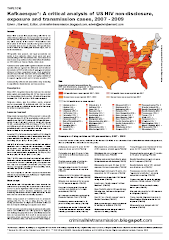
Regions/countries/states/jurisdictions covered

ACT (Aus) (3) Africa (37) Alberta (5) Angola (3) Arkansas (6) Asia (1) Australia (50) Austria (6) Azerbaijan (1) Belgium (1) Benin (2) Bermuda (3) Botswana (6) Brazil (1) British Columbia (7) Burkina Faso (1) Burundi (1) California (5) Cambodia (1) Cameroon (1) Canada (119) China (3) Colorado (2) Congo (1) Czech Republic (1) Delaware (1) Denmark (10) Egypt (4) Europe (3) Fiji (1) Finland (7) Florida (7) France (10) Georgia (US) (4) Germany (15) Ghana (1) Guinea (5) Guinea-Bissau (3) Guyana (1) Idaho (2) Illinois (5) India (3) Indiana (1) Iowa (7) Ireland (3) Italy (1) Jamaica (1) Kansas (3) Kentucky (2) Kenya (4) Kyrgyzstan (1) Laos (1) Latin America (1) Lesotho (1) Louisiana (2) MIssouri (4) Maine (2) Malawi (2) Mali (3) Malta (2) Manitoba (8) Maryland (3) Michigan (12) Minnesota (1) Mississippi (2) Montana (1) Mozambique (2) NSW (Aus) (3) Nebraska (3) Netherlands (3) New Hampshire (1) New Jersey (2) New Mexico (2) New South Wales (2) New York (11) New Zealand (17) Niger (3) Nigeria (3) North Carolina (3) Norway (10) Nova Scotia (1) Ohio (5) Oklahoma (2) Ontario (55) Oregon (1) Papua New Guinea (1) Pennsylvania (3) Qatar (1) Quebec (7) Queensland (Aus) (1) Rwanda (2) Saskatchewan (4) Scotland (5) Senegal (2) Sierra Leone (4) Singapore (6) South Africa (6) South Australia (14) South Carolina (4) South Dakota (2) South Korea (3) Spain (1) Swaziland (1) Sweden (20) Switzerland (10) Tanzania (3) Tennessee (4) Texas (7) Togo (5) UAE (1) UK (38) USA (149) Uganda (18) Ukbekistan (1) Ukraine (1) Vermont (1) Victoria (Aus) (14) Virginia (2) Washington (State) (2) Western Australia (5) Wisconsin (3) Zimbabwe (5)
Showing posts with label Australia. Show all posts

Wednesday, 27 April 2011

UNAIDS announces new project examining "best available scientific evidence to inform the criminal law"

A new project announced yesterday by UNAIDS will "further investigate current scientific, medical, legal and human rights aspects of the criminalization of HIV transmission. This project aims to ensure that the application, if any, of criminal law to HIV transmission or exposure is appropriately circumscribed by the latest and most relevant scientific evidence and legal principles so as to guarantee justice and protection of public health."

I'm honoured to be working as a consultant on this project, and although I can't currently reveal any more details than in the UNAIDS article (full text below), suffice to say it is hoped that this project will make a huge difference to the way that lawmakers, law enforcement and the criminal courts treat people with HIV accused of non-disclosure, alleged exposure and non-intentional transmission.

The UNAIDS article begins by noting some positive developments previously highlighted on my blog, including Denmark's suspension of its HIV-specific law.  It's not too late to sign on to the civil society letter asking the Danish Government to not to simply rework the law, but to abolish it altogether by avoiding singling out HIV. So far, well over 100 NGOs from around the world have signed the letter.

The article also mentions recent developments in Norway. In fact, the UNAIDS project is funded by the Government of Norway, which has set up its own independent commission to inform the ongoing revision of Section 155 of the Penal Code, which criminalises the wilful or negligent infection or exposure to communicable disease that is hazardous to public health—a law that has only been used to prosecute people who are alleged to have exposed others, to, and/or transmitted, HIV.  It will present its findings by October 2012.

As well as highlighting some very positive recent developments in the United States – the National AIDS Strategy's calls for HIV-specific criminal statutes that "are consistent with current knowledge of HIV transmission and support public health approaches" and the recent endorsement of these calls by the National Alliance of State and Territorial AIDS Directors (NASTAD) – it also focuses on three countries in Africa.

Positive developments have also been reported in Africa. In the past year, at least three countries—Guinea, Togo and Senegal—have revised their existing HIV-related legislation or adopted new legislation that restrict the use of the criminal law to exceptional cases of intentional transmission of HIV.
I'd like to add a few more countries to the "positive development" list.

Canada
Last September, I spoke at two meetings, in Ottawa and Toronto, that officially launched the Ontario Working Group on Criminal Law and HIV Exposure's Campaign for Prosecutorial Guidelines for HIV Non-disclosure.

The Campaign's rationale is as follows
We believe that the use of criminal law in cases of HIV non-disclosure must be compatible with broader scientific, medical, public health, and community efforts to prevent the spread of HIV and to provide care treatment and support to people living with HIV. While criminal prosecutions may be warranted in some circumstances, we view the current expansive use of criminal law with concern.

We therefore call on Ontario's Attorney General to immediately undertake a process to develop guidelines for criminal prosecutors in cases involving allegations of non-disclosure of HIV status.

Guidelines are needed to ensure that HIV-related criminal complaints are handled in a fair and non-discriminatory manner. The guidelines must ensure that decisions to investigate and prosecute such cases are informed by a complete and accurate understanding of current medical and scientific research about HIV and take into account the social contexts of living with HIV.

We call on Ontario's Attorney General to ensure that people living with HIV, communities affected by HIV, legal, public health and scientific experts, health care providers, and AIDS service organizations are meaningfully involved in the process to develop such guidelines.
Last month, Xtra.ca reported that
The office of the attorney general confirms it is drafting guidelines for cases of HIV-positive people who have sex without disclosing their status.

This is a major breakthrough, but the campaign still needs your support. Sign their petition here.

By the way, video of the Toronto meeting, 'Limiting the Law: Silence, Sex and Science', is now online.


Australia
Also last month, the Australian Federation of AIDS Organisations (AFAO) produced an excellent discussion paper/advocacy kit, 'HIV, Crime and the Law in Australia: Options for Policy Reform'.

As well as providing an extensive and detailed overview regarding the current (and past) use of criminal and public health laws in its eight states and territories, it also provides the latest data on number, scope and demographics of prosecutions in Australia.
There have been 31 prosecutions related to HIV exposure or transmission in Australia over almost twenty years. Of those, a number have been dropped pre-trial, and in four cases the accused has pleaded guilty. All those charged were male, except for one of two sex workers (against whom charges were dropped pretrial in 1991). In cases where the gender of the victim(s) is/are known, 16 have involved the accused having sex with female persons (one of those cases involves assault against minors) and 10 involved the accused having sex with men. This suggests that heterosexual men, who constitute only about 15% of people diagnosed with HIV, are over-represented among the small number of people charged with offences relating to HIV transmission. Further, men of African origin are over-represented among those prosecuted (7 of 30), given the small size of the African-Australian community.
It then systematically examines, in great detail, the impact of such prosections in Australia.

These include:
  1. HIV-related prosecutions negate public health mutual responsibility messages
  2. HIV-related prosecutions fail to fully consider the intersection of risk and harm
  3. HIV-related prosecutions ignore the reality that failure to disclose HIVstatus is not extraordinary
  4. HIV-related prosecutions reduce trust in healthcare practitioners
  5. HIV-related prosecutions increase stigma against people living with HIV
  6. HIV-related prosecutions are unacceptably arbitrary
  7. HIV-related prosecutions do not decrease HIV transmission risks
  8. HIV-related prosecutions that result in custodial sentences increase the population of HIV-positive people in custodial settings
It notes, however, that
There is a narrow category of circumstances in which prosecutions may be warranted, involving deliberate and malicious conduct, where a person with knowledge of their HIVstatus engages in deceptive conduct that leads to HIV being transmitted to a sexual partner. A strong, cohesive HIV response need not preclude HIV-related prosecutions per se. Further work is required by those working in the areas of HIV and of criminal law:
  • To consider what circumstances of HIV transmission should be defined as criminal;
  • To define what measures need to be put in place to ensure that prosecutions are a last resort option and that public health management options have been considered; and
  • To ensure those understandings are part of an ongoing dialogue that informs the development of an appropriate criminal law and public health response.
 That's exactly the kind of policy outcome that UNAIDS is hoping for.

In the meantime, AFAO suggests some possible strategies towards policy reform. Their recommendations make an excellent advocacy roadmap for anyone working to end the inappropriate use of the criminal law.

Their suggestions include:
  • Enable detailed discussion and policy development
  • Develop mechanisms to learn more about individual cases
  • Prioritise research on the intersection of public health and criminal law mechanism, including addressing over-representation of African-born accused

  • Work with police, justice agencies, state-based agencies and public health officials
  • Improve judges’ understanding of HIV and work with expert witnesses
  • Work with correctional authorities
  • Work with media
I truly hope that the recent gains by advocates in Australia, Canada, Denmark, Guinea, Norway, Togo, Senegal and the United States is the beginning of the end of the overly broad use of the criminal law to inappropriately regulate, control, criminalise and stigmatise people with HIV in the name of justice or public health.

The full UNAIDS article is below.  I'll update you on the project's progress just as soon as I can.

Countries questioning laws that criminalize HIV transmission and exposure
26 April 2011

On 17 February 2011, Denmark’s Minister of Justice announced the suspension of Article 252 of the Danish Criminal Code. This law is reportedly the only HIV-specific criminal law provision in Western Europe and has been used to prosecute some 18 individuals.

A working group has been established by the Danish government to consider whether the law should be revised or abolished based on the best available scientific evidence relating to HIV and its transmission.

This development in Denmark is not an exception. Last year, a similar official committee was created in Norway to inform the ongoing revision of Section 155 of the Penal Code, which criminalises the wilful or negligent infection or exposure to communicable disease that is hazardous to public health—a law that has only been used to prosecute people transmitting HIV.

In the United States, the country with the highest total number of reported prosecutions for HIV transmission or exposure, the National AIDS Strategy adopted in July 2010 also raised concerns about HIV-specific laws that criminalize HIV transmission or exposure. Some 34 states and 2 territories in the US have such laws. They have resulted in high prison sentences for HIV-positive people being convicted of “exposing” someone to HIV after spitting on or biting them, two forms of behaviour that carry virtually no risk of transmission.

In February 2011, the National Alliance of State and Territorial AIDS Directors (NASTAD), the organization representing public health officials that administer state and territorial HIV programmes, expressed concerns about the “corrosive impact” of overly-broad laws criminalizing HIV transmission and exposure. The AIDS Directors called for the repeal of laws that are not “grounded in public health science” as such laws discourage people from getting tested for HIV and accessing treatment.

Positive developments have also been reported in Africa. In the past year, at least three countries—Guinea, Togo and Senegal—have revised their existing HIV-related legislation or adopted new legislation that restrict the use of the criminal law to exceptional cases of intentional transmission of HIV.

Best available scientific evidence to inform the criminal law


These developments indicate that governments are also calling for a better understanding of risk, harm and proof in relation to HIV transmission, particularly in light of scientific and medical evidence that the infectiousness of people receiving anti-retroviral treatment can be significantly reduced.

To assist countries in the just application of criminal law in the context of HIV, UNAIDS has initiated a project to further investigate current scientific, medical, legal and human rights aspects of the criminalization of HIV transmission. This project aims to ensure that the application, if any, of criminal law to HIV transmission or exposure is appropriately circumscribed by the latest and most relevant scientific evidence and legal principles so as to guarantee justice and protection of public health. The project, with support from the Government of Norway, will focus on high income countries where the highest number of prosecutions for HIV infection or exposure has been reported.

The initiative will consist of two expert meetings to review scientific, medical, legal and human rights issues related to the criminalization of HIV transmission or exposure. An international consultation on the criminalization of HIV transmission and exposure in high income countries will also be organized.

The project will further elaborate on the principles set forth in the Policy brief on the criminalization of HIV transmission issued by UNAIDS and UNDP in 2008. Its findings will be submitted to the UNDP-led Global Commission on HIV and the Law, which was launched by UNDP and UNAIDS in June 2010.

As with any law reform related to HIV, UNAIDS urges governments to engage in reform initiatives which ensure the involvement of all those affected by such laws, including people living with HIV.

Wednesday, 4 August 2010

Global: 'Where HIV is a crime, not just a virus' - updated Top 20 table and video presentation now online


Where HIV Is a Crime, Not Just a Virus from HIV Action on Vimeo.

Here is my presentation providing a global overview of laws and prosecutions at the XVIII International AIDS Conference, Vienna, on 22 July 2010.

Abstract: Where HIV is a crime, not just a virus: a global ranking of prosecutions for HIV non-disclosure, exposure and transmission.

Issues: The global (mis)use of the criminal law to control and punish the behaviour of PLHIV was highlighted at AIDS 2008, where Justice Edwin Cameron called for "a campaign against criminalisation". However advocacy on this vitally important issue is in its infancy, hampered by lack of information on a local, national and international level.

Description: A global overview of prosecutions to December 2009, based on data from GNP+ Global Criminalisation Scan (http://criminalisation.gnpplus.net); media reports collated on criminalhivtransmission.blogspot.com and WHO Europe pilot human rights audit. Top 20 ranking is based on the ratio of rate per year/per HIV population.

Lessons learned: Prosecutions for non-intentional HIV exposure and transmission continue unabated. More than 60 countries have prosecuted HIV exposure or transmission and/or have HIV-specific laws that allow for prosecutions. At least eight countries enacted new HIV-specific laws in 2008/9; new laws are proposed in 15 countries or jurisdictions; 23 countries actively prosecuted PLHIV in 2008/9.

Next steps: PLHIV networks and civil society, in partnership with public sector, donor, multilateral and UN agencies, must invest in understanding the drivers and impact of criminalisation, and work pragmatically with criminal justice system/lawmakers to reduce its harm.

Video produced by www.georgetownmedia.de


This table reflects amended data for Sweden provided by Andreas Berglöf of HIV Sweden after the conference, relegating Sweden from 3rd to 4th. Its laws, including the forced disclosure of HIV-positive status, remain some of the most draconian in the world. Click here to download pdf.

Friday, 30 July 2010

Australia: Defendant in AU$750k Sydney gay civil case now faces criminal charges

A 55 year-old gay man who was successfully sued for AU$757,487 in April for allegedly misrepresenting his HIV-positive status as HIV-negative to his former long-term partner who is now also HIV-positive, is now facing criminal charges.

one count of “cause person to contract grievous bodily disease”. He will appear in Balmain Local Court on August 11.
Reporting of both the civil case outcome and the criminal charges has been extremely well done by the local gay newspaper, the Sydney Star Observer.  Its reporting makes for a stark contrast with the local gay press in neighbouring New Zealand, which last year demonised a man accused of non-disclosure who committed suicide following his arrest before any accusations could be proven in court.

Details of the civil case can be found in this report. Notable is the
[AU]$50,000 in exemplary damages [awarded] as an expression of [the court's] “disapproval of disgraceful conduct”.
Mike Kennedy, executive director of the Victorian AIDS Council in Melbourne mentioned the case during the Q&A session of a recent meeting of anti-criminalisation advocates in Vienna (video will be uploaded of this meeting over the next few days).  He noted that since civil cases have a lower standard of proof than criminal cases, it has allowed for extremely damaging testimony as to the impact of being diagnosed HIV-positive to be recorded in court records.  He was concerned that future criminal cases would refer to such testimony (and the damages awarded).

Currently, reporting of this case has remained within the gay press but it is likely that the mainstream media will catch on following the man's August 11th hearing.

This is not the first gay criminal HIV exposure/transmission case in Australia - although it is the first in New South Wales.  Michael Neal was previously found guilty of attempted intentional transmission, rape and reckless conduct in Victoria; a gay male sex worker was previously sentenced to 10 weeks in prison in Australian Capital Territory for being a male sex worker with HIV; and Stuart McDonald faces charges of 'recklessly' infecting eight men in South Australia. His trial begins on Monday, August 2nd.  

Wednesday, 16 December 2009

Australia: Man gets 4 1/2 years for impossible HIV transmission

Update: December 16th
Wepukhulu Zebtek was sentenced to four-and-a-half years in prison by Judge Allan Fenbury who "said the sentence would deter other carriers of the HIV virus from not informing their sexual partners". Mr Zebtek will be eligible for parole in two years and three months.

Original post: October 19th
Something is very wrong with this picture. In January 2008, I reported that a Perth man, Wepukhulu Zebtek, now 44, had been charged with aggravated sexual penetration after allegedly raping a woman and apparently infecting her with HIV, but that his lawyer had successfully argued that since the woman had tested HIV-positive three days following the alleged rape, his client could not possibly have infected the woman, because it takes much longer than three days to form antibodies to HIV.

Today, the AAP reports that Mr Zebtek has pleaded guilty to causing grievous bodily harm after the charge of aggravated sexual penetration was finally dropped last month.

In other words, he has pleaded guilty to infecting a woman he couldn't have possibly infected, something that none of the various Australian news outlets, such as ABC news and Fox news mention.

In fact none the reports now mention that the sex they had was originally, allegedly non-consensual, but all the stories focus on the fact that Mr Zebtek didn't use a condom despite knowing he was HIV-positive. Only the AAP story also mentions that he didn't disclose before unprotected sex (which is an important element of the 'crime').

Obviously some deal has been done between his original arraignment and today's guilty plea, but I don't understand why Mr Zebtek would plead guilty to this charge, given the evidence that he couldn't possibly have infected the complainant.

I can only guess that it has something do with his previous history of unprotected sex, although this did not result in any criminal charges, according to the AAP story.

He had been counselled by the Victorian Department of Health in 2002 after a number of reports he was having unprotected sex with women other than his wife. Mr Sholz said Zebtek had denied the claims at the time but was given comprehensive and clear evidence about the risks of unprotected sex and was told he must practise safe sex. Victorian authorities closed his file after 2004 and Zebtek moved to W[estern] A[ustralia].
Mr Zebtek has been released on bail until his sentencing in December, when he faces up to ten years in prison.

Tuesday, 24 November 2009

Australia: New publication examines criminalisation; works as advocacy tool

NAPWA monograph:
click on image to download
There have been some very important policy developments in Australia recently that I've been waiting to post about until I'd finished reading the entire (Australian) National Association of People Living With HIV/AIDS (NAPWA) monograph, The Criminalisation of HIV Transmission in Australia: Legality, Morality and Reality, to which I contributed a chapter (as a co-author).

I've now read all eleven chapters and I have to say that the monograph is essential reading for anyone interested in the issue of criminalisation. It has provided me with a great deal of insight and food-for-thought as I write my book (an international overview of the issues) for NAM.

As the Honourable Michael Kirby writes in the preface

"NAPWA has collected knowledgeable and informed commentators who have a great awareness of the epidemic in Australia. Without exception, the chapters are thoughtful, balanced and informative. I hope that they will be read in Australia. Indeed, I hope that they will be available overseas to bring enlightenment that is the first step in an effective response to the epidemic."
You can see video of MP Kay Hull speaking at the launch, held last month in Canberra, here.

The monograph is already working its magic as an advocacy tool. Last week, the Sydney Star Observer reports that HIV organisations in Victoria – where more than half of all Australian prosecutions have taken place – are leading the call to clarify exactly when the public health department will involve the police to deal with people who are not disclosing their HIV status and having unprotected sex.

Contents: click on image to enlarge


One of the chapters in the monograph examines such discrepancies in new state and national guidance on the management of people living with HIV who engage in risky sexual behaviour. The National Guidelines for the Management of People with HIV Who Place Others at Risk were produced in 2008 following the fallout from the Michael Neal and Stuart
McDonald cases. The guidelines recommend that public health authorities refer people who persistently ignore warnings to disclose and/or practise safer sex to the police as a last resort, but aren't very clear on how this happens in practice.
Victorian AIDS Council executive director Mike Kennedy said although there were guidelines, a recent meeting of AIDS Council heads showed other states were similarly unclear about exactly what circumstances trigger a referral to police. “I’m not aware of any Australian state that has any clear guideline to say how this will happen, so that’s the missing bit from the reviews that were done around the country,” Kennedy said. “Our view is that [protocols] ought to be governed by a set of agreed procedures, not just rely on goodwill and a set of relationships between people in the Health Department and people in the police service because those people change.”
The NAPWA monograph also includes an enlightening chapter on the impact of prosecutions on people living with HIV, concern echoed in this comment in the SSO article from People Living With HIV/AIDS Victoria president Paul Kidd.
[Kidd] said the uncertainty of where criminal charges would be pursued was creating concern among some HIV positive people. “They’re fearful that in the normal course of their sexual lives they could put themselves in a situation where they inadvertently attract the attention of the police,” Kidd said. “We’re not talking about people who are deliberately spreading HIV or behaving in a negligent fashion. We’re talking about ordinary gay men and other people who are HIV positive who live in an environment where unprotected sex is a part of [their] lives.

I'm also reproducing an editorial by Robert Mitchell, NAPWA's president, below, to give you an idea how NAPWA hopes this monograph will lead to a change in the way Australia deals with criminal prosecutions.

HIV affects us all and, positive or negative, gay or straight, we all have a responsibility to do what we can do prevent HIV transmission. People living with HIV have long accepted the critical role they play in preventing HIV infections, as part of a model of shared responsibility. But the recent increases in criminal prosecutions of HIV exposure and transmission in Australia have caused considerable concern and led some to ask: is that model of shared responsibility breaking down?

In response, last year NAPWA commissioned a collection of papers to examine these issues. We wanted to show how these cases have been prosecuted quite inconsistently across the country, and how they have been represented in the public domain by media coverage. We are launching the resulting monograph, The Criminalisation of HIV Transmission in Australia: Legality, Morality and Reality, this week.

A number of authors with different viewpoints have contributed to the monograph, including academics, legal experts and voices from within the HIV-positive and HIV-affected communities. The end result is a collection of papers that provide rigorous analysis of the current environment in Australia, and other parts of the world, with regards to prosecution of HIV transmission.

This set of materials and commentaries will be the basis for further work on these issues by NAPWA and its member organisations. Our intention is to start a dialogue across the HIV sector and with the broader public health and legal sectors, to examine the issues raised and the impact of criminal prosecutions on the HIV-positive community in Australia today.

While few would argue that an HIV-positive person who deliberately and maliciously sets out to infect another person with HIV has committed an act of violence that should be subject to criminal sanction, very few of the prosecutions in Australia have been in this category. Almost all have been for the ‘knowing and reckless’ category of HIV transmission, where the accused had no intention of transmitting HIV.

The use of criminal law against a person on the basis of HIV status in these circumstances is considered by many to be discriminatory, as it treats the HIV-positive partner as perpetrator and the HIV-negative partner as victim. This shifts the burden of prevention onto people with HIV, and undermines established principles of shared responsibility and safe, consenting, sexual practice.

The blame and persecution directed towards HIV positive people is unacceptable and NAPWA is calling for a review of criminal laws to redress this imbalance. Laws requiring mandatory disclosure by positive people, and laws that treat HIV as inherently more serious than other infections with similar medical impacts, are areas we think need fixing. We need a nationally consistent legal framework that supports public health policy and population health outcomes, and protects the human rights of people with HIV.

NAPWA hopes this work will spark interest and support from across the community to work towards resolving these differences and contradictions. We are working towards a nationally consistent, fair and just legal framework that reinforces rather than degrades the model of shared responsibility and treats HIV as a health issue first and a legal issue only as a last resort.

Tuesday, 30 June 2009

Tuesday, 16 June 2009

Global prosecutions league table sees Sweden on top

I've just done a rather quick and dirty calculation of prosecutions for HIV non-disclosure, exposure or transmission per capita, based on GNP+'s Global Criminalisation Scan data, and produced this rather interesting league table.


Despite Canada, the US and Australia being disproportionately represented on my blog, due to the sheer number of prosecutions taking place, Sweden, Norway and New Zealand have actually prosecuted the highest proportion of people with HIV in their respective countries.

Having just returned from an excellent conference organised by HIV Sweden in Stockholm (on which I reported today in this aidsmap.com news story, highlights of which are below), it really comes as no surprise that Sweden and Norway head the league of shame.

And last Tuesday, Mr Justice Cameron addressed a meeting in Stockholm organised by HIV Sweden to discuss HIV and the criminal law in Sweden and other Nordic countries.

The meeting heard that Sweden's laws were often applied selectively and discriminatory, including the recent case of an African migrant woman who had gone to the police after being raped by two men.

However, rather than charge her assailants, the police charged the woman with HIV exposure. The case is still ongoing.

Peter Gröön, of Stockholm County Council, shared data showing that African migrants – ten of the 16 people prosecuted in the past five years – also received longer prison sentences than their Swedish counterparts. Mr Justice Cameron told the meeting that this kind of HIV exceptionalism, which is fuelled by stigma, must not be tolerated. "We want [HIV to be treated] neither better, nor worse than any other disease," he said.

The meeting also heard that a coalition of grass roots and civil society organisations in Norway might lead to an abolition of Norway's current HIV exposure and transmission law, Section 155, which has led to ten prosecutions the past five years.

The law, which does not allow HIV-negative people to consent to unprotected sex, and makes little distinction between HIV exposure and transmission, places the burden on HIV-positive individuals to both disclose HIV status and insist on condom use in order to be able to avoid potential prosecution.

Through a campaign that has included providing every MP in Norway with information about the inequities of the law, and a major newspaper article from Mr Justice Cameron, published in May, representatives of HIV Manifesto and HIV Norway were hopeful that the law will be repealed during the country's revision of the its Penal Code.

The meeting also heard that a similar opportunity might also be possible in Sweden later in the year, during the pubic debate that will follow a proposal to lengthen prison sentences for assault (the law under which criminal HIV exposure and transmission is prosecuted in Sweden).

Australia: New legal practitioners guide launched in NSW (updated)

Last Thursday, Australian High Court Justice Virginia Bell helped launch a new criminal HIV transmission guide for legal practitioners produced by New South Wales' HIV/AIDS Legal Centre (HALC).

Speaking at the launch, leading civil rights lawyer, David Buchanan, noted that there was a growing tension between the "extraordinary range and depth of the public health forces marshalled against laws that criminalise people with HIV" and public opinion.

However, he said that the movement against criminalisation is not clear-cut, since "the prosecution of people with HIV in [New South Wales] has the potential both to vindicate people’s basic rights to protection from harm, yet also the potential to disrupt one of the world’s more successful exercises in the protection of public health."

The full text of David Buchanan's extremely interesting and insightful address (which, at over 3000 words, plus 30 footnotes, was too long to post in its entirety here) can be downloaded (as a pdf file) here. [Update: June 22nd. The previous version was not correctly formatted and resulted in the notes being out of sync. Apologies. This has now been corrected.]

Update July 1st: HALC tells me they have a limited number of hard copies of the guide available on request.

You can now download a pdf version of the guide here.

HALC also tells me they are working on an Australian-wide version of the Guide, although this is not likely to be ready until late in the year. However, they will have two more publications regarding criminal transmission coming out in July and August which I will upload when I receive them.

Monday, 11 May 2009

Australia: Sydney husband gets 4 1/2 years after pleading guilty to infecting wife

A 38 year-old man who previously pleaded guilty to a charge of "maliciously inflicting grievous bodily harm" (reckless HIV tranmission) after his ex-wife filed a complaint, has been sentenced to "four years and six months full-time jail with a non-parole period of three years, meaning he will be eligible for release in April 2012 at the earliest" by Judge Jennifer English in Sydney.

For more on the case, see this blog entry from last June. The same story from the AAP ran in almost every Australian paper today, but there is no information explaining why sentencing took almost a year, when it was originally scheduled for last August; nor how it is possible that he might have infected her "some time between January 1994 and December 2003" when the child she bore was diagnosed with AIDS in 1998.

Friday, 17 April 2009

Australia: More charges against African migrant in Adelaide

The 40 year-old African migrant previously charged with "two counts of endangering life after he exposed his partner to the HIV virus" and released on bail last month is now "facing five counts of an act to endanger life allegedly perpetrated against five women."

It is still unclear from the latest report in Adelaide Now (which continues to print his name and show his photo) whether any of the five female complainants are now HIV-positive.

What has become clearer is that criminal charges were laid following failed public health intervention.

Prosecutor Lucy Boord has previously told the court [the man] had a "flagrant disregard" for the health of the women.

[The man] had allegedly ignored three Department of Public Health orders by allegedly having unprotected sex with them.

"The community is at risk of this accused because he continues to ignore any order issued," Ms Boord said.

"The offending itself is extremely serious given... his flagrant disregard of the victims and their health."

The prosecution has asked for more time "to gather evidence for the new charges".

"There is still a large amount of information to come in this matter, including medical declarations," Ms Boord said.

The man remains on bail and was ordered to appear in court again in July.

Wednesday, 15 April 2009

Australia: More delays in Stuart McDonald trial

The trial of Stuart McDonald – the 41 year-old Adelaide man accused of 'recklessly' infecting eight men with HIV between January 2001 and January 2006 – has been delayed again until at least May, because the prosecution needs more time.

Accoring to a report in The Australian, he again appeared in the Supreme Court and pleaded not guilty to eight charges of

having unprotected sex with the men while knowing he had the HIV AIDS virus and knowing the acts were likely to endanger their lives and intending or being recklessly indifferent to endangering their lives.

He also pleaded not guilty to raping, assaulting and threatening the life of one of the men in February 2005.

Justice Kevin Duggan told the court he was "anxious'' to list the case for trial "as soon as possible''. Crown prosecutor Dominic Petraccaro said the prosecution was not in a position to list the case yet. "It's obviously a complicated trial,'' he said.

Justice Duggan adjourned the case until next month (May 1) saying he would like the prosecution and defence to be in a position then to indicate when it was anticipated the trial might be able to commence.

Mr McDonald was the first person to be detained without charge under South Australia’s public health Act, in April 2007, and he remains in custody awaiting his trial.

Tuesday, 24 March 2009

Australia: Bail for African migrant accused in Adelaide

An African migrant who is charged with "two counts of endangering life after he exposed his partner to the HIV virus" has been granted bail.

ABC online reports that the man, whose case was first reported last month, has received "home detention bail on the condition he surrenders his passport and wears an electronic monitor."

Despite the report's headline – 'Bail for accused HIV infector' – it's not clear from any of the reports so far that that he is actually accused of criminal HIV transmission, but rather non-disclosure prior to unprotected sex (criminal HIV exposure). This seems possible under South Australia's criminal law, but unusual.

Last month's report from Adeleide Now included the following details:

[Police] allege he exposed the woman to the Human Immmuno-deficiency Virus (HIV) through sexual intercourse in 2004 and 2005, without her knowing that he was HIV-positive.

This latest report adds a little more detail to the case, notably that, like so many accused in low-prevalence high-income countries, the man is a heterosexual African migrant:
The court heard [man's name] came to Australia as a refugee and has been living in Australia for 10 years.

The court also heard he was about to return to Africa when he was arrested.


However, the report also suggests that it is not only the woman who is a complainant in the case, but also her baby.

He will also be prevented from contacting any of his alleged victims including a child born to one of his ex-girlfriends.
This suggests that the woman, his ex-girlfriend, tested HIV-positive after transmitting HIV to her baby, and he now stands accused of both infections.

Sunday, 15 March 2009

Australia: Man pleads guilty to infecting wife, gets three years

A court in Victoria, Australia has sentenced an HIV-positive haemophiliac to three years in prison after he pleaded guilty to not informing his wife of his HIV status and subsequently infecting her.

In order to protect the wife's identity, the man's name has not been published in any of the reports, and even the name of the town or city in Victoria where they live is not mentioned.

The case was first reported last month in the Herald Sun.

A man who infected his wife with HIV did not tell her he had the virus because he was scared she would leave him, a court heard yesterday. The 39-year-old caught HIV as a teenager from a hospital blood transfusion during his treatment for haemophilia. The County Court heard he began a relationship in January 1996 with his future wife and continued to have unprotected sex with her despite knowing the dangers. Prosecutor Claire Quin said the woman soon became ill - losing 10kg in a week - and was diagnosed with the virus. But Mrs Quin said the man kept his secret for another year, leading his girlfriend to believe one of them must have caught the virus from a previous partner. The court heard they married in 2001 and did not reveal their HIV status to the woman's family until they separated in 2007. Mrs Quin said the man told police he knew the more times he had unprotected sex with his wife the higher her chances of catching the disease. But he said his way of dealing with his problem was to ignore it. "She would not be in a relationship with me if she knew the truth," he said.

This week the man was sentenced to three years in prison by Judge Thomas Wodak, according to a second report in the Herald Sun.

Judge Wodak said the man had shown a contemptible and callous disregard for the woman he professed to love. "You acted with gross irresponsibly and selfishness," he said. "The most likely explanation for your conduct is that you put your own feelings and needs ahead of responsibility, decency and concern for (the woman's) well-being." Judge Wodak said in jailing the man for a maximum of five years, that his poor health would make jail harder for him and he deserved a sentencing discount for his plea of guilty.
A report on the case in the Sydney Morning Herald focuses primarily on the impact of HIV on the wife. It begins:

A woman infected with HIV by her husband says her life has been destroyed by the disease, which has left her unemployable and unable to sign her own name.

Saturday, 14 March 2009

Australia: Stuart McDonald finally pleads not guilty; trial begins next month

Stuart McDonald, the Adelaide man accused of infecting eight men with HIV in 2005 and 2006 after meeting them via a gay dating site and who has been awaiting trial since his 2007 arrest, has now pleaded not guilty and his trial will begin next month in the South Australian Supreme Court.

According to a brief report from ABC News online, he pleaded not guilty to eight counts of endangering life by having unprotected sex, one count of rape, one count of threatening to kill, and one count of assault.

Another article in the Adeleide Advertiser includes some ridiculously irrelevent 'facts' about Mr McDonald, such as his pubic hair colour, but also mentions that one the complainants originally failed to pick him out of an identity parade.

Today, the alleged victim said he took part in a police identification line-up after he learned he had been infected.

The court has heard McDonald was in that line-up and given the number six.

The alleged victim said he picked the fifth man in the line-up.

"That was when I saw number six smirk," he said.

"I looked closer, analysing his face, his eyebrow shape, his gaunt cheeks and his olive skin and realised I'd picked the wrong man."

For more background on this case see this article by Sally Cameron on aidsmap.com, and click here for a page refresh with all of my blog postings on the Stuart McDonald case.

Friday, 6 February 2009

Australia: Adelaide man charged with HIV exposure

The Australian reports:

A 40-YEAR-OLD Adelaide man faces two charges after he allegedly knowingly exposed a woman to HIV.

Yesterday detectives from the sexual crime investigation branch charged the man from Findon, in Adelaide's western suburbs, with two counts of acts endangering life.

He was remanded in custody to appear in the Adelaide Magistrates Court today.

Police allege the woman was exposed to the human immunodeficiency virus through sexual intercourse in 2004 and 2005.

They said she was unaware the man had HIV at the time.

"The investigation is continuing in order to attempt to locate other potential victims," a police spokesman said.

More details of the case, including the man's name, are published on Adelaide Now.

Thursday, 2 October 2008

Australia: No more appeals for Andree Chad Parenzee

Andree Chad Parenzee – who was found guilty in Adeleide in 2006 of three counts of endangering life, has run out appeals.

He originally appealed last year by arguing that HIV does not cause AIDS and cannot be sexually transmitted. That appeal failed spectularly, and he was sentenced to nine years in jail. He appealed again in July, but that also failed.

Now, South Australia's Court of Criminal Appeal has ruled that his most recent appeal applications were "incompetent".

Full story from The Sydney Morning Herald below.

HIV man loses appeal against conviction
AAP/Sydney Morning Herald
September 16, 2008

An HIV-positive man jailed for having unprotected sex with three Adelaide women has lost a bid to have his case reopened.

Andre Chad Parenzee, 37, had tried to appeal against his conviction after being jailed for nine years in 2007 on three counts of endangering life.

He was charged after one of his victims, a mother of two, became infected with HIV.

In a majority verdict in South Australia's Court of Criminal Appeal, Parenzee's application for an extension of time to appeal and his application for leave to appeal were both dismissed.

In a two-one judgment, the court ruled that both his applications were incompetent.

Chief Justice John Doyle said that while he would have granted leave to appeal, he would have rejected the final appeal anyway.

He said evidence from doctors who dealt with Parenzee provided a solid basis for the jury to find that he knew that by having unprotected sex he would create a real, or significant risk, of infecting a woman with HIV.

"The evidence that Mr Parenzee gave about his state of knowledge and belief was, on my own assessment, unconvincing," Justice Doyle said.

"In any event, it was certainly open to the jury to reject much of his evidence."

In his appeal, Parenzee had argued there was no quantifiable evidence at his trial to prove he was likely to be putting anyone's life in danger when he had sex, or that he knew he was doing so.

"There was no evidence Mr Parenzee was told that having unprotected sex would lead to a person's life being in danger," his lawyer Andrew Tokley said.

"Parenzee believed that if he didn't ejaculate while having unprotected sex there was no risk to his partner."

Prosecutor Martin Hinton QC said Parenzee knew about the risks of unprotected sex within weeks of his diagnosis but had failed to tell his partner.

"He said he had cancer ... she is never told he has HIV until very late."

Last year, Parenzee lost a previous bid to appeal against his conviction after unsuccessfully arguing that HIV did not exist and could not be sexually transmitted.

An application to appeal his conviction to the High Court was expected.

With time off for good behaviour, Parenzee will be eligible to be released in 2011.

Monday, 15 September 2008

Australia: HIV-positive sex worker gets 2 1/2 months jail for being an HIV-positive sex worker

The HIV-positive male sex worker previously named and shamed by the Canberra Public Health Department has been sentenced to two months and two weeks in prison for being an HIV-positive sex worker, acccording to a report from ABC News online.

Interestingly, Canberra's daily newspaper, The Canberra Times, appears to be on the side of the sex worker in its coverage of the case.


HIV sex worker jailed
ABC News online
15th September 2008

A Canberra man who worked as a prostitute while infected with HIV and hepatitis C has been sentenced to less than three months in jail.

Hector Scott, 42, pleaded guilty to operating a commercial sexual service from his Kingston flat last year while knowingly being infected with HIV.

As a public health measure, the ACT health department contacted nearly 500 people known to Scott.

Forty-three of them admitted to having a sexual encounter with him and were urged to be tested for HIV.

Magistrate John Burns said it was impossible to know whether Scott had unprotected sex with any of his clients.

But he said Scott's breach of the prostitution act was very serious because he chose to put others at risk for his own commercial benefit.

Magistrate Burns sentenced him to two months and 14 days in jail and a two year good behaviour order.


Outrage over HIV-positive prostitute's sentence
The Canberra Times
15/09/2008

A jail term handed down to an HIV-positive prostitute in Canberra sends a "disgraceful" message that having sex with an infected person is unsafe, Australia's peak sex workers association says.

The Scarlet Alliance has hit out after a judge's decision today to sentence a male sex worker to two-and-a-half months in prison for providing a commercial sexual service while knowing he was infected with a sexually transmitted disease.

Hector Scott, 41, from Kingston, was charged under section 25 of the ACT's Prostitution Control Act which makes the behaviour illegal.

Scarlet Alliance chief executive Janelle Fawkes said the organisation was "appalled" by the decision, saying she was extremely concerned at the possible repercussions after this kind of message.

"Last week, the ACT attorney-general, Simon Corbell, came out and stated that Section 25 should be reviewed and considering current risk in transmission that, in fact, an HIV positive person being a sex worker does not hold a higher risk for the community," Ms Fawkes said.

"But this week, we have a judge in the ACT making an example of a person who was only being a sex worker whilst HIV-positive.

"That sends a clear and cutting message that having sex with an HIV-positive person is unsafe and that is simply not true."

The same activity in NSW and several other states would not be deemed illegal, Ms Fawkes said.

The charge carries a maximum penalty of six months imprisonment, but Scott was sentenced to two months and 14 days.

He also pleaded guilty to failing to register as a sex worker, for which he received a two-year good behaviour bond.


Sunday, 24 August 2008

Australia: Lam Kuoth's laywers appeal against 'excessive' suspended sentence

Lawyers for Lam Kuoth have lodged an appeal against his two year suspended sentence for HIV exposure, claiming it is "manifestly excessive".

Story from the Herald Sun, below, which also was printed in a later editions under the rather sarcastic headline: 'Freedom too harsh for HIV-positive man'

HIV-positive refugee appeals on 'harsh' sentence
Norrie Ross
August 22, 2008

AN HIV-positive refugee who had unprotected sex with a young woman claims his suspended jail term was too harsh.

Lam Kuoth, 29, was sentenced to two years in jail, suspended for three years, and was given a community-based order in the County Court earlier this month.

Kuoth who came to Australia from Sudan in 2006 and lives in Geelong pleaded guilty to two counts of recklessly endangering another person.

His lawyers lodged an appeal against the sentence with the Court of Appeal yesterday claiming the suspended term was "manifestly excessive".

The court will rule in the next few months if he can win permission to appeal.

Sentencing judge Paul Lacava heard that Kuoth knew of his HIV status when he twice had unprotected sex with his unwitting 24-year-old victim in April last year.

He acted in defiance of public health orders that required him to use a condom.

Kuoth also had unprotected sex with another woman but she did not want to be involved in any prosecution, the court was told.

That woman has since had his child and the child, now eight months, is not believed to be HIV-positive.

Tuesday, 19 August 2008

Uganda/Australia: Two 'HIV-positive people' murdered for alleged HIV exposure or transmission

Two disturbing case reports this week - one from Uganda and one from Australia - highlight the dangers that HIV-positive people face when they disclose (or when others disclose) their HIV status.

In Uganda, a man allegedly hacked his wife of 10 years to death with a machete after he found out he was HIV-positive and blamed his infection on his wife. Report from The Daily Monitor below.

And in Australia, a man stabbed and killed his mother's boyfriend after hearing allegations that he was HIV-positive, even though it's not clear that he actually was. Report from The Australian below.

UPDATE November 24th 2008: A jury has found the Australian man guilty of manslaughter and he was today sentenced to a minimum of five years in jail, according to a report from The Sydney Morning Herald. The Australian reports that "the jury found him not guilty of the more serious charge of murder..."


Man kills wife over HIV infection
Patson Baraire, in Rukungiri
August 15, 2008

Police in Rukungiri have arrested a man who allegedly killed his wife of 10 years by hacking her with a machete after he learnt he was infected with HIV, the virus that causes Aids. The police identified the suspect as Mr Julius Tumwesigye, 30, and said he blamed his infection on his wife.

According to the officer-in-charge of crime in the area, Mr Jackson Mugisha, the suspect stabbed his wife, Glorius Kyarikunda, 25, at 10am on Tuesday in Kikarara Trading Centre in Bwambara Sub-county, Rukungiri District. The couple had two children aged six and four.

Residents, who spoke on condition of anonymity, told Daily Monitor that Kyarikunda had fled to her parent’s home on Sunday after a fight with her husband. The attack is reported to have occurred two days later when Kyarikunda returned with the children to collect her property and found an enraged Tumwesigye.

It was at that point that Mr Tumwesigye allegedly pounced, hacking her to pieces. She died moments later. Mr Tumwesigye, who was by now drenched in his wife’s blood, attempted to run but neighbours, who had been drawn to the homestead by Ms Kyarikunda’s screams, arrested him.

It was the timely intervention of the Police that saved him from the mob that was baying for his blood.

A blood-stained machete was recovered from the scene of the crime. A post-mortem report showed that the deceased died from deep cuts inflicted by sharp object.

Mr Mugisha told Daily Monitor, that such murders seldom happen in Rukungiri. “It is the only murder of the kind that I can recall in a long time,” he said, in a telephone interview. However, murders generally have been on the increase in western Uganda. Several weeks ago, a mentally ill man in Bushenyi hacked his family of six to death before killing himself.

A well known HIV, gender and human rights activist, Dr Lydia Mungherera, who lives openly with HIV, yesterday condemned the attack and called for swift justice. “It is horrific that a woman is hacked to death on being blamed to have infected a man with HIV,” Dr Mungherera said.

“No one knows who infected who in this case. It has become a common practice for women to be blamed in society as the cause of the pandemic. It is very bad to hack a person you have been living together with for long.” Tumwesigye had, by yesterday, not yet been charged.

Dr Eugene Kinyanda, a consultant psychiatrist with the Medical Research Council said Mr Tumwesigye’s act could be due to lack of counselling services in the area.

He said: “Such psychosocial problems that are not attended to eventually result into brutal murders because of delusion. But sometimes it may be due to mental illness or frustration after realising one has contracted HIV.”

According to Mr Moses Muramuzi, a neighbour to Mr Tumwesigye, the suspect had become withdrawn in recent days after discovering that he was HIV positive. “He vowed to deal with his wife whom he accused of bringing it to him,” Mr Muramuzi said. “He claimed he had no outside relationship.”

About a million people in Uganda are living with HIV but activists warn of increasing attacks, especially within homes. At a recent workshop held in Soroti, the Regional Manager of the charity ActionAid Uganda, Ms Ann Akwango, said violence against women living with HIV and Aids is increasing and revealed that statistics from Pallisa District had indicated 100 out of 465 HIV-positive women questioned during a survey earlier this year, had experienced some form of violence after revealing their status to their husbands.

It is feared that this type of violence will scare partners from revealing their status, drive the epidemic underground and lead to increasing infection and deaths from people afraid to seek professional care and support.


Man 'stabbed mum's lover over HIV claim'
The Australian
August 18, 2008

A SYDNEY man has admitted to stabbing but not murdering his mother's boyfriend after hearing claims her lover was HIV positive, a jury has been told.

In the Crown's opening address in the New South Wales Supreme Court today, Chris Maxwell QC said Jason Podesta had admitted stabbing Steven Bannister on November 22, 2006.

But, he said, the issue for the jury would be whether Mr Podesta had a "substantial mental impairment'' at the time, which would enable him to be found guilty of manslaughter.

Mr Podesta, of Liverpool and who was 19 at the time of the killing, has denied murdering Mr Bannister.

Mr Maxwell said the Crown believed the jury would return a verdict of murder.

The body of Mr Bannister, dressed only in tracksuit pants and joggers, was found on the footpath at Casula, in Sydney's southwest, on November 22, 2006.

Mr Maxwell said Mr Podesta's mother, Cathy, who was in her early 40s, had been in a relationship for at least several years with Mr Bannister.

He said mr Podesta told police his mother received a number of apparent prank phone calls on her mobile phone the night before 24-year-old Mr Bannister's death.

"The calls related apparently to the sexual activities of Cathy Podesta's boyfriend, Steven Bannister, and included ... that it was believed he was HIV positive,'' he said.

"In the interview, the accused said his mother was extremely upset about the calls and the fact she may have contracted the disease.''

Mr Maxwell is continuing his opening address before Justice Lucy McCallum.

Saturday, 16 August 2008

Australia: Suspended sentence for HIV exposure angers some

Interesting (over)reaction to the two year suspended sentence handed down to Lam Kuoth for HIV exposure in Melbourne last week.

Following a guilty plea to two counts of recklessly endangerment, Mr Kuoth has been sentenced to two years' prison, suspended for three years and is currently under 24-hour staff supervision in a halfway way. Mr Kuoth is allowed four hours of unsupervised release each day.

ABC radio, with its ridiculous headline - Outrage over soft sentence for HIV sex crime - reports that a spokesman for the Crime Victims Support Association is outraged at the 'soft' sentence, and wants not just Mr Kuoth locked up, but anyone whose doctor is aware they might be having unprotected sex. Only at the very end do they quote the President of the Law Institute of Victoria, who supports the sentence. Very nicely balanced piece of reporting, ABC radio!

Reports from The Age, and the transcript from ABC's PM programme, below.

HIV-infected man who had unprotected sex avoids jail sentence
Miki Perkins
August 12, 2008

LAM Kuoth knew he was HIV-positive when he met a woman at a Chapel Street nightclub, returned to her home and had unprotected sex with her.

Yesterday Kuoth, 29, received a two-year wholly suspended sentence in the County Court after he pleaded guilty to two counts of recklessly endangering the unwitting 24-year-old woman. He was put on a strict community-based order and told he must undergo treatment and counselling, and abstain from alcohol.

His victim was not infected with the virus, but Judge Paul Lacava said Kuoth had known he exposed her to danger.

Kuoth, formerly of the Geelong suburb of Norlane, migrated to Australia from Sudan in 2006 and was diagnosed HIV-positive three months later.

Former chief health officer Dr Robert Hall placed Kuoth on an order under the Health Act on April 4, 2007, to practise safe sex and tell partners he had HIV.

In December Kuoth was deemed a security risk for a second time and isolated in an empty ward at the Thomas Embling hospital. Now in a suburban house under 24-hour staff supervision, Kuoth is allowed four hours of unsupervised release each day.

Judge Lacava said that after a year of counselling Kuoth acknowledged the mistakes in his conduct.


PM - Outrage over soft sentence for HIV sex crime
Monday, 11 August , 2008
Reporter: Alison Caldwell

MARK COLVIN: Victims of crime are angry that a HIV positive man, who pleaded guilty to having unprotected sex with a woman without telling her about his condition is not going to jail.

The man was sentenced to two years in Melbourne this morning but the judge suspended the sentence and placed him on a two year community-based order.

Alison Caldwell reports.

ALISON CALDWELL: 29-year-old Lam Kuoth pleaded guilty to two counts of reckless conduct endangering another person.

Twice last year he had unprotected sex with a woman he met at an inner city nightclub. He didn't tell her that he had HIV.

The County Court was told Kuoth was unwilling to come to terms with his diagnosis and that he'd been placed under a supervision order by the Department of Human Services.

The Court also heard that his prospects for lasting rehabilitation were uncertain and that it was of paramount importance to protect the community from him.

Even so, today Justice Paul Lacava sentenced him to two years jail, suspended for three years and placed him on a two year community-based order.

NOEL MCNAMARA: I think it's disgraceful. It's really outrageous. Quite out of line with what the community would feel about a guy like this.

ALISON CALDWELL: Noel McNamara is the spokesman for the Crime Victims Support Association.

His daughter was murdered and he often speaks out against what he sees as overly lenient sentences.

He says today's sentence is no different.

NOEL MCNAMARA: It's certainly a dangerous practice and it's got to be stamped out and the only way you're gonna stamp it out is not by giving him a suspended sentence and sending him off to play a few games down at the community sentencing people. He should have been locked up and punished.

ALISON CALDWELL: Recently appointed County Court judge Paul Lacava has placed Lam Kuoth under strict supervision orders.

Judge Lacava told the court:

PAUL LACAVA (voiceover): Fortunately you didn't infect the woman with the HIV virus, but you could have and you knew you could have.

ALISON CALDWELL: The prosecution submitted Kuoth shouldn't be jailed.

Judge Lacava said he initially thought that was too lenient but after reading DHS reports, he agreed continued treatment was the best option for Kuoth.

Kuoth initially refused to admit to having sex with the woman and was served with an isolation order that confined him to a hospital.

In March he was transferred to a home in Melbourne where he was monitored by staff and video surveillance 24 hours a day.

Since May he's gradually been allowed more unsupervised time, as it is, that can be up to four hours a day.

Judge Lacava said Kuoth had recently told a doctor that if he found a new girlfriend he would always use a condom when they had sex.

He said Kuoth appeared to be taking more responsibility for his behaviour.

Noel McNamara still believes Kuoth should be behind bars.

NOEL MCNAMARA: Naturally he's going to say that. He's not going to say he's going to reoffend without a condom because he would go to jail then. But I mean, no I don't think it's good enough.

ALISON CALDWELL: Two and a half weeks ago, another Melbourne man was found guilty of trying to deliberately spread HIV to other men.

A jury found Michael John Neal guilty of 15 charges including attempting to infect another person with HIV, rape and procuring sexual penetration by fraud.

As in Kuoth's case, the Department of Human Services opened a file on Neal after his doctor contacted it in November 2001.

DHS sent Neal three letters between 2001 and 2006 advising him of his responsibility to practice safe sex and to disclose his HIV status.

Neal is soon to be sentenced.

Noel McNamara says, it shouldn't be up to the DHS.

NOEL MCNAMARA: That should be taken off DHS and put into the Justice Department because that's where it belongs.

ALISON CALDWELL: If there's an adult male, or female, who is diagnosed with HIV and their doctor is concerned that they are having unsafe sex, do you think the doctor should be going to the police straight away and bypassing DHS?

NOEL MCNAMARA: It should be mandatory.

ALISON CALDWELL: But the Law Institute of Victoria is defending the sentence. President Tony Burke.

TONY BURKE: A trial judge, when crafting a sentence such as in this instance, has to weigh up on the one hand deterrent with the need to encourage rehabilitation on the other. And it's fairly clear that in this instance the judge has sought to balance those two countervailing influences to craft a sentence which both the prosecution and the defence agreed was appropriate.

MARK COLVIN: The President of the Law Institute of Victoria, Tony Burke ending Alison Caldwell's report.

Archive

Is this blog useful? Let me know

If you find this blog useful, please let me know, and if you find it really useful, please also consider making a small donation.

Thank you.

(Clicking on the Donate button above will take you to Paypal.)